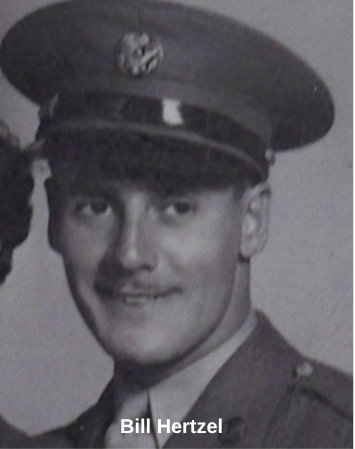
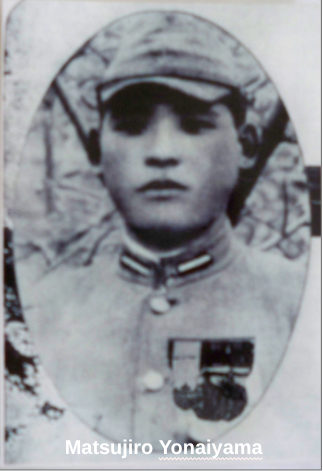
Today I bring you a heartwarming story of kindness, respect and reconciliation.
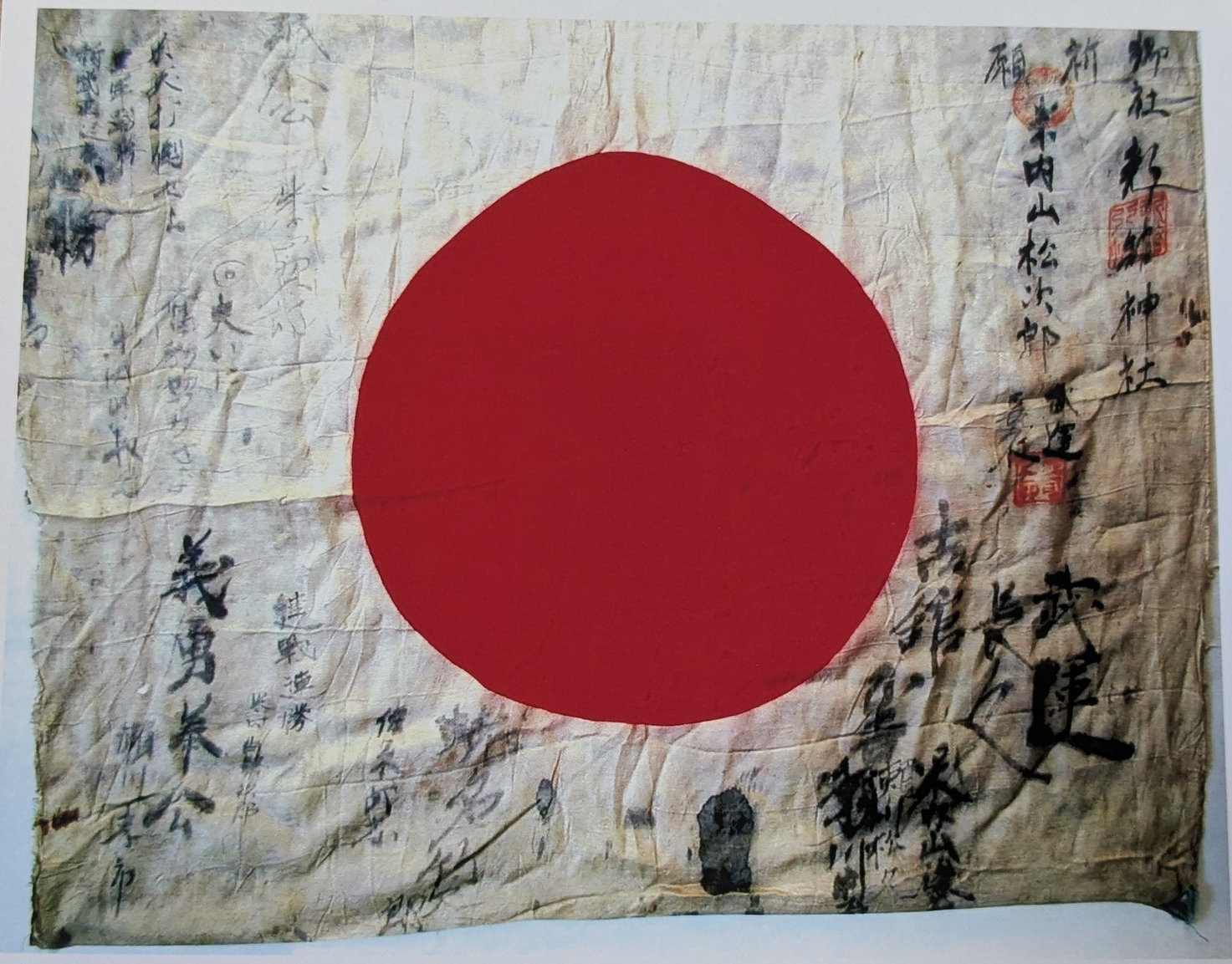
The story was told to me by Webster resident Kathy Hertzel, whose father Bill served in the Pacific Theater in WWII. In November 1944, after fighting on the island of Leyte in the Philippines, he removed a silk battle flag from the body of a fallen Japanese soldier. Such battlefield souvenirs were common among Allied servicemen.
The red disk in the center of the large flag, symbolizing the Rising Sun, was surrounded by names and symbols written in Japanese kanji. They included the soldier’s name – Matsujiro Yonaiyama – and well-wishes from family members and friends. A bullet hole and blood were also still visible. Bill realized the profound personal significance of what he had found, so he folded the flag carefully and tucked it inside a leather pouch to keep it safe during the long trip home after the war.
Bill stored the pouch in his dresser, bringing it out only occasionally to show visitors. Kathy remembers how carefully her father took care of it, making sure she knew it was a precious artifact that should be respected. As a young girl, she was fascinated by the flag, slowly yellowing with age, and often wondered about the young man who wore the flag so bravely as he fought in the war.
For years, the flag remained mostly forgotten, until 1978, when Bill showed it to a Japanese colleague. She was able to translate some of the writing, including the soldier’s name. That discovery gave the flag a human identity.
Bill died later that year, so he was never able to continue his search. But in 1995, on the 50th anniversary of the end of the war in the Pacific, his daughter Kathy took up the cause.
Her first efforts – writing to the Japanese consulate in New York City and the U.S. Ambassador to Japan – fell on deaf ears. Several years later, a friend suggested she contact a colleague of hers in California whose roommate was Japanese. That attempt was much more successful.
The roommate, Tishi Washizu, agreed to help. He carried photos of the flag back to Tokyo, where the national newspaper Asahi Shimbun picked up the story. On January 28, 2000, Shigejiro Yonaiyama saw the article, recognized his brother’s name and contacted the local newspaper bureau; they, in turn, relayed the message to Kathy.
Kathy knew it was imperative that the flag be returned to the family, so she quickly arranged for its journey home. After carefully packing the heirloom, she sent it back to where it had started more than 55 years before. In an accompanying letter, she wrote, “It is with much joy that I send this flag on its final voyage.”
On March 19, 2000, the flag was placed in the hands of Matsujiro’s brother and nephew, and that same day it was presented at Matsujiro’s empty grave.
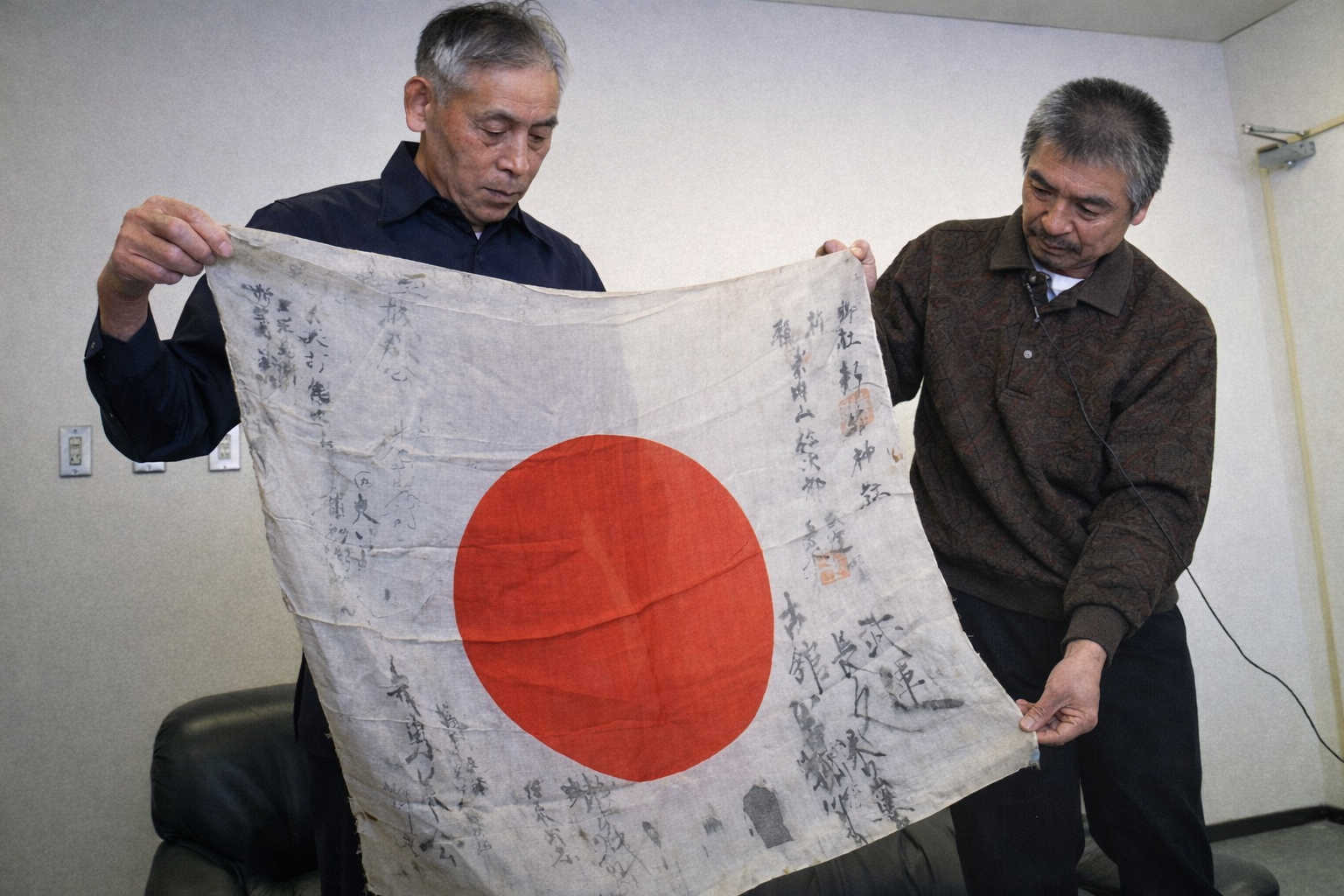
Here’s an especially touching twist to this story: the family never knew what had happened to Matsujiro. They’d been told that he’d died when the ship carrying him from Manchuria to Leyte sank, and never even knew the time or place of his death. All they had received to remember him by was an empty box with his name on it. Now, thanks to the efforts of Kathy Hertzel and many others, the memory of Matsujiro Yonaiyama lives on, in a battle flag which hangs proudly on a shrine in his brother’s home.
* * *
(posted 4/6/2026)
email me at missyblog@gmail.com. “Like” this blog on Facebook and follow me on Instagram and Threads (@missyblog)
You can also get email notifications every time I post a new blog by using the “Subscribe” link on the right side of this page (or all the way at the bottom of the page if you’re on your phone).


 webster on the web
Leave a comment