The Webster Theatre Guild (WTG), our town’s very own community theater group, turns an incredible 90 years old this year, and is celebrating the occasion by bringing a high-energy comedy to the stage which will fill the theater with a soulful sound (and lots of laughs).
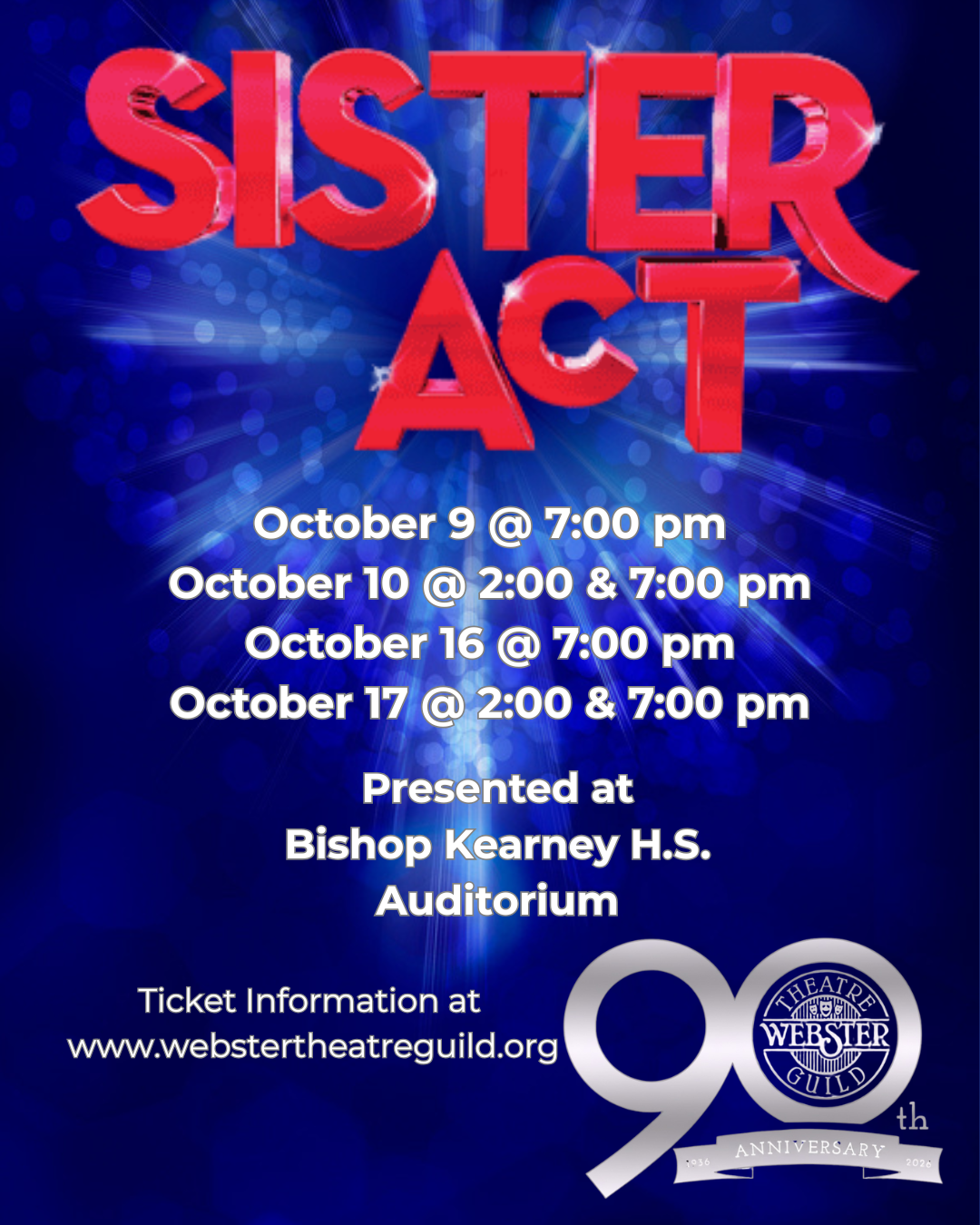
This coming Friday, Oct. 9, the Theatre Guild will raise the curtain on Sister Act: A Divine Musical Comedy, presented in six performances through Oct. 17.
The show is based on the 1992 movie (starring Whoopie Goldberg) and hit Broadway musical, with music by Alan Menken and lyrics by Glenn Slater. The story follows Deloris, a nightclub singer who witnesses a crime and is placed in protective custody in a convent. She ends up teaching the convent’s initially struggling choir, and, in the process, changes the lives of the nuns and herself.
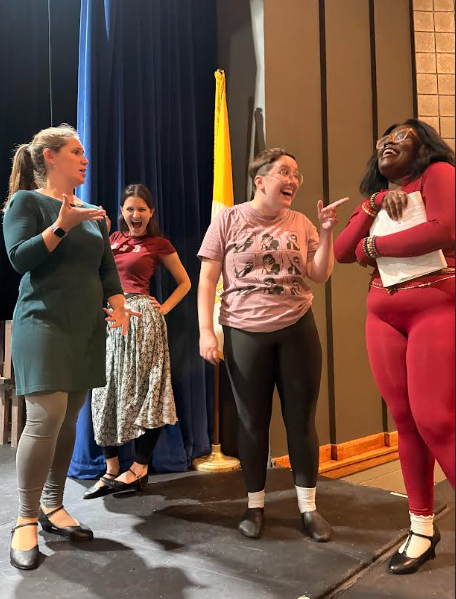
Sister Act hits the stage with the force of a disco ball struck by divine inspiration. Deloris, a bold and big-hearted nightclub singer, lands in a convent for her own protection and winds up transforming a tuneless choir into a soulful powerhouse. Her energy shakes the dust off every pew as she teaches the nuns to sing with joy, courage, and a little sparkling attitude.
Sister Act is being directed by J. Simmons, who’s marking a bit of history with the Guild himself. Simmons’ connection to theater began early. Even at 4 years old, he was working professionally in commercials and in regional theaters. But the spark which really shaped his ultimate career path was when, at the age of 12, he was cast in the Webster Theatre Guild’s production of Annie. What started as a childhood introduction to the stage quickly became a lasting passion.
Today, Simmons is a highly respected director, actor, fight choreographer and private acting coach. He works regularly with Blackfriars Theater and Geva Theater, serves as drama instructor for the Rochester Broadway Theater League, and is a theatrical consultant and mentor for the University of Rochester International Theatre Program. But, even with all those impressive credits to his name, the Webster Theatre Guild holds a special place in his heart.
He especially likes being involved in the Guild’s milestone years (apparently). In 2011, he directed the Guild’s 75th anniversary show, Urinetown, then continued to direct every year through the Guild’s 80th anniversary production, The Music Man.
And now he’s back.
“I thought it was apropos to come back for the 90th, having done the 75th and 80th,” he said. “I wanted to give back the love that I feel for this community and group of actors.”
And he knows how important it is for this group of actors to have community theater in their lives. After all, it was this relatively modest production company which sparked his own career.
He said,
If you look around Rochester, there are so many people who are on Broadway and doing different things that have ties to community theater. This is where they got their chance to connect with what they thought was important and now they’ve made a whole career out of it. We have to have this outlet for the community, for people to come, share stories. The theater is one of the best classrooms.
So let’s get out and support these actors who’ve been working so hard to bring live theater to our back doors.
Sister Act: A Divine Musical Comedy will take the stage on
Friday Oct. 9 at 7 p.m.
Saturday Oct. 10 at 2 and 7 p.m.
Friday Oct. 16 at 7 p.m.
Saturday Oct. 17 at 2 p.m. (ASL interpretation at this performance) and 7 p.m.
Shows will be held at Bishop Kearney High School, 125 Kings Hwy S.
Tickets are $25, and can be purchased online here. They’ll also be available at the door unless they sell out.
194019621967
A brief history
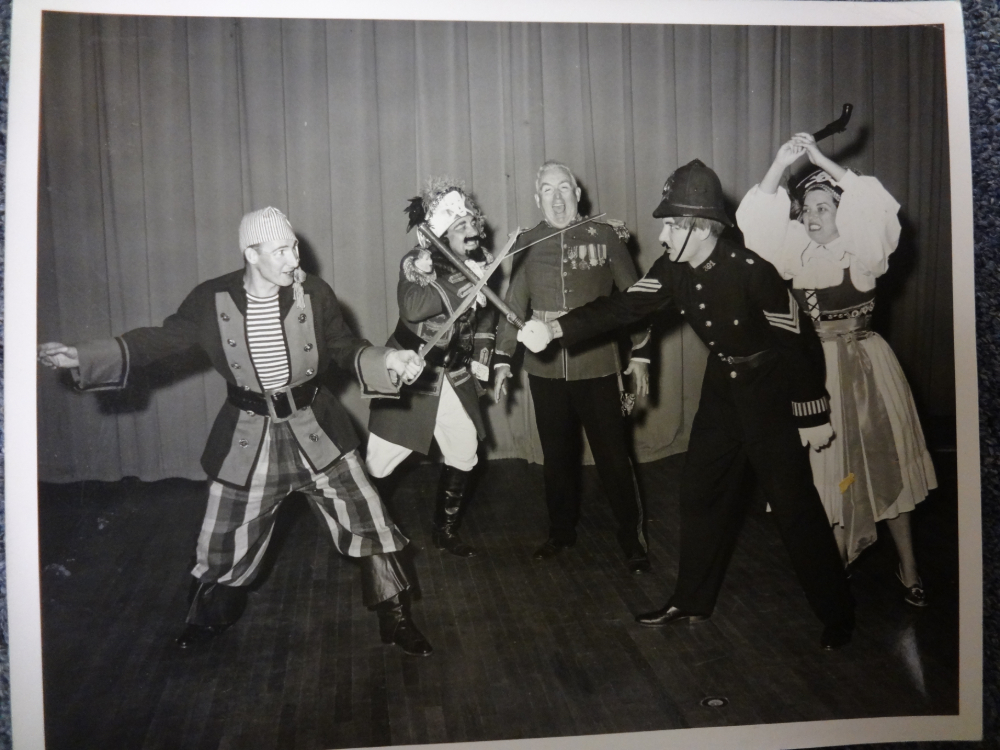
The Webster Theatre Guild dates back to 1936, and ever since its inception, it’s been more than just a theater group; it’s been a vital part of our community, not only providing aspiring actors an outlet to pursue their passion for performing, but also supporting the Webster community by providing annual scholarships to graduating high-school seniors.
While the Guild has been operating continuously for about 90 years (that’s more than 153 productions), its character has changed substantially over that time.
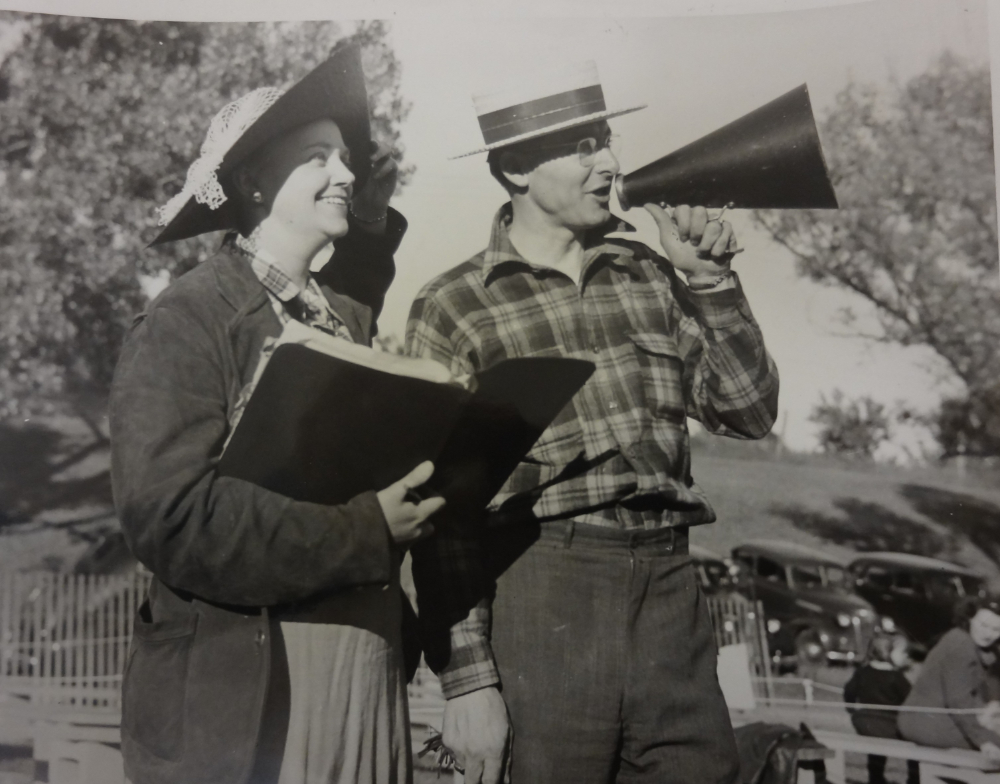
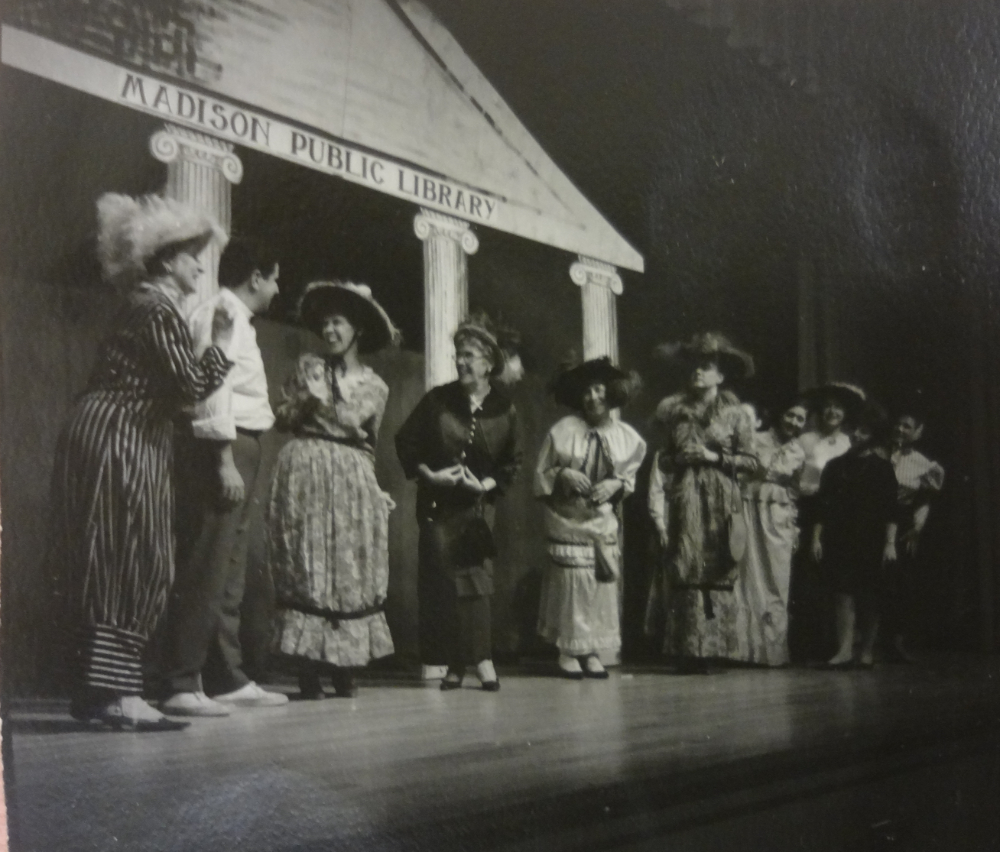
It was founded in 1936 by Erva Wright Smith and the Rev. John Schott, then pastor of Webster Presbyterian Church. In its earliest days, it was known for producing one-act plays, performed at various locations around the village, and the productions sometimes were staged to benefit community groups like the Webster Public Library and Sons of the American Legion. So even back then, the Guild was dedicated to serving the community.
The Guild remained active through World War II, and one-act plays were still part of the Guild’s main identity. That changed in 1954 when the Guild produced its first musical, Speak of the Devil. It was in 1958 when the guild started its now-familiar tradition of annual musicals.
If you’d like to see a whole slew more historical photos, click here.
* * *
email me at missyblog@gmail.com. “Like” this blog on Facebook and follow me on Instagram and Threads (@missyblog)
You can also get email notifications every time I post a new blog by using the “Subscribe” link on the right side of this page (or all the way at the bottom of the page if you’re on your phone).
I picked up a bit of rather exciting news from the Village of Webster’s Sept. 8 newsletter, which reported that plans are in motion to bring some much needed improvements to Schantz Park.
Schantz Park is nestled between State Rd. and Hawley Dr. on the south side of the Village of Webster. It’s a multi-use recreational space which features a baseball diamond, basketball court, a few picnic tables and grills, and a playground. There are also some old tennis courts which haven’t been usable for years and are rather an embarrassment.
The whole park has needed some attention for quite a while, and work has begun on a whole list of improvements. According to the newsletter, at their August 27 meeting, the Village Board voted to accept a bid from Kircher Construction for work for stage one of the project, work on the basketball court’s concrete pad and installation of a toddler basketball court.
The existing basketball court will be removed and a new 30 x 60 concrete pad will be installed in the same area. The toddler basketball court will feature two partial half courts, with a high-performance, waterproof VersaCore surface and shorter hoops.
The basketball courts are just the start of many improvements planned for the park. They include:
a proposed walking trail around the perimeter of the park
new playground equipment and new safety surface
pickleball courts where the tennis courts are now
expanded parking area
replacing the baseball field with soccer goals and obstacle course equipment
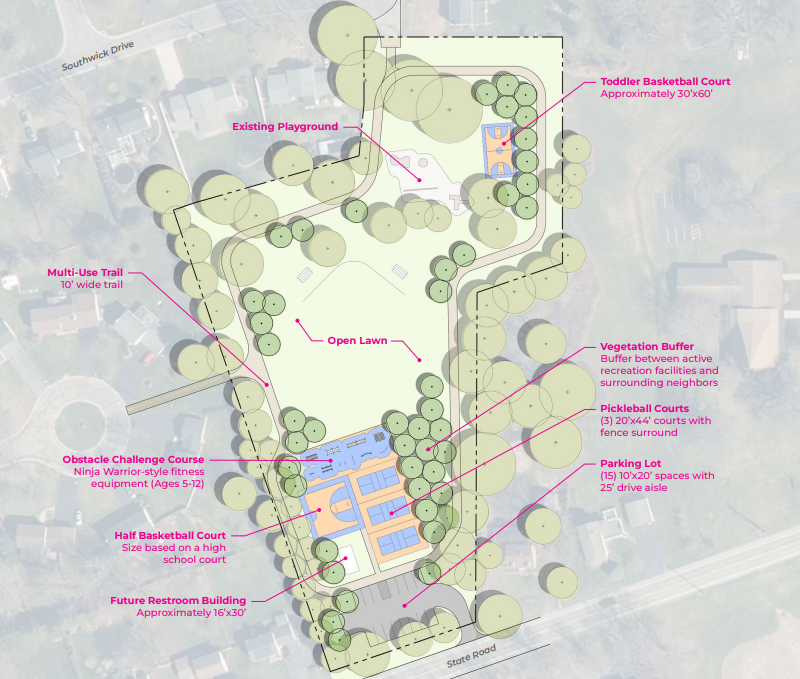
The map below shows these and other proposed improvements. Residents can continue to offer their comments or questions about the project using this online comment form.
The toddler basketball court is part of the Little Legends project, in partnership with the Rochester-based Knox & Nash Foundation, a non-profit organization that supports families navigating pregnancy, NICU, and infant loss. It was established by Codi and Andrew Mrozek in memory of their twin boys, Knox and Nash, who passed last January due to Twin to Twin Transfusion Syndrome. Codi is coach of the Webster Schroeder girls basketball team, and also a teacher in the district.
Codi and Andrew’s mission is to improve bereavement care for families experiencing pregnancy and infant loss, a loss in the NICU, and the loss of one or all twins or multiples. They plan to honor their sons with the new Little Legends playground and toddler basketball court at Schantz Park.
* * *
(posted 10/3/2026)
email me at missyblog@gmail.com. “Like” this blog on Facebook and follow me on Instagram and Threads (@missyblog)
You can also get email notifications every time I post a new blog by using the “Subscribe” link on the right side of this page (or all the way at the bottom of the page if you’re on your phone).
I heard some big news recently about the Joe Obbie Farmers’ Market, which right now calls Towne Center Plaza its home every Saturday morning. Next season, the market will be returning to the Village of Webster.
Beginning June 12, 2027, the Joe Obbie Farmers’ Market will be setting up at Spry Middle School, in the cafetorium parking lot right off of South Ave. It’ll still be on the same day (Saturday), at the same time (8:30 a.m. to 1 p.m.) and will have the same vendors you’ve come to know and love, plus some new ones.
The parking at Spry will be much easier and more plentiful, and I’ve heard unconfirmed reports that there will be food trucks at the new location as well. (Still trying to get more information about stuff like that.)
It’s also basically going to be right across the road from me, so I’m all for the move!
As I find out more about this change, I’ll let you all know.
* * *
email me at missyblog@gmail.com. “Like” this blog on Facebook and follow me on Instagram and Threads (@missyblog)
You can also get email notifications every time I post a new blog by using the “Subscribe” link on the right side of this page (or all the way at the bottom of the page if you’re on your phone).
Next time you take a walk through the Webster Arboretum on Schlegel Rd., you might find yourself stopping for more than just the flowers and trees. You might just lose yourself in rhyme.
Placed along the Arboretum’s gracefully winding paths is a series of five poems, the work of area authors, posted on handsome plaques adjacent to some of the park’s most picturesque features. They’re part of the Arboretum’s Poetry Trail, a community-driven space that blends the natural beauty of the park with local literature.
Opened in May 2025, the trail was spearheaded by Rochester-area poet Ron Friedman, who worked closely with the Arboretum’s Board of Directors to determine which poems would be used, where they would be placed and how the plaques would be designed. Ultimately, 11 poems were selected from hundreds submitted the previous spring, the chosen poets reflecting a variety of ages and talents, including one near the pond, called “If I Were a Butterfly,” written by preschoolers.
The trail currently features five of the chosen poems, each printed on a handsome brown plaque. In addition to the poem, there’s also a QR code which links to a recording of the poet reading his or her work. Reading the poem along with the author is a very calming experience. (The preschoolers’ poem doesn’t have a QR code, but you can see a video of the children reading it here.)
The trail itself stretches for a little less than a half mile, winding past the pond and the smaller gazebo, and across the covered footbridge. It only takes about 20 minutes to walk its length, depending on how long you pause to contemplate each poem. Most of the plaques are placed right on the gravel trail, which makes them very accessible. They’ve been installed at natural resting points, highlighting several of the Arboretum’s most beautiful locales.
In addition to the preschoolers’ butterfly poem, the four other poems are “Messages From the Garden” by Heidi Nightengale of Auburn, “Haiku Spring” by Rachel Ikins of Baldwinsville, “She Who is Sealed is Plastic” by Karen Faris of Rochester, and “Dear Arboretum in Webster” by Bobbie Dumas Panck of Malone.
Ron has six additional poems in reserve, which are currently “on the road,” having traveled to the Webster Schroeder High School library, the Webster Library, Monroe Community College, and the Before Your Quiet Eyes bookstore on Monroe Ave. He plans to rotate five of those into the Arboretum soon, to keep the trail engaging and feature a greater variety of poets. The posts themselves will remain in the same locations.
The map indicates the approximate location of each poem (click on it to enlarge it). The Webster Arboretum is located at 1700 Schlegel Rd.
* * *
(posted 7/13/2026)
email me at missyblog@gmail.com. “Like” this blog on Facebook and follow me on Instagram and Threads (@missyblog)
You can also get email notifications every time I post a new blog by using the “Subscribe” link on the right side of this page (or all the way at the bottom of the page if you’re on your phone).
One of the most colorful signs of summer in Webster is the return of the Joe Obbie Farmers’ Market to Webster Towne Center Plaza on Holt Rd. (in front of Old Navy).
The market opened for the season on Saturday, June 13, and will be set up every Saturday at the plaza from 8:30 a.m. to 1 p.m. through October, rain or shine. The very popular Evening in the Park Market will also return to Charles Sexton Park (formerly known as North Ponds) from 5 to 8 p.m. on Wednesday evenings beginning next week, July 15. These events also have live music and food trucks, so remember to pack your folding chairs!
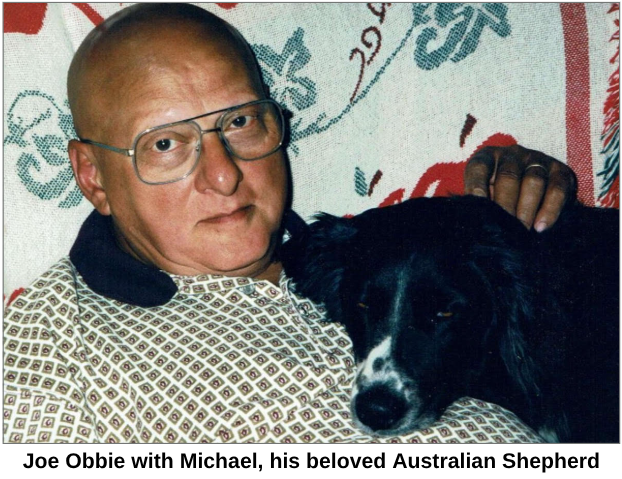
But today, I want to address a question I’ve had for a long time: Who WAS Joe Obbie and why is the market named after him? The answer was not hard to find; his son Mark has provided the background on the market’s website page. You can check that out for yourself, but I’m pleased to reprint that piece here:
The market began in 1983 when our father, Joe Obbie, saw a couple selling crafts outside his favorite Webster diner. He asked if he could join them to sell produce from his farm. By agreeing to let our father set up shop, they were doing more than just inviting in one farmer. They were tapping into a network of local farmers since our father was a lifelong resident of the town — and a master at social networking, motivated by a passion to preserve Webster’s farming heritage.
Joe started recruiting other farmers he knew, and the market was born. It moved to the other end of the same parking lot, where it remained for several years. Once it outgrew its corner of that village parking lot, it moved to another. Eventually, that proved too limiting as well. The expanded market finally found its current home, which had unlimited space for the many farmers and craftspeople who wanted to participate, and importantly, for their customers.
Webster had more than doubled in size during Joe’s adulthood since the 1950s, with housing and commercial developments crowding out farms and vacant land. Joe grew up on a small farm where his father, Charlie, grew potatoes and celery that he sold at the Rochester Public Market. Joe eventually became his father’s business partner, until their small farm proved inadequate to support Joe’s growing family and he went to work at the town’s biggest employer at the time, Xerox. In his later years, Charlie started a popular farm stand in front of his house to sell all kinds of vegetables. After he died in 1980, Joe, who lived next door and who had planted acres of grapes, apples, and garlic to serve as his retirement “hobby,” started his own farm stand.
Because there were fewer and fewer working farms in the town, Joe believed it was essential to give the many new residents of the town a way to connect with Webster’s farming heritage. Now, the farmers market gave him a way to spread that message to the entire community, and not just to the people who drove by his farm. He and our mother, Pat, worked tirelessly to recruit vendors and manage and promote the market for more than 20 years. When they were accompanied in their booth by one of us, by their growing brood of grandchildren, or by our younger adopted and foster siblings (Joe and Pat were longtime foster parents and ended up with a household of six or seven kids at any given time).
Just weeks after Joe died of cancer in 2005, our family gathered at the market to celebrate the unveiling of its new name: Webster’s Joe Obbie Farmers’ Market. There could be no more meaningful tribute to his life’s mission than to see that others, aided for many years by Pat, would carry on his work to sustain and improve the market. We are so grateful to the people who have carried that torch since 2005 and work so diligently to make the market a success.
In October 2023, Pat baked her last grape pies and cookies for the vendor booth she ran in the years since her husband’s death. Though she has now “retired” from the market, at age 86, we hope to talk her into coming to the 2024 market (and beyond) to greet customers and tell the story of how this market grew from one farmer to many.
Mark Obbie
* * *
(posted 7/9/2026)
email me at missyblog@gmail.com. “Like” this blog on Facebook and follow me on Instagram and Threads (@missyblog)
You can also get email notifications every time I post a new blog by using the “Subscribe” link on the right side of this page (or all the way at the bottom of the page if you’re on your phone).
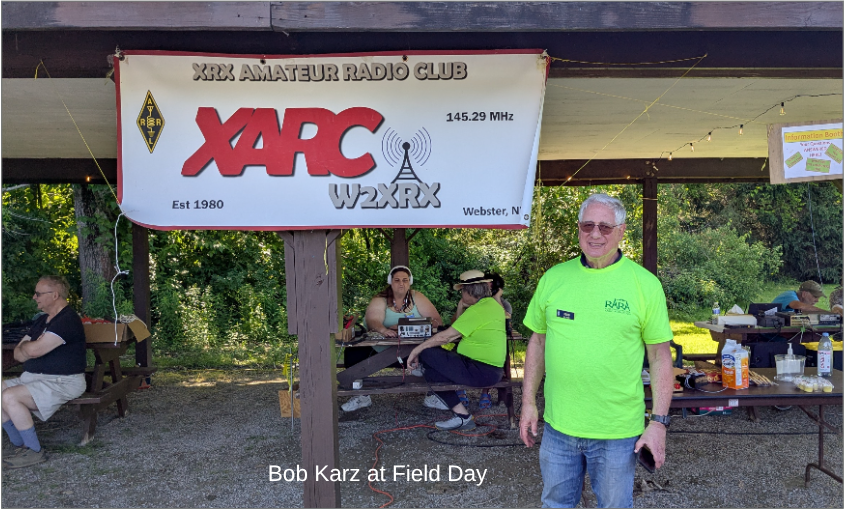
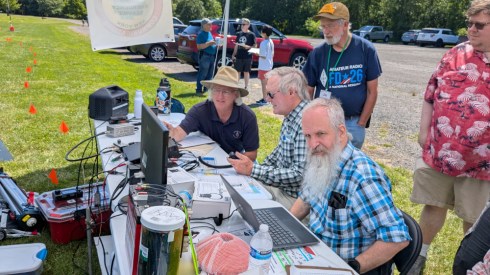
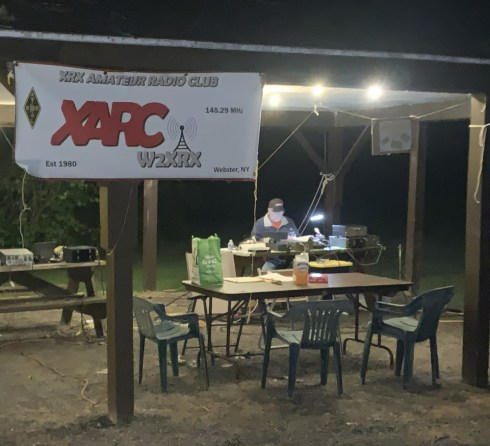
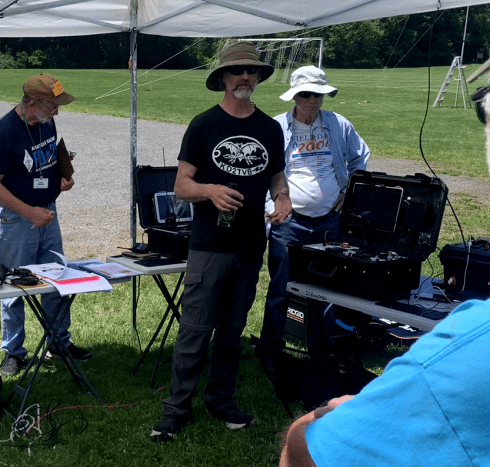
I had the great opportunity once again this year to attend the annual XRX Amateur Radio Club Field Day, held Saturday through Sunday, June 27 to 28. This is basically a ham radio marathon event, designed to replicate setting up communications in emergency conditions.
I took a lot of notes and many photos, but instead of trying to sum up the event from my less-than-knowledgeable perspective, I will once again this year share with you the follow-up report prepared by Field Day Chair Bob Karz:
* * *
For amateur radio, the most important time of the year is the fourth full weekend in June. Over 30,000 of us across the US and Canada set up more than 1,000 temporary stations completely off the grid, typically in parks and other public spaces, making contact with each other as well as international stations. The event is called “Field Day,” and an important objective is to test our readiness to provide radio communication in the event of a natural disaster or other emergency.
Last weekend marked the sixth year that the Rochester Amateur Radio Association (RARA), Monroe County Amateur Radio Emergency Services (MCARES), and the XRX Radio Club have sponsored an amateur radio Field Day at the north end of Webster’s Kent Park. Thirty-nine local amateurs participated this year in perfect weather — not too hot, not too cold, and no rain.
The disastrous Venezuelan twin earthquakes just three days earlier remind us about why emergency communications are essential during a natural disaster. Venezuelan radio amateurs are continuing to work to deliver health and welfare messages throughout the earthquake area. To facilitate their work, certain radio frequencies were declared off limits for this year’s Field Day so Venezuelan communications could continue unimpeded.
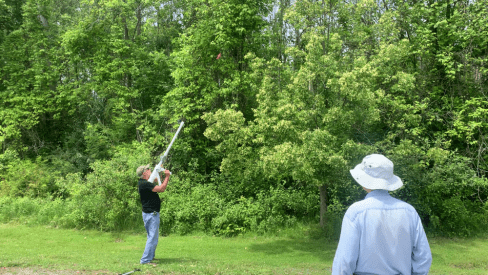
We began our Field Day set up on Friday morning stringing our wire antennas high in the trees. Rather than climbing them (difficult and dangerous), we use a homemade “air cannon” to launch a shuttle trailing fishing line into the canopy. The fishing line is replaced with string and then rope which supports our antennas.
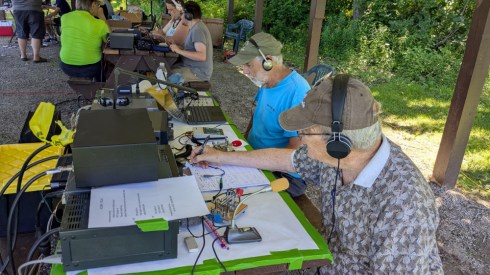
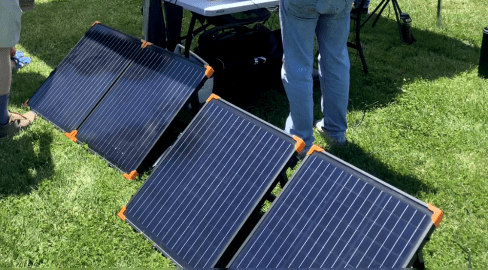
We set up five separate stations Saturday morning. Three used voice, Morse code, or a computer mode called FT8. The fourth station used voice only, and was exclusively for beginners. A fifth station was for very high frequency (VHF) relatively short-range communications (about 50 miles). We also set up two generators and various solar cell arrays for power and a computer network to log our contacts.
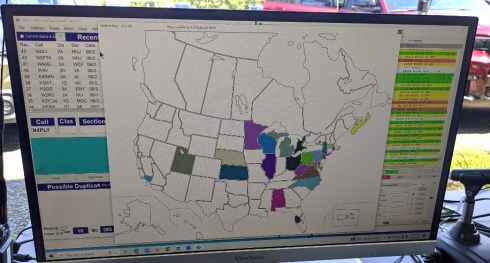
We began operations promptly at 2:00 pm, and over the next 24 hours made contact with 1,065 stations (165 more than last year) in every state except Wyoming, Nevada, and Alaska, most Canadian provinces, and the countries of Lithuania, New Zealand, Spain, Italy, England, Russia, Germany, Finland, France, and Indonesia. All contacts were completely off the grid as if there were a real emergency. We estimate that we will finish in the top 10 to 15% of about 320 Field Day stations our category.
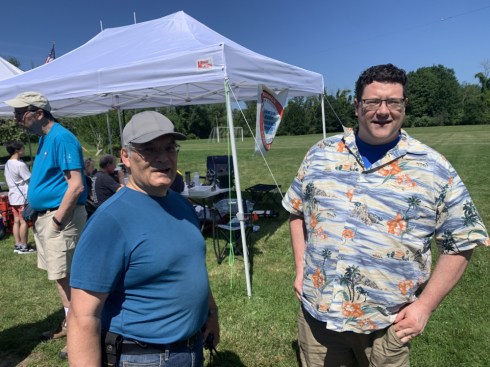
This year we welcomed visits by Webster Town Supervisor Alex Scialdone, Section Manager Scott Bauer (an officer in the Amateur Radio national organization), and Missy Rosenberry from Webster on the Web and her husband Jack. Field Day is always a good time to showcase our hobby, so we were pleased to welcome visitors from the nearby baseball tournament as well as others in the area who stop by.
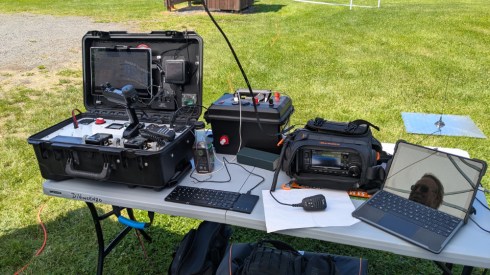
Field Day is more than radio contacts. It is also for showing off new equipment, like a measurement tool called a Vector Network Analyzer that tells how well our antennas are working, a small transceiver about the size of a paperback book with about the power of a nightlight that we used to make more than 30 contacts as far away as Missouri, and a keyer that generates Morse code without controls. Rather, you talk to it using (you guessed it) Morse code. We also heard a presentation about homemade “go boxes” with everything needed to get on the air (antenna, transceiver, computer, batteries, microphone, keyer, and all the connecting wiring) are together and ready to go for any emergency. Field Day is also food, lots of it, including a mobile kitchen to prepare real meals but also lots of snack food as well.
Field Day is just a sampling of what amateur radio is about. If you’d like to learn more visit arrl.org or rochesterham.org.
Here’s a whole slideshow of images from the day. Thank you to Bob for many of these:
The “go box” on display
Manning the “GOTA” station (“get on the air”) for newbies
Working the Morse code station
After just an hour, they’d contacted all these states
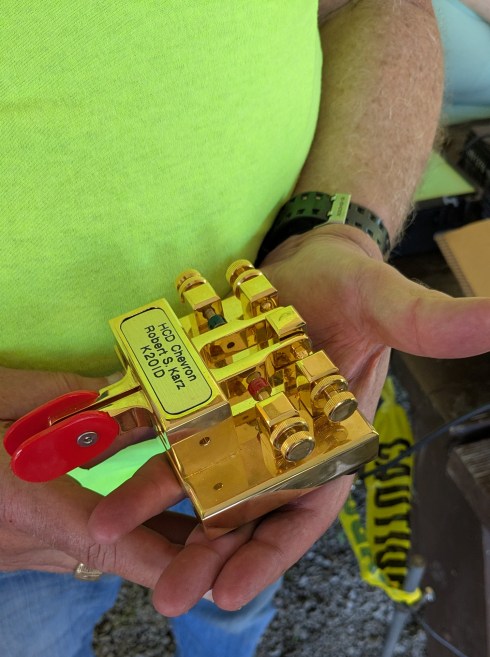
Bob Karz’s gold-plated keyer
Operating a station into the night
Joe Delorenzo shows Webster Town Supervisor Alex Scialdone the GOTA station
solar arrays
Peter Fournia using an air cannon
Sam Hartley demonstrates his Go Box
* * *
email me at missyblog@gmail.com. “Like” this blog on Facebook and follow me on Instagram and Threads (@missyblog)
You can also get email notifications every time I post a new blog by using the “Subscribe” link on the right side of this page (or all the way at the bottom of the page if you’re on your phone).
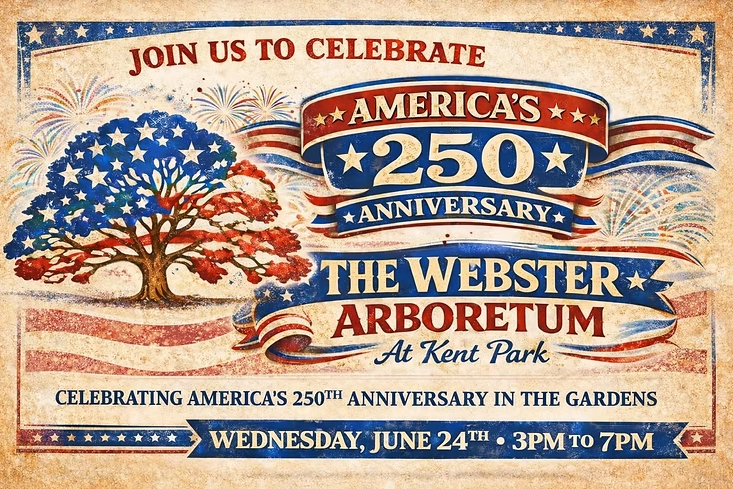
Our country is marking a HUGE birthday this year, and the Webster Arboretum’s planning an equally huge party to celebrate.
For four hours on Wednesday afternoon, June 24, the Arboretum will be filled with music, dance, storytellers, games, food trucks, kids’ activities, information tables from two dozen community organizations, and much more.
It all happens from 3 to 7 p.m. on Wednesday June 24 at the Arboretum, 1700 Schlegel Rd. A very entertaining variety of activities are scheduled all afternoon, so bring a folding chair for the music, and try to be there for as long as you can.
Here’s the whole schedule:
2:45 p.m.: Kidet Marching Band (WCSD’s elementary school marching band)
3 p.m.: VFW Patriot Guard
3 to 4 p.m.: Continental Army Tent with Michael Grenier
3:30 to 4:30 p.m.:Fathers’ Night Out in the gazebo (Dixieland band)
3:30 to 4 p.m.:Storytelling Circle withGanondagan (traditional Haudenosaunee stories)
3:30 to 4:30 p.m.Striking Strings dulcimer group (including harp, penny whistle, flute, guitar and marimba)
3:30 to 6:30 p.m.:Uncle Bucks food truck
4 to 4:30 p.m.:Life of the Seneca withGanondagan, a talk about the daily life of the Seneca
4 to 4:30 p.m. and 4:30 to 5 p.m.: Children’s Militia Program
4 to 5 p.m.: Paint-a-pot activity for kids
4 to 5:30 pm.: Guided tours of the Arboretum
4:30 to 5:30 p.m.: Dance Party with Dancing with Denise
4:30 to 6:30 p.m.: Poetry Trailguided tours
5 to 5:30 p.m.: Wildlife Rock Stars, exotic animals show-and-tell
5 to 6 p.m.:Story time with Nancy Nesbitt of the Webster Museum
5:30 to 6 p.m.:Flint and Steel presentation
5:30 to 6:30 p.m.: Flower-seed paper cutouts at the craft table
5:30 to 7 p.m.:Scoops ice cream truck
6 to 6:30 p.m.: Duck Derby! Purchase a duck and race them in the pond
6 to 6:45 p.m.:Webster Village Band
6 to 7 p.m.:Chorus of the Genesee, barbershop harmony
6:30 to 7 p.m.:Story timefor kids with the Webster Public Library
6:45 p.m.:Firing of the musket
Plus, all afternoon, you can check out incredible art displays with Joe Altieri, play lawn games with the kids, stop by the Patriotic coloring table, and try your hand at a scavenger hunt and history trivia quiz.
See? You’re not going to want to miss a minute of this event, so plan to come early and have dinner and dessert there. (P.S. make sure to stop by the Women’s Club of Webster information table and say hi to me!)
email me at missyblog@gmail.com. “Like” this blog on Facebook and follow me on Instagram and Threads (@missyblog)
You can also get email notifications every time I post a new blog by using the “Subscribe” link on the right side of this page (or all the way at the bottom of the page if you’re on your phone).
It’s a sure sign of spring when the Friends of Webster Trails (FWT) volunteers start ramping up their trail maintenance efforts. I learned all about them in the most recent Friends newsletter, which popped up in my email box the other day, my quarterly reminder of how lucky we are to have this organization in our community.
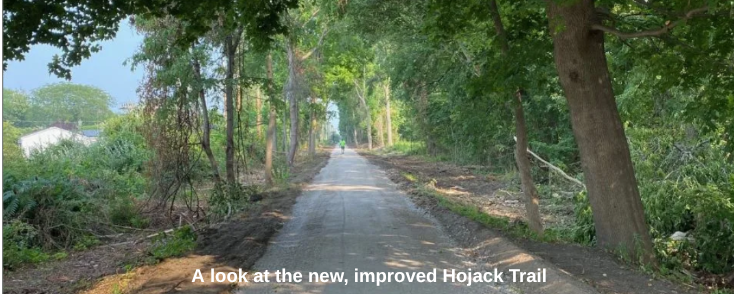
A large portion of the spring newsletter reviewed last year’s improvements to the Hojack Trail, the five-mile long former railroad bed that stretches from Lake Rd. at Forest Lawn to Phillips Rd. Those efforts included adding drainage and resurfacing the entire stretch between Holt and Drumm roads. It caused a little bit of disruption when portions of the trail had to be closed, but the results are fantastic. The trail has been busy all winter with walkers, runners, bikers, and cross-country skiers enjoying the new surface and improved drainage.
The work isn’t done quite yet, though. Later this spring, the Friends will be installing signage at each road crossing, and interpretive signs highlighting the history and the habitat of the trail. They’ll also be adding benches and planting scores of small trees and shrubs. A ribbon-cutting ceremony is being planned for later this summer, to officially reintroduce the new, improved Hojack to the community.
Improvements to the Hojack Trail were just a small part of what the Friends of Webster Trails accomplished last year, including:
Painting the kiosk at the Bird Sactuary Trail, and adding a map and history panels;
Adding an extension to the Herman Rd. Forever Wild Forest Green Trail;
Blazing a new side trail at the John Ungar and Michael Johnson Trails;
Adding a bridge at Vosburg Hollow (thank you Eagle Scout Jacob Bowen), connecting that trail from the Hojack to Gosnell Big Woods; and much more.
Plans for this spring and summer are no less ambitious. Upcoming projects include improving the Red, Blue and Green Trails at Herman Rd. Forever Wild Forest; adding a new boardwalk and walking stick station to State Rd. Nature Preserve; keeping the trails free from downed trees; and many more. And of course, the Friends’ ReTree volunteers will continue their incredible work, raising and planting a variety of native trees.
We have an amazing trail system in our town, and I hope you can see now that the Friends of Webster Trails are the folks to thank for that. These dedicated volunteers are committed to planning, maintaining, and promoting our trails, and advocating for the preservation of the natural character of Webster’s open spaces.
Our trails provide close, easy, and free opportunities for exercise and to spend time in nature for people of all ages. If you’re a regular user of any of Webster’s 28 miles of trails, please consider showing them some love by becoming a member of the Friends. It doesn’t cost much (really, just $15 for an individual or $20 for a family) and the funds go directly to making our trail system better for everyone to enjoy.
email me at missyblog@gmail.com. “Like” this blog on Facebook and follow me on Instagram and Threads (@missyblog)
You can also get email notifications every time I post a new blog by using the “Subscribe” link on the right side of this page (or all the way at the bottom of the page if you’re on your phone).
Winter is actually a great time of year for a hike. Our already beautiful local parks and preserves become even more spectacular under a layer of snow. They’re so unbelievably quiet and peaceful that sometimes the only thing you can hear is the ice cracking under your boots. As long as you’re bundled up against the cold and have some good boots (and traction cleats), a winter hike is nothing less than food for the soul.
If you like that idea but aren’t sure where to start, the Friends of Webster Trails would like to invite you to a stroll through one of our town’s newest trail systems, the State Road Nature Preserve. The hike is scheduled for this Saturday, Feb. 7 from 10 to 11 a.m. at the preserve, 1571 State Rd.
The family-friendly, guided hike will take participants through most of the preserve’s trails (measuring a bit more than one mile). If there’s snow (which there likely will be), you’ll look for animal tracks as you traverse a hidden trail network. Make sure to dress in layers and have traction devices for your feet if necessary. Well-behaved, leashed dogs are welcome.
There’s no charge for the hike, but please register here so the Friends know how many to expect. More information about winter hiking safety can be found here.
Can’t make it to State Rd.?
If you like the idea of a winter hike but can’t make it to the State Rd. guided hike this weekend, consider the Friends’ Loop of the Month, described in the Friends’ February newsletter:
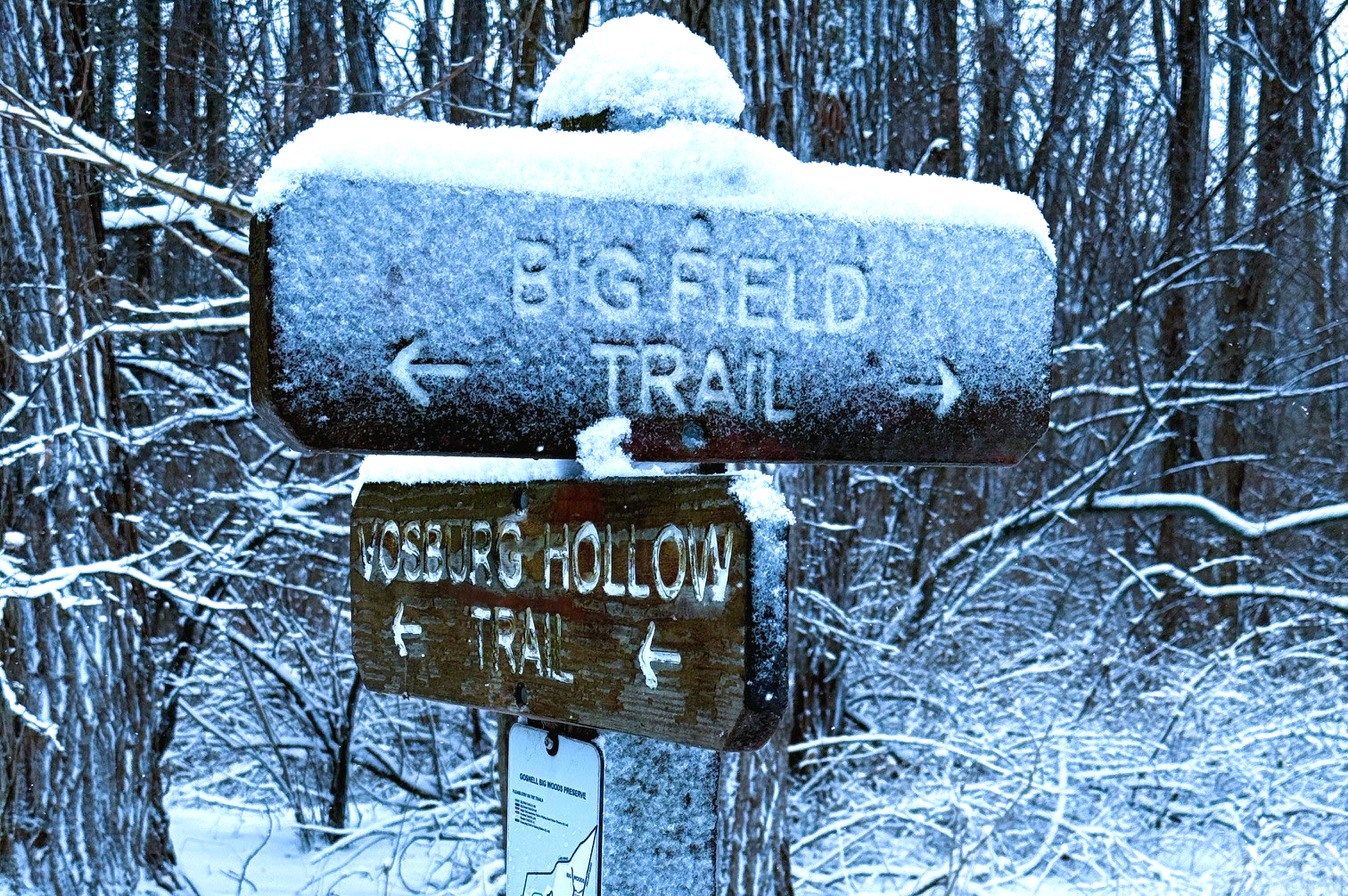
With winter conditions still in place, flatter trails are often the best choice when dealing with ice and snow. Consider starting at Gosnell Big Field. From there, you can follow the connector path into Vosburg Hollow, then continue on to the Hojack Trail. This loop is approximately 2.5 miles,with the option to add extra distance by heading farther along the Hojack Trail before turning back. This loop offers flexibility, scenic views, and a great way to enjoy the trails safely during the winter months.
If trail conditions are icy, an easier option is to walk through Vosburg Hollow, cross the bridge, through the parking lot, up the connector trail onto the Hojack Trail. Be aware that Vosburg Hollow includes a few hills that may be slippery in winter conditions, so use caution.
Trees in your way on the trail?
If you ARE a regular hiker and frequently enjoy Webster’s amazing trail system, no doubt you’ve come across a tree or two blocking the path. Ash trees especially like to topple in high winds.
If you do see something like that, the Friends would really like to know about it. You can email them here, with the following information:
The preserve name
The trail where the tree is located or drop pin
A photo if you can. That way they can bring the proper equipment to take care of the job.
Extra eyes on the trails help the Friends respond more quickly and keep the trails safe for everyone. (And P.S. try to avoid walking in the woods during high winds.)
Become a Friend
If you’d like to keep tabs on all of the latest news from the all-volunteer Friends of Webster Trails, including advance notice of special events, consider joining the organization and you, too, will get their monthly newsletter. It’s only $15 for individuals, $20 for families, and worth every penny. Click here for more information.
* * *
(posted 2/3/2026)
email me at missyblog@gmail.com. “Like” this blog on Facebook and follow me on Instagram and Threads (@missyblog)
You can also get email notifications every time I post a new blog by using the “Subscribe” link on the right side of this page (or all the way at the bottom of the page if you’re on your phone).
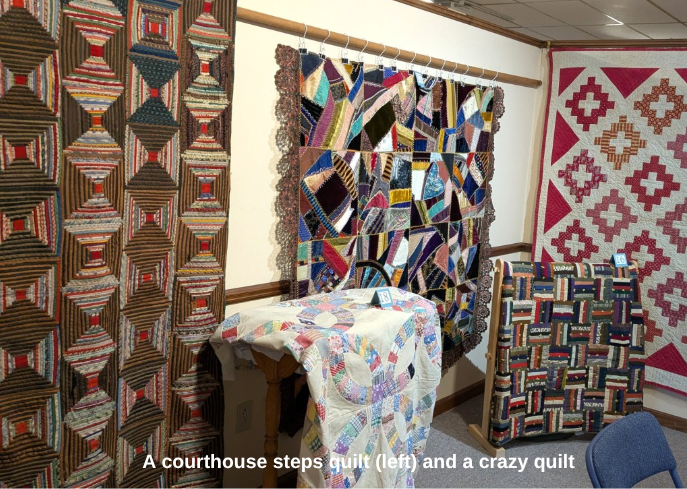
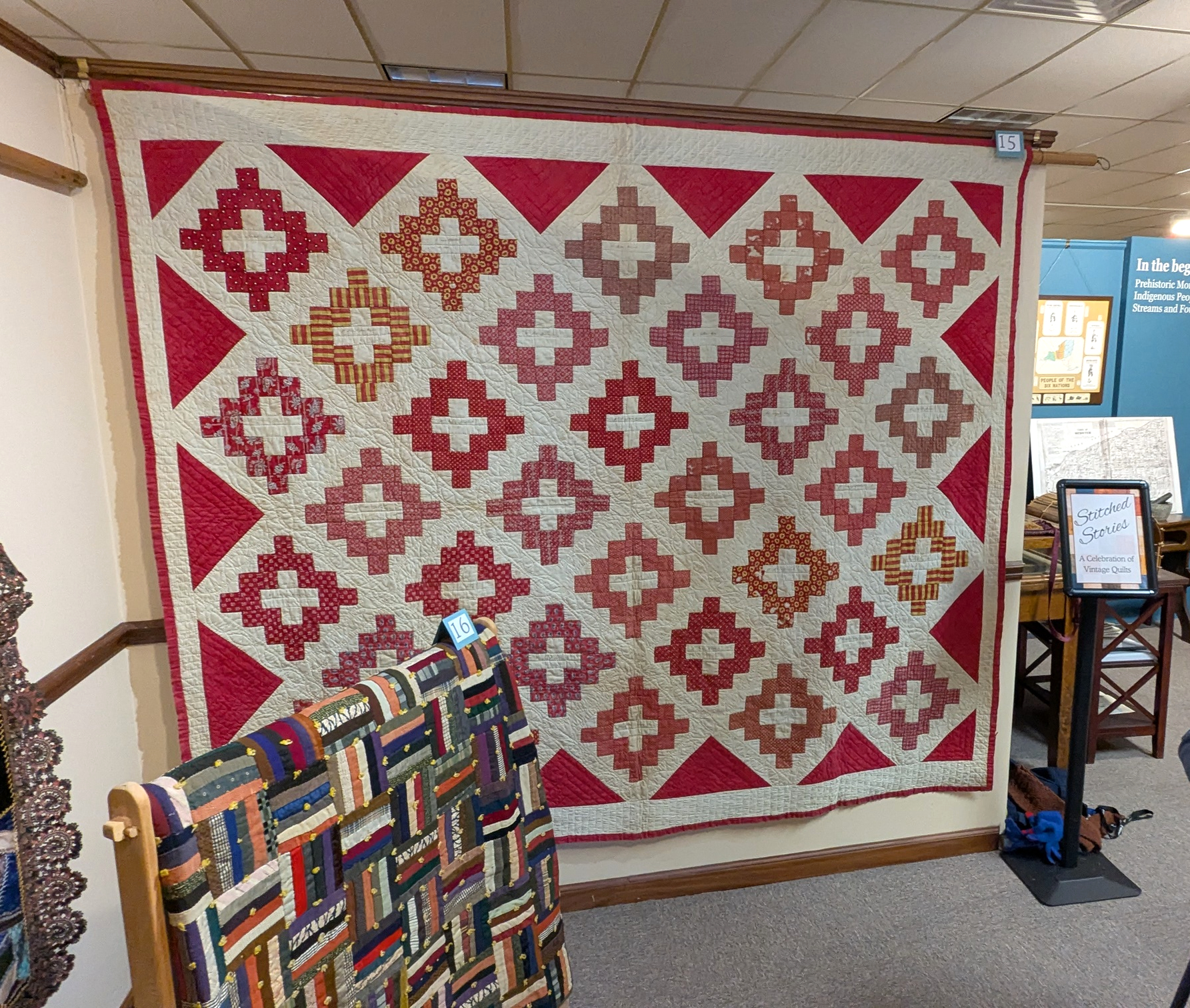
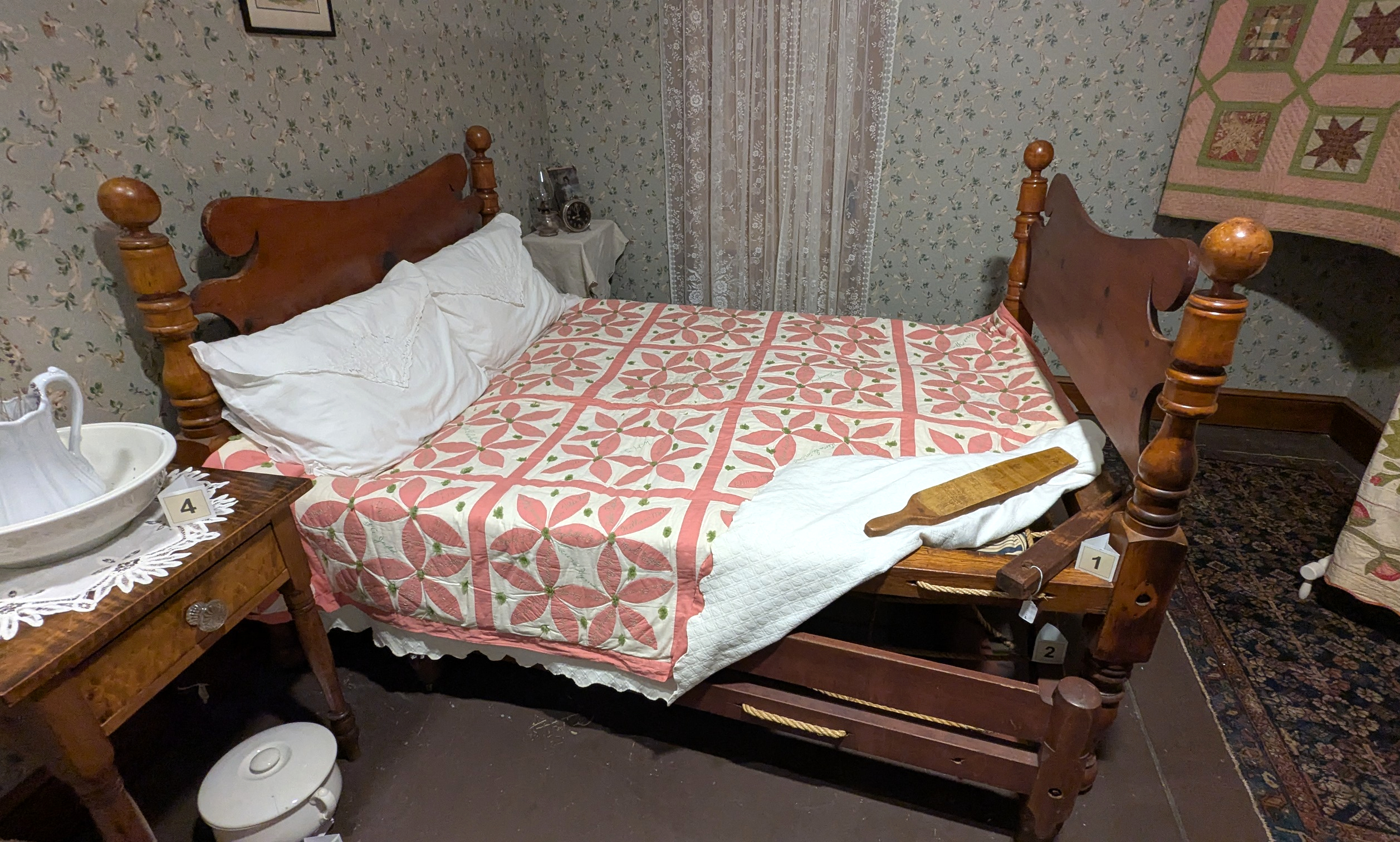
The Webster Museum’s annual Quilt Exhibit — called “Stitched Stories” — has returned, and if you love anything and everything about quilting you’re not going to want to miss it.
Stitched Stories offers an illustrated journey through Webster’s history, told through the evolving designs, colors, fabrics and intricate patterns of heirloom quilts. Over the years, the museum has been the fortunate recipient of many vintage quilts. Most are documented in detailed binders that include their history, the artisans who created them, and, in many instances, their appraised value. These textile treasures capture decades of Webster history in their stitches.
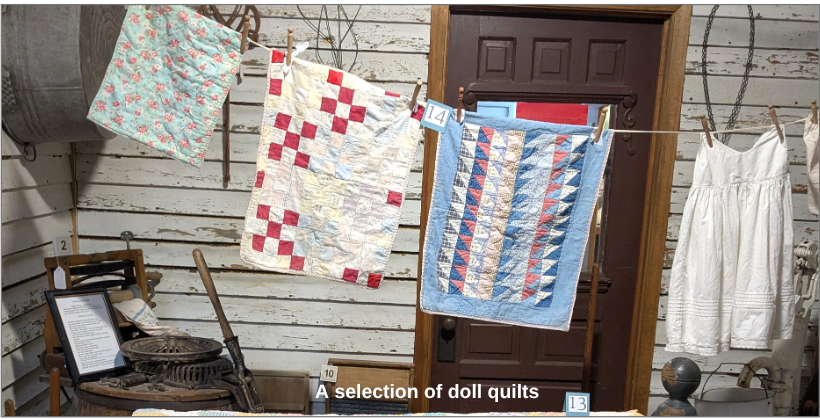
More than 20 quilts of different sizes have been placed on display throughout the museum, from doll-sized mini-quilts, to a small cot quilt, to a full-sized courthouse steps quilt. They hang in exhibit cases, decorate the vintage parlor and bedroom, and adorn walls and railings. With some pieces dating back over 170 years, each stands as a testament to months of patient needlework and intricate craftsmanship.
I stopped by the museum on Tuesday afternoon to see the exhibit for myself, and discovered how LITTLE I know about the history of quilting. For example, there are so many different designs, popular during various times — like the wedding ring design, flying goose quilt, nine-patch quilt, crazy quilt and the “beginner friendly” courthouse steps design. (I did not consider that anywhere near beginner friendly myself.)
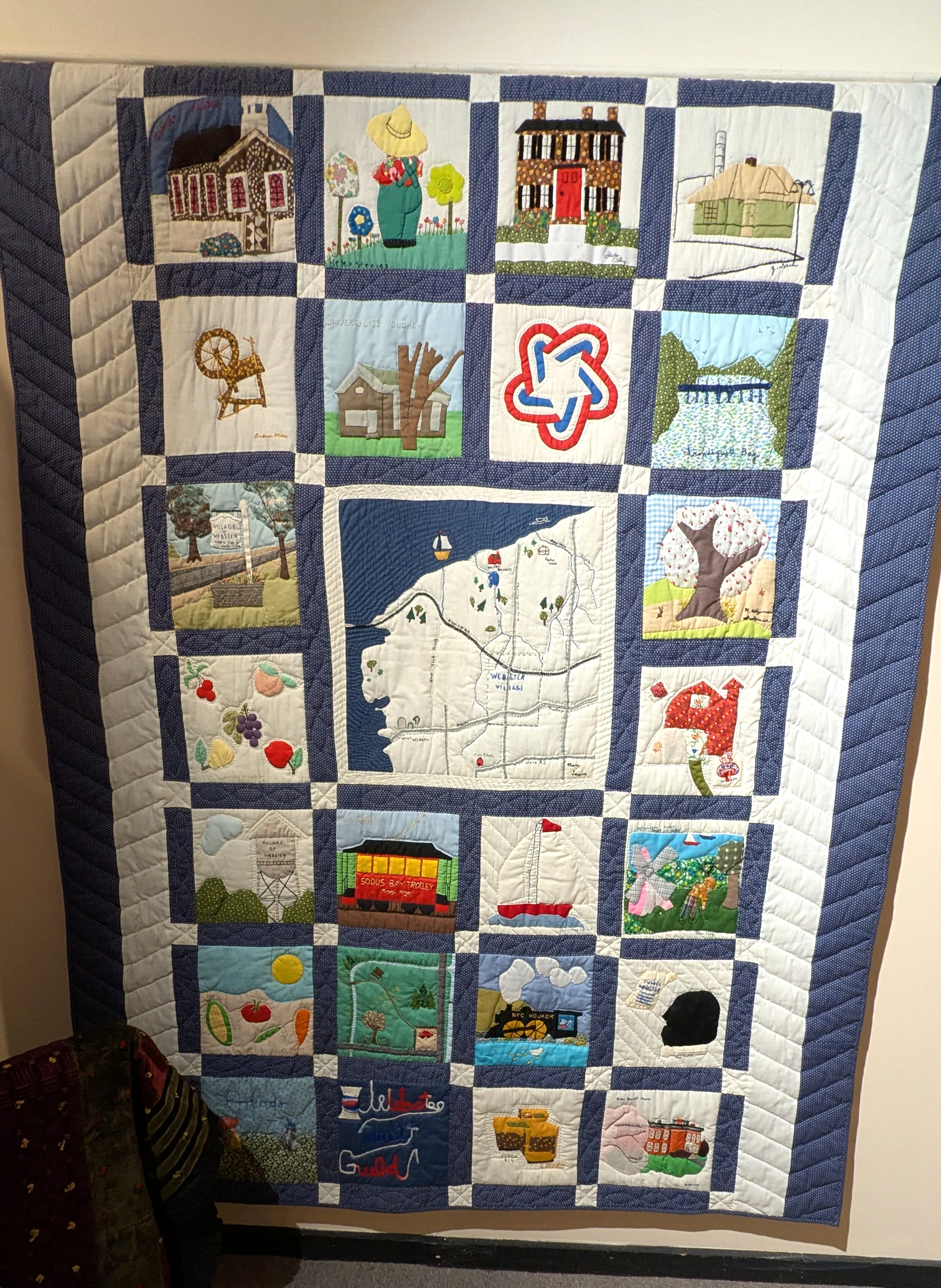
The Woodhull quiltBicentennial quilt
Some of the history was very interesting. The tiny doll quilts, for example, were popular from the late 1800s to the mid-1900s, often made by young girls just learning to sew. Cot quilts, used on a small bed or cot, were just the right size for a soldier in the Civil War to tuck into his backpack. The album panel quilt, crafted by Minerva Green Woodhull, has writing on it by her father-in-law, Byron Woodhull, who was Webster’s first supervisor. And I particularly liked the Webster Bicentennial heritage quilt, depicting a Webster map and squares representing historical highlights, made in 1976 by members of the Webster Quilt Guild.
An informative binder near the museum’s front entrance provides some background about each of the quilts on display. There’s even more information about each in the museum’s library, if you’re interested. Just ask one of the volunteers about that.
The Webster Museum is located at 18 Lapham Park, in the Village of Webster. They’re open Tuesday, Thursday and Saturday from 2 to 4:30 p.m.
* * *
email me at missyblog@gmail.com. “Like” this blog on Facebook and follow me on Instagram and Threads (@missyblog)
You can also get email notifications every time I post a new blog by using the “Subscribe” link on the right side of this page (or all the way at the bottom of the page if you’re on your phone).
I feature the people and places and events that make Webster the wonderful community it is — and throw in some totally-not-Webster-related personal ramblings every once in a while as well.
I love it when readers send me news about the great things happening in their schools or the community, so please email me anytime at missyblog@gmail.com