When the skeletons show up on Holt Rd., you know it’s almost Halloween.
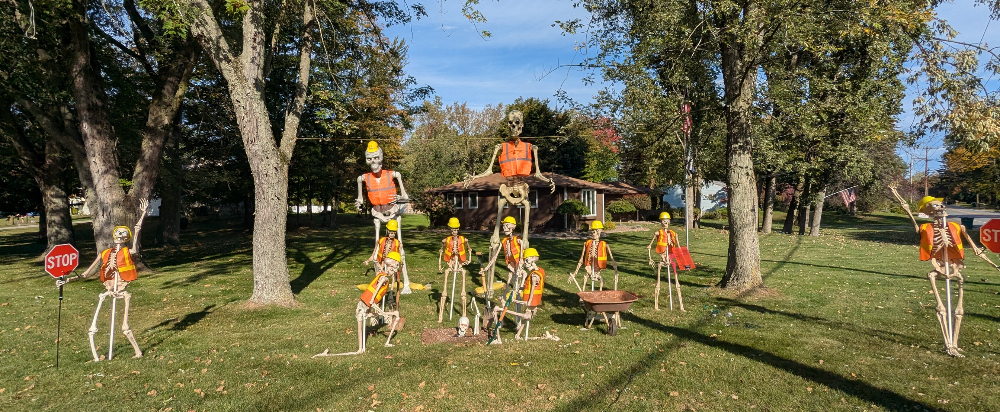
Anyone who regularly travels down Holt Rd. is almost certainly familiar with the imaginative skeleton display erected every year at the corner of Holt and Klem roads. They’re the work of George Baker and Melissa Baker and their family, and for the last four years they’ve been bringing smiles to the faces of children and adults alike.
George started erecting monstrous skeletons in his front yard for Halloween in October, 2023. At first, it was just one really big one, the big daddy of them all, standing a full 12 feet tall. That humongous skeleton alone, with its glowing eyes, drew a lot of comments and happy honking from the drivers passing by. So of course, he couldn’t stop there.
Every Halloween since, that Big Daddy skeleton has returned, joined by an ever-growing supporting cast. And each year, the menagerie is set up in a brand new creative and humorous display. Last year, the skeletons were recklessly competing in a bike race. The year before, they were playing on a playground and splashing in a kiddie pool.
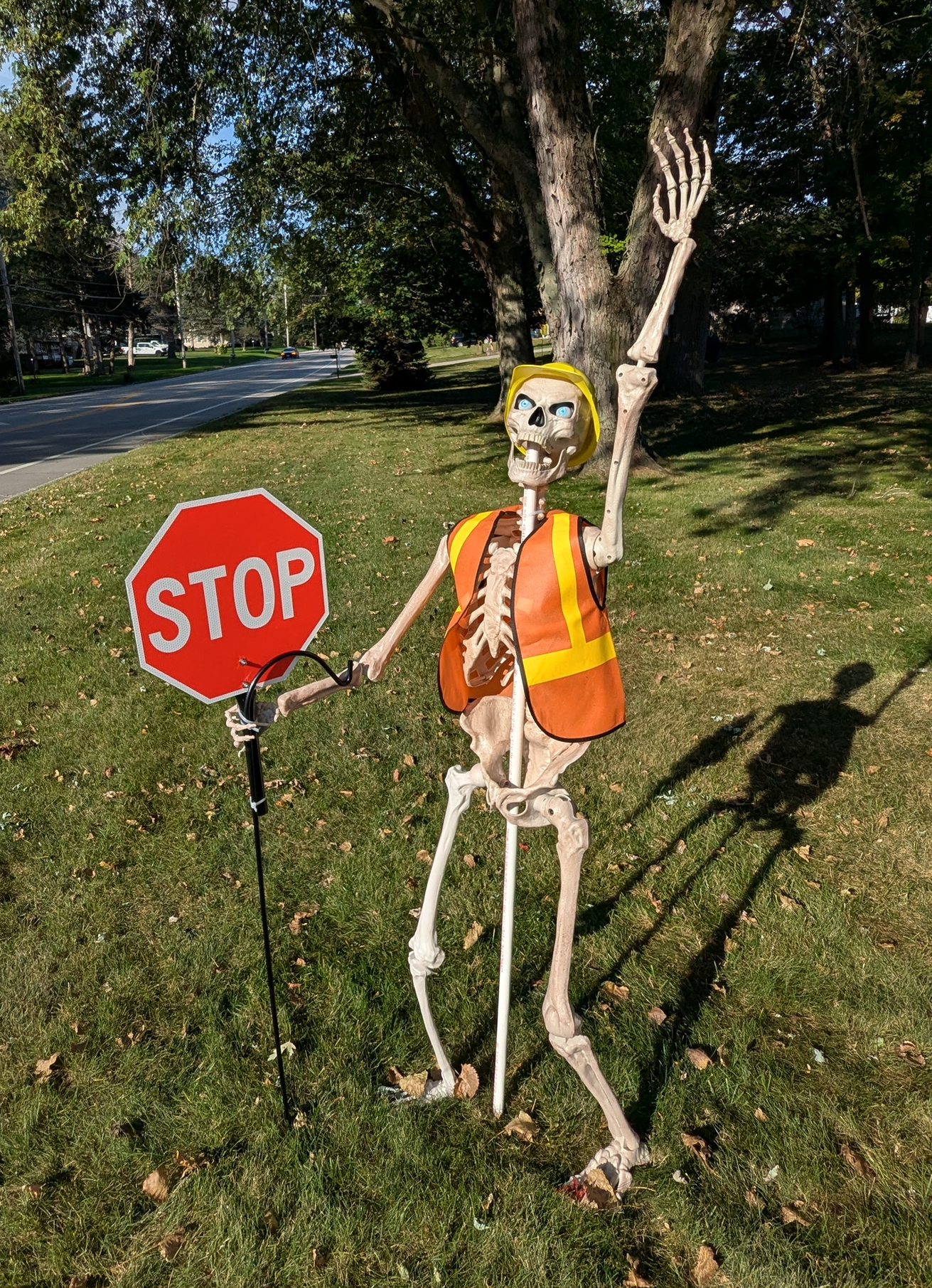
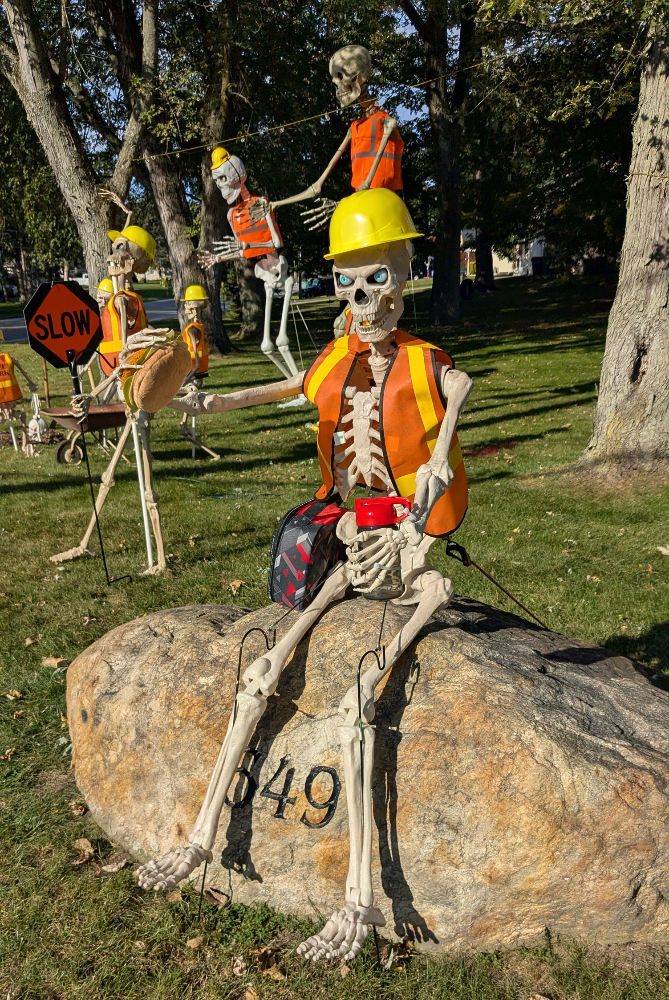
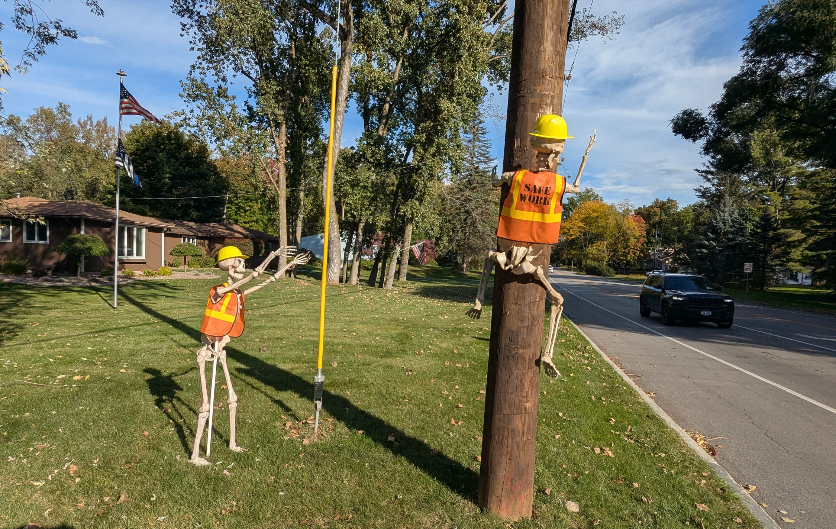
This year, it seems the skeletons have stopped playing and finally found gainful employment. This Halloween they’ve taken on the roles of construction workers. A dozen 6-foot skeletons and two monstrous ones make up this year’s display, complete with bright orange construction vests and hard hats. A few are stopping traffic, several are peering at a skull which has appeared in the hole they’ve dug, one is climbing a pole, one is on his lunch break, and another (holding a clipboard) is clearly the supervisor. The two monstrous skeletons are keeping a close eye on the whole scene.
George Baker, who was a utility worker before he retired, came up with the idea way back in January. They were able to purchase all the hard hats and vests they needed on Amazon (even the huge ones, sizes 4X and 5X). And since the costumes came in sets of 12, they had to add a few more smaller skeletons to wear them.
As the season approached, finalizing the details was truly a family effort. Everyone pitched in with ideas as the project progressed. Then they all got together on Sunday Oct. 4 to put the whole scene together, in a work session which began at 11 a.m. and continued until after dark.
Melissa Baker wrote, “It is a lot of work, but well worth the joy and pleasure it brings to all who drive by. As we set up, people are honking, hooting and hollering and giving us a thumbs up. It’s great to see the smiles on everyone’s face. All the positive comments on social media also make our efforts well worth every minute. It is a great family bonding activity also.”
Thanks so much to George and Melissa Baker and their dedicated team of helpers: Ryan Moorman, Brendan Moorman, Nolan Moorman, Richard Moorman, Alicia Moorman, Brianna Bouwens and Chad Baker. Your efforts are bringing smiles to everyone who passes by.
Check out the display for yourself. It’s located at the corner of Holt and Klem Rds., and you are more than welcome to stop by and take a selfie.
* * *
email me at missyblog@gmail.com. “Like” this blog on Facebook and follow me on Instagram and Threads (@missyblog)
You can also get email notifications every time I post a new blog by using the “Subscribe” link on the right side of this page (or all the way at the bottom of the page if you’re on your phone).
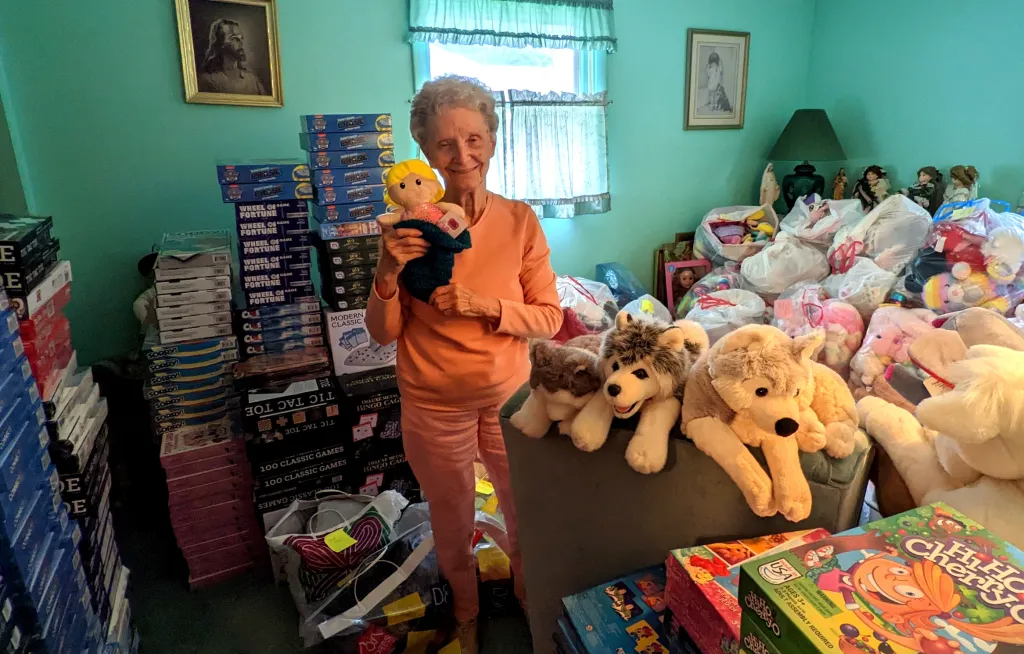
When last we heard from Florence Kinney, Webster’s “Mrs. Claus,” it was November 2022, when I wrote a blog about how this amazing woman had just achieved her equally amazing goal of delivering 100,000 gifts to children in need.
Florence Kinney is the driving force behind a grassroots ministry which she calls “Santa’s Workshop,” dedicated to bringing presents to children who might not get many gifts, or anything, for Christmas. It began in 2003, with the purchase of just two toy trucks for two brothers who would be spending Christmas in the hospital. The effort grew every year, to the point where, four years ago, she had distributed more than 100,000 gifts. (Click here to read more about Florence and how she got started.)
But there was no way she was going to stop there. Now in her 37th year of ministry, Santa’s Workshop has provided more than 112,000 gifts to local hospitals, Williamson Come-Unity Center, Cure Childhood Cancer, Ronald McDonald House and other Rochester-area organizations.
Right now, Florence is beginning to ramp up her 2026 effort, and she could use our community’s help. As prices go up on pretty much everything, the cost of games has become more and more challenging (and Florence buys almost all of the gifts she distributes). Her elves have set up an Amazon Wish List where you can purchase items directly. Or if you’d like to go out and shop on your own, the games the hospitals request most are Candyland, Count Your Chickens, Four in a Row, Tic-Tac-Toe, Trouble, Hi-Ho Cherryos and Magna Doodle boards, Uno and Bingo.
Also, if anyone knits baby/child hats (any size), scarves or mittens, Florence likes to include these with her gifts. If you’d like to donate some, the hospitals will certainly appreciate them.
If you have any questions, feel free to call Gail Fannis at 585-329-6511.
* * *
email me at missyblog@gmail.com. “Like” this blog on Facebook and follow me on Instagram and Threads (@missyblog)
You can also get email notifications every time I post a new blog by using the “Subscribe” link on the right side of this page (or all the way at the bottom of the page if you’re on your phone).
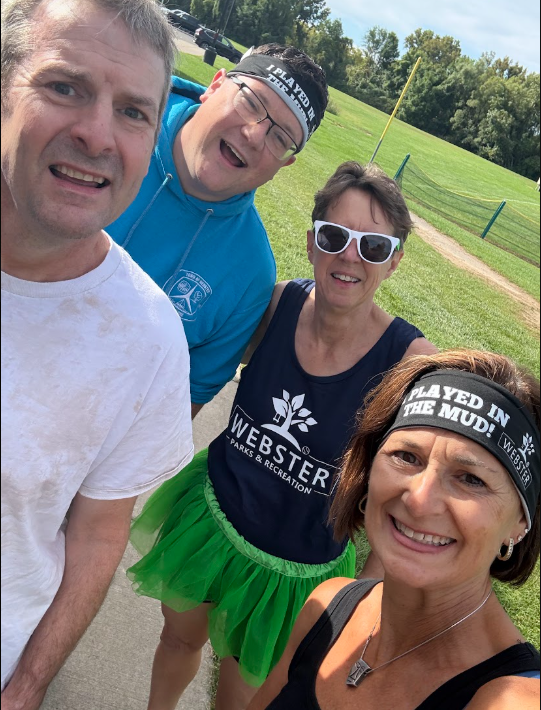
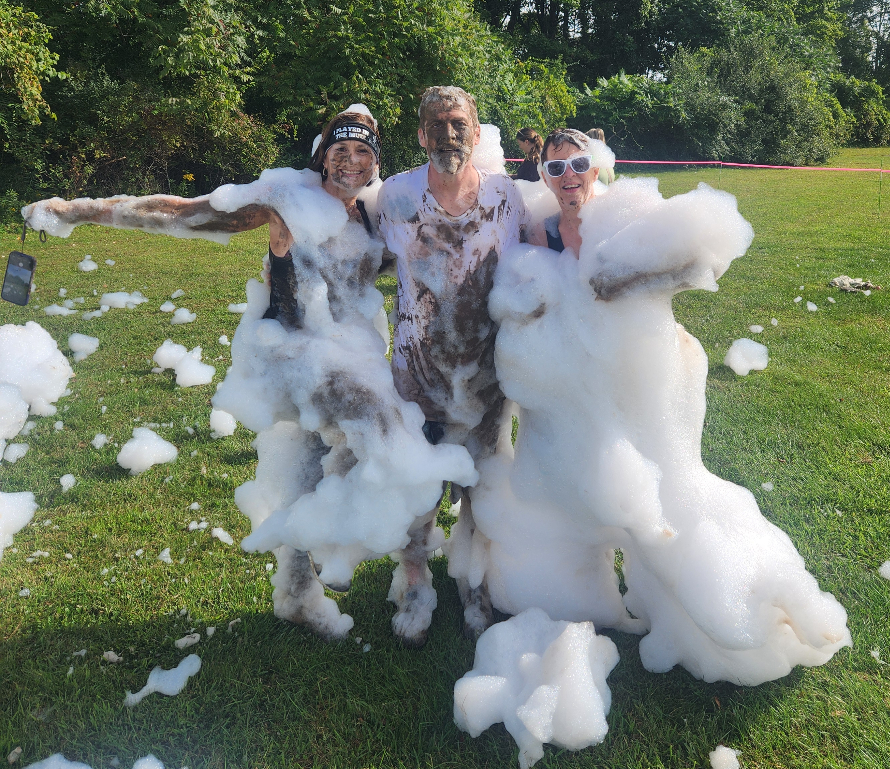
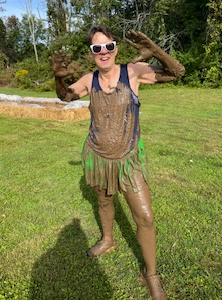
Before the run …… and after (photo courtesy J. Verna)
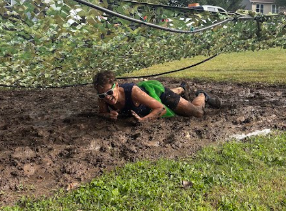
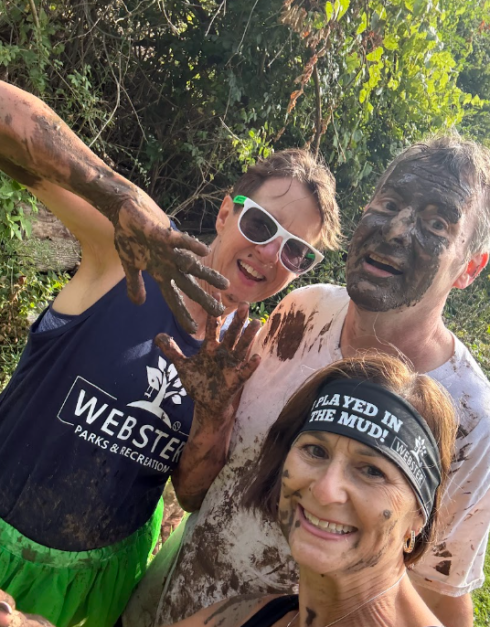
I have to say, I was NOT planning to write a follow-up blog to last Saturday’s super incredibly fun Mud Run at the Webster Recreation Center. But then my email and texts started filling up with photos from the event, and as I went through them I knew I needed to share them with you all.
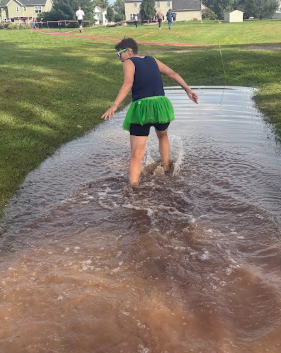
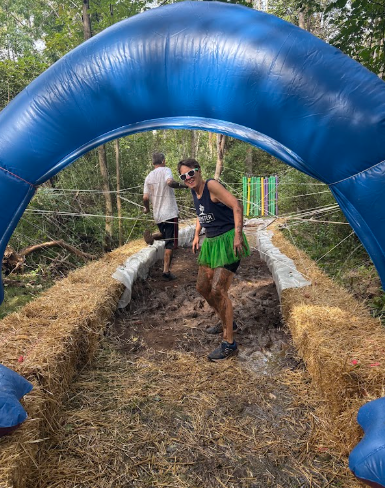
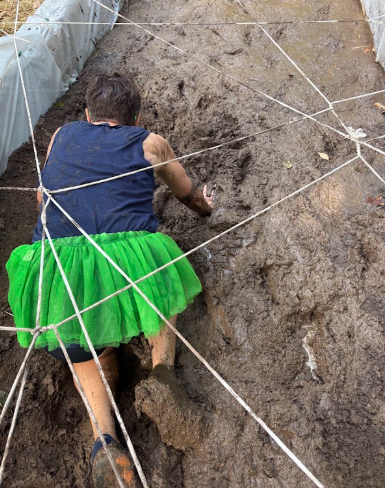
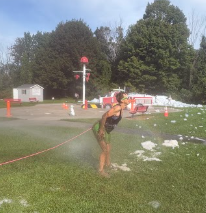
The Mud Run — if you’re still not familiar with it — is an annual half-mile (or so) fun run/walk around the trails in back of the Webster Recreation Center, where participants splash through water, crawl through mud, maneuver through a string maze, clamber over hay bales, hop through tires, and manage a few other obstacles before being engulfed by a huge pile of suds, then sprayed off by the Webster Volunteer Fire Department. The goal for almost everyone, especially the kids, is to get as muddy as possible.
It’s exactly as much fun as it sounds. And (BONUS!) at the end, the Rec Center was handing out fried cakes, apples and t-shirts.
I “ran” the run with my friends Kevin and Denise, but also saw a lot of other friends and neighbors there, including Webster Town Supervisor Alex Scialdone, who gamely muddied himself as well. Denise kept her phone with her through the entire course, which I thought was extremely brave. She took most of the photos you’ll see here, unless otherwise noted.
And of course I wore a tutu.
The necessary fire dept. spray-down
This was an incredible family event, and I highly recommend you put it on your calendar for next year. It’s usually scheduled for the third Saturday in September.
* * *
email me at missyblog@gmail.com. “Like” this blog on Facebook and follow me on Instagram and Threads (@missyblog)
You can also get email notifications every time I post a new blog by using the “Subscribe” link on the right side of this page (or all the way at the bottom of the page if you’re on your phone).
Wednesday night’s storms were no joke. The severe thunderstorm warnings and tornado watches (and then warnings in some places) weren’t kidding this time. Rarely during these events do I lose power (thank you Village of Webster) and have little damage aside from small branches, twigs and leaves littering the yard.
Wednesday night, though, we weren’t so lucky.
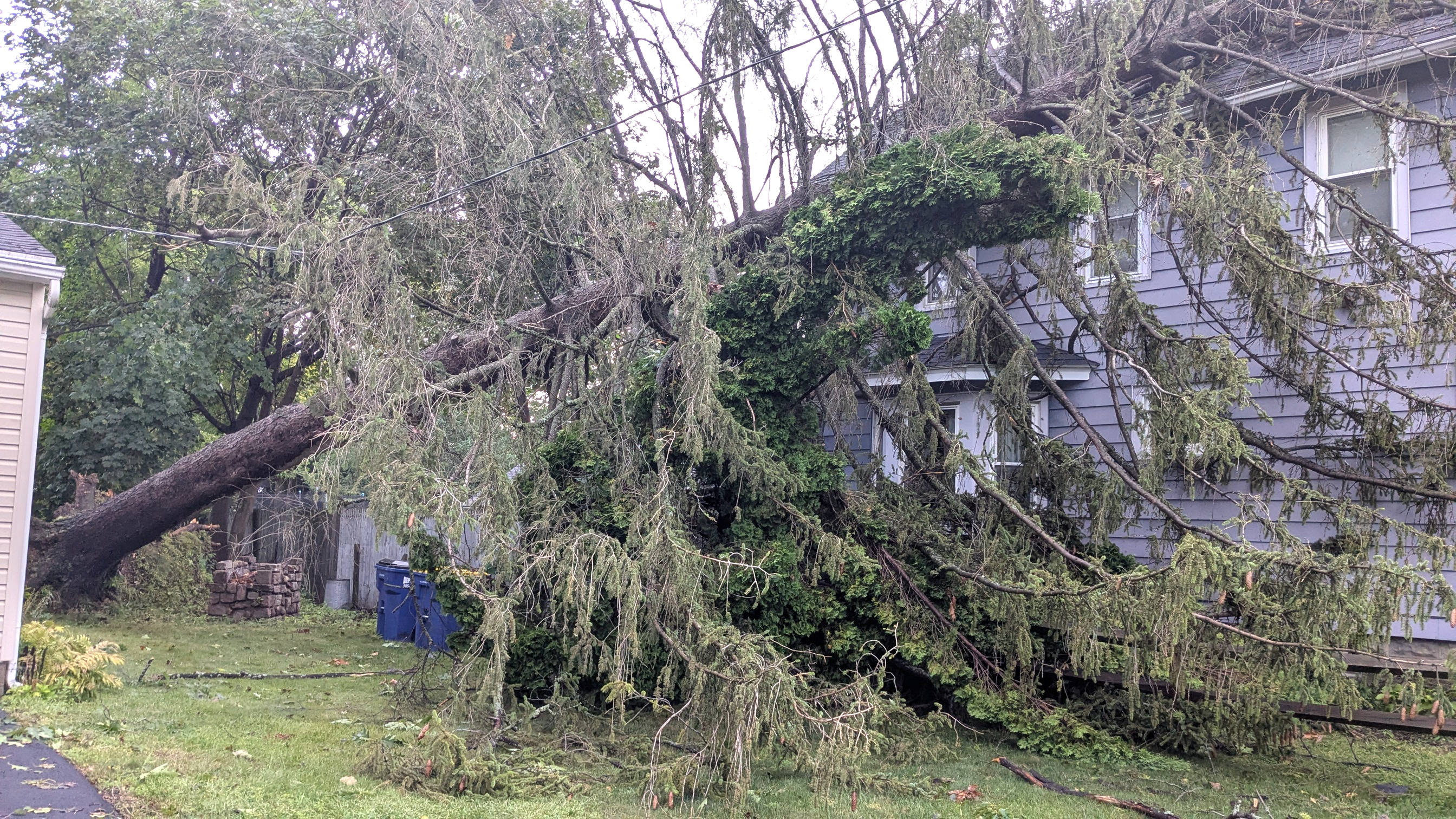
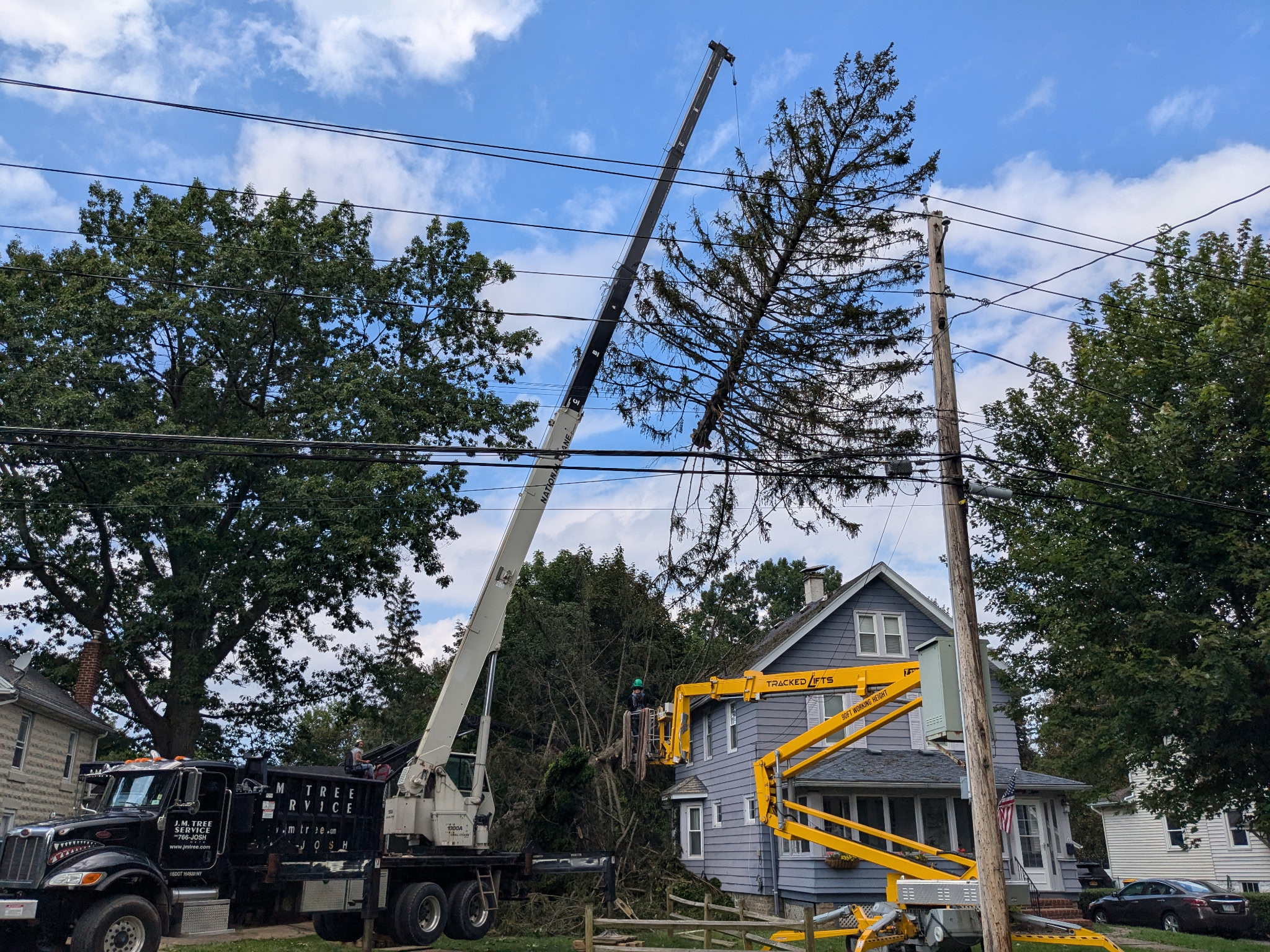
I was sitting on my enclosed front porch with a few friends, sipping some wine and watching the lightning, when the power went out. Didn’t bother me; when that happens it’s usually only for a short time, and in the meantime it’s like camping. But, shortly thereafter, we heard a huge crash come from beside my garage. Seems that one of our trees had decided to make an unannounced visit to my neighbor’s roof.
A few of us ran outside to assess the situation, which proved somewhat difficult in the still-driving rain. Sure enough, our really big white pine had become uprooted, and much of it was resting atop our neighbor’s house. As adults do, we reconvened on the porch to discuss the ramifications of this disturbing event — and finish our wine.
After a while, the rains relented, my friends headed to their Fairport home (where they still had power), and my husband Jack went next door to check on the neighbors, Matt and Kari. Great neighbors that they are, they took the whole thing in stride, and laughed about how snake-bitten they seem to be when it comes to natural disasters and their homes. The tree had managed to punch a small hole in their roof, so Matt had already contacted his insurance agent, already putting things in motion.
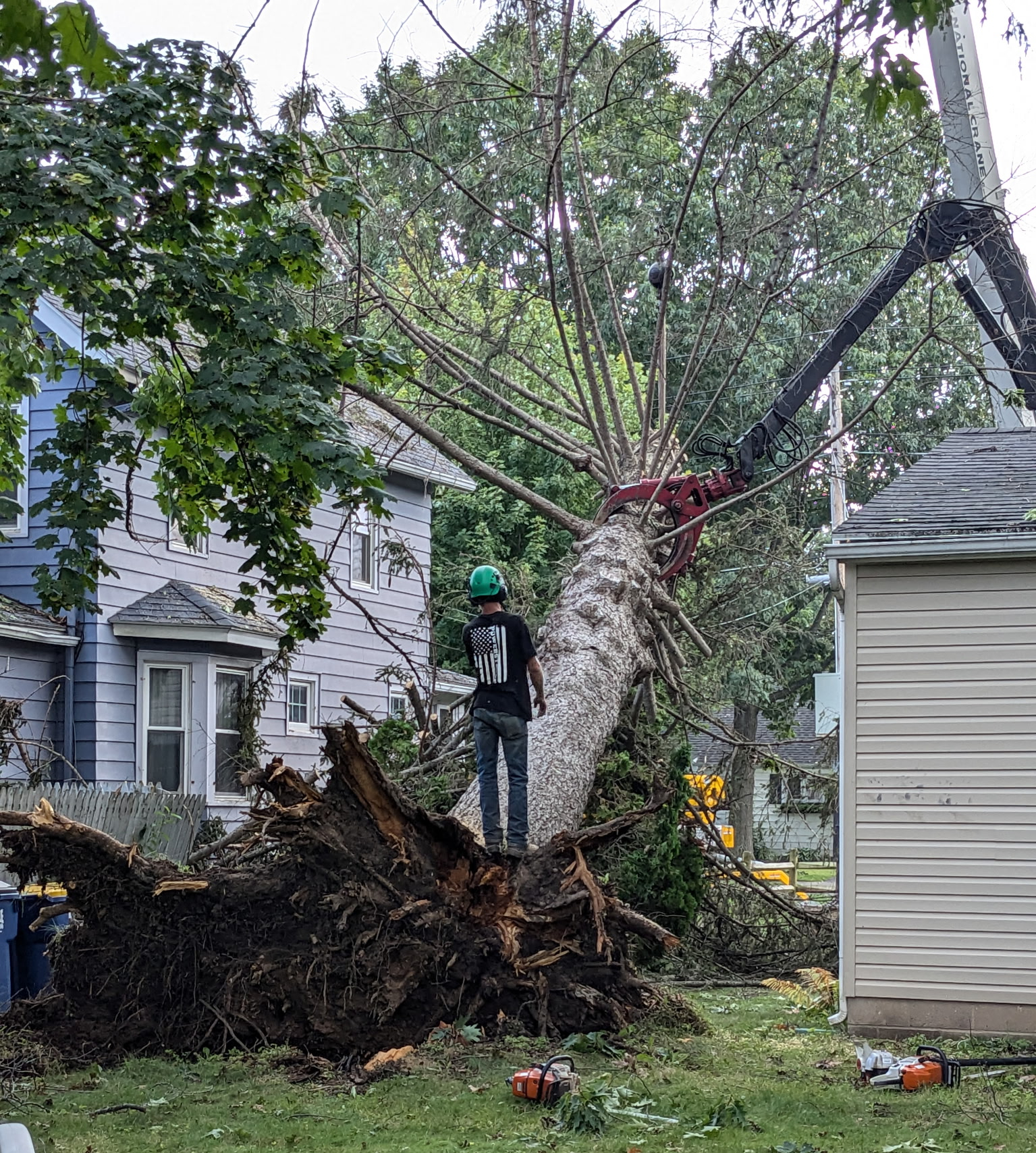
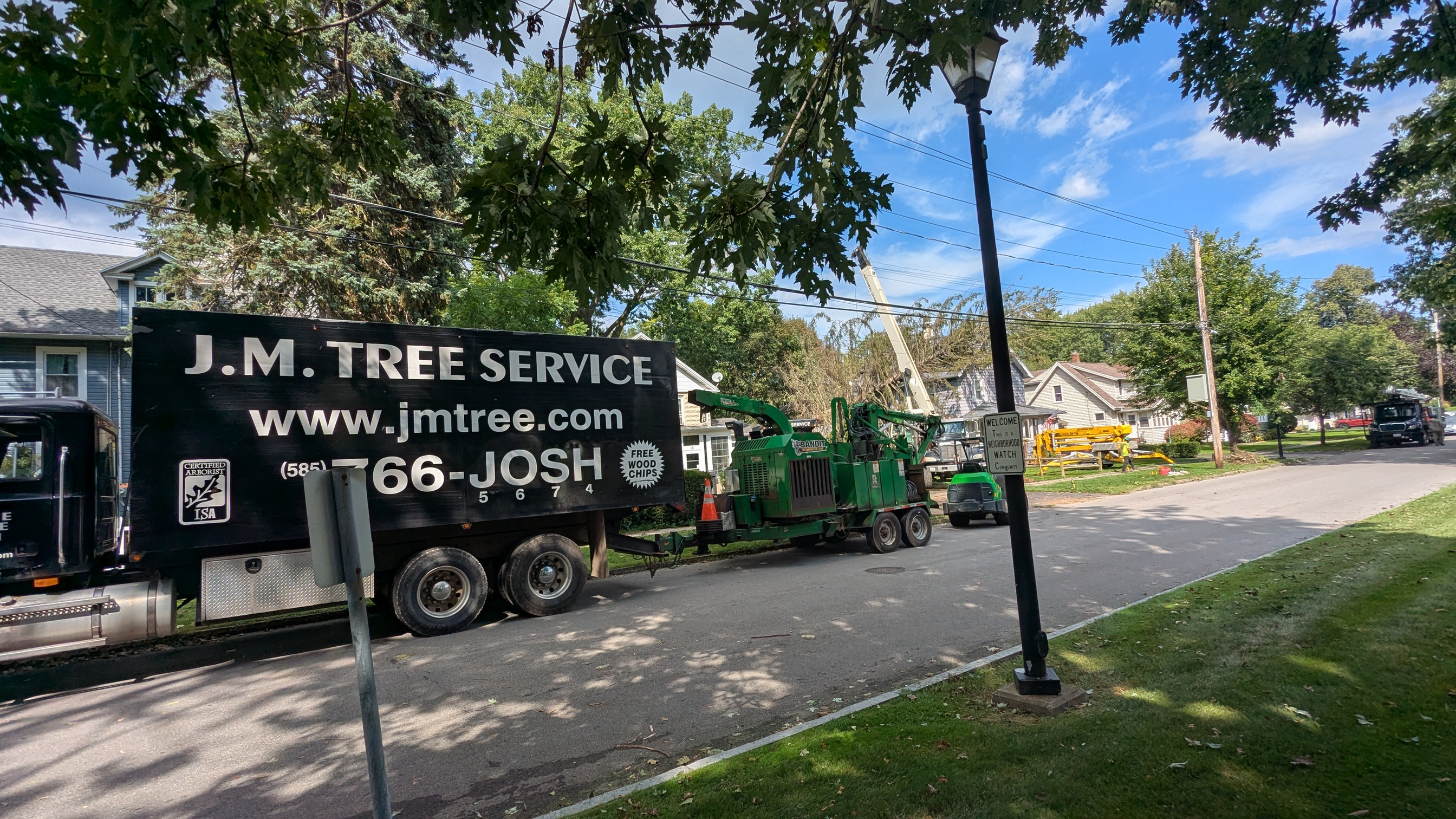
Props to RG&E for getting our power back by 1:00 a.m. and for dispatching Birchcrest Tree and Landscape only a half hour after we called to remove a branch from a power line. And a HUGE shout out to J.M. Tree Service, who came out in force early Thursday afternoon to tackle the huge job of removing the huge tree.
And they did that very efficiently. It was a fascinating process watching the J.M. worker-bees sawing and removing huge chunks of tree, being careful not to cause any more damage, and chewing them all up in their shredder. By the end of the afternoon, our landscape looked a lot different, minus a few trees and a big piece of our fence. But the worst of the experience was over. One more adventure in the life of a homeowner.
I hope you and yours fared the storm, and if you did lose any trees, they fell without incident.
* * *
email me at missyblog@gmail.com. “Like” this blog on Facebook and follow me on Instagram and Threads (@missyblog)
You can also get email notifications every time I post a new blog by using the “Subscribe” link on the right side of this page (or all the way at the bottom of the page if you’re on your phone).
Today I offer part 2 of the story of my European summer, and our six-week tour through eight countries and 15 different cities and towns. We’ve already visited Austria, Ireland and Germany. Our next stop is The Netherlands. (Remember to click through the hyperlinks to see the photos from each locale.)
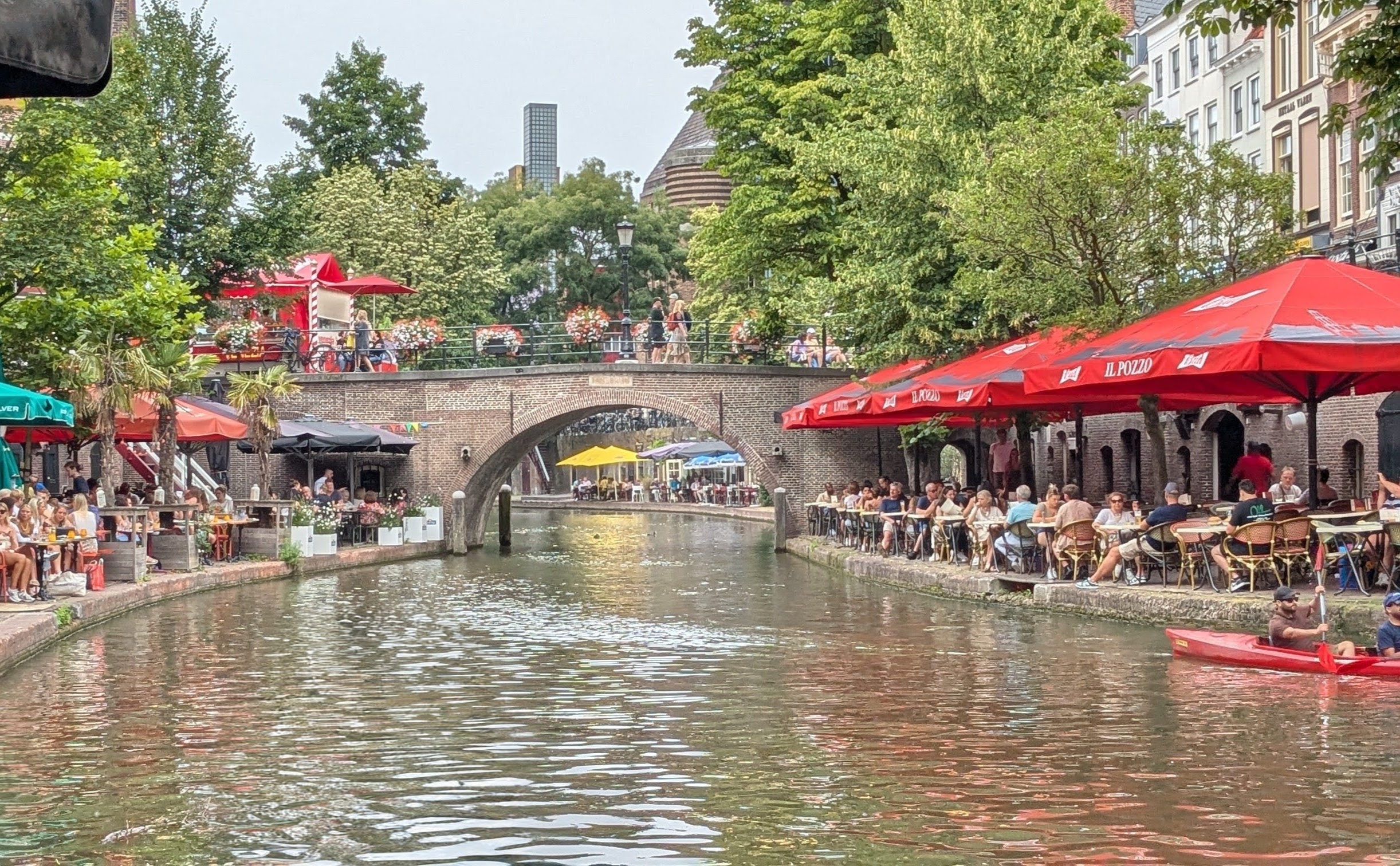
We both had wanted to see Amsterdam but didn’t necessarily want to stay in the heart of the city, so we decided on Utrecht, a small city about a half-hour train ride away. We had read that Utrecht was like Amsterdam on a smaller scale.
We didn’t have a whole lot of time to explore the city once we got there, but did walk around town a bit and visited the town’s incredible library-former-post-office. For dinner we sat on the canal. It was like a dream.
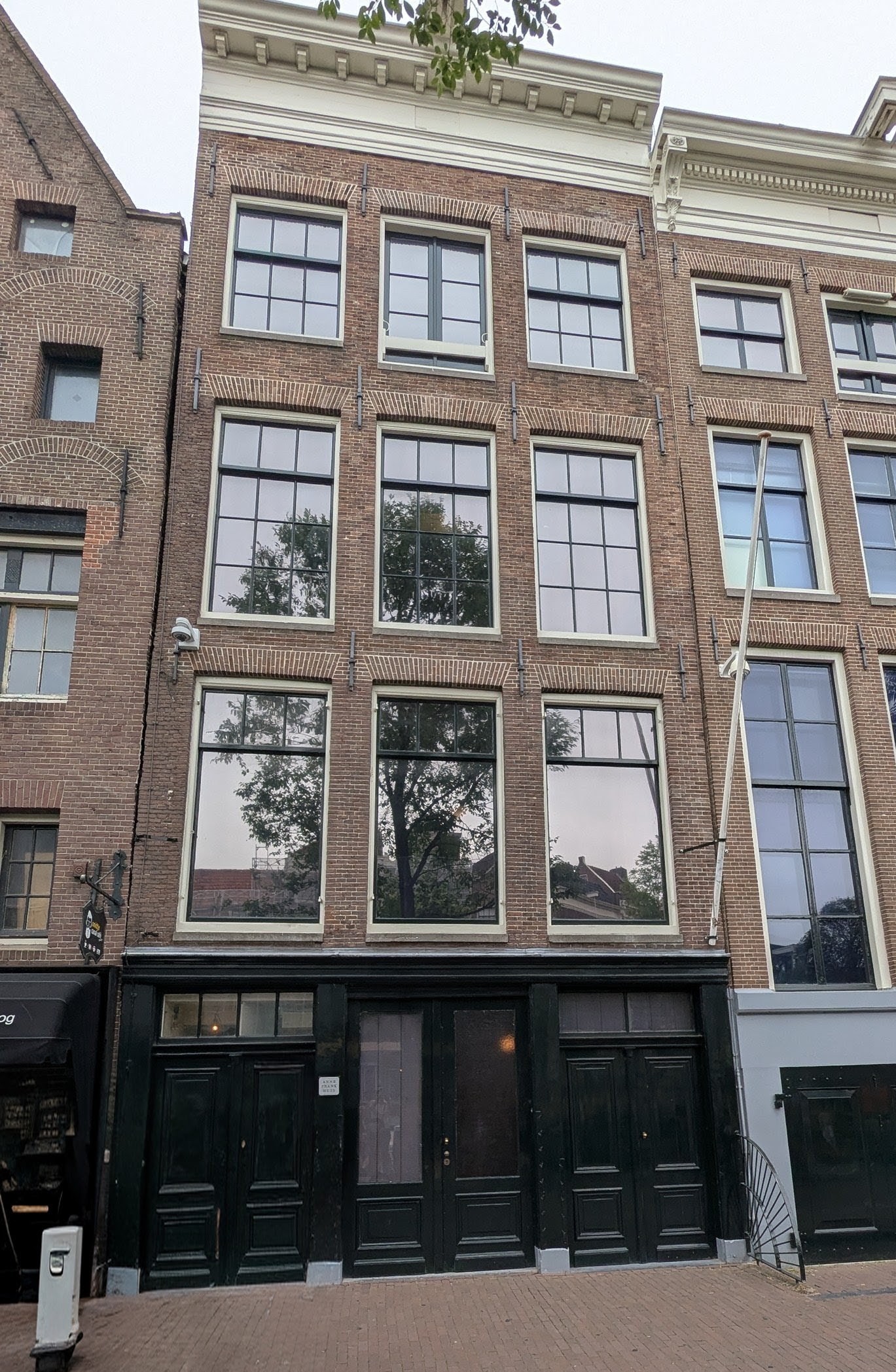
We headed to Amsterdam the next day, the highlight of which was visiting the Anne Frank House. Our visit included a half-hour introduction before a self-guided tour through the annex proper. The intro taught us a lot, and gave some great insights into the whole story. The annex furniture is no longer there (the Nazis cleared it out after they arrested the family) but we did walk through the secret bookcase and through several of the actual rooms where the family and their friends hid for more than two years. And of course we were able to see the actual diary itself.
The Frank family’s stumbling stones are not located at the annex site, because the memorial project places stones specifically at a victim’s last known voluntary, freely-chosen residence, not a place of hiding. But they did have photos of those stumbling stones at the exhibit. (There’s a photo in the gallery.)
This was the only day we saw even a little rain on our entire trip, and even then it didn’t rain on us. It rained briefly when we were in the Anne Frank House, but had ended before we got out.
We also took a one-hour canal boat tour. The entire city was preparing for a huge gay pride parade and festival, so the streets were full of happy couples, and pride flags are hanging off every building. More wandering around after the canal boat tour, this time through the Red Light District, where business was hopping. That was quite interesting. No stopping into souvenir shops on those streets.
Turns out we like Utrecht better than Amsterdam. It’s more picturesque, more chill, cleaner and more charming. We loved just hanging out by the canal, enjoying a pint, and watching tour boats, canoes and paddle boats float by.
The bikes in Amsterdam, by the way, were no big deal. Just had to keep your head on a swivel. The bikes in Utrecht, however, were WAY MORE frequent and troublesome.
It was a long travel day to Bayeux, which took us on the Eurostar through Paris.
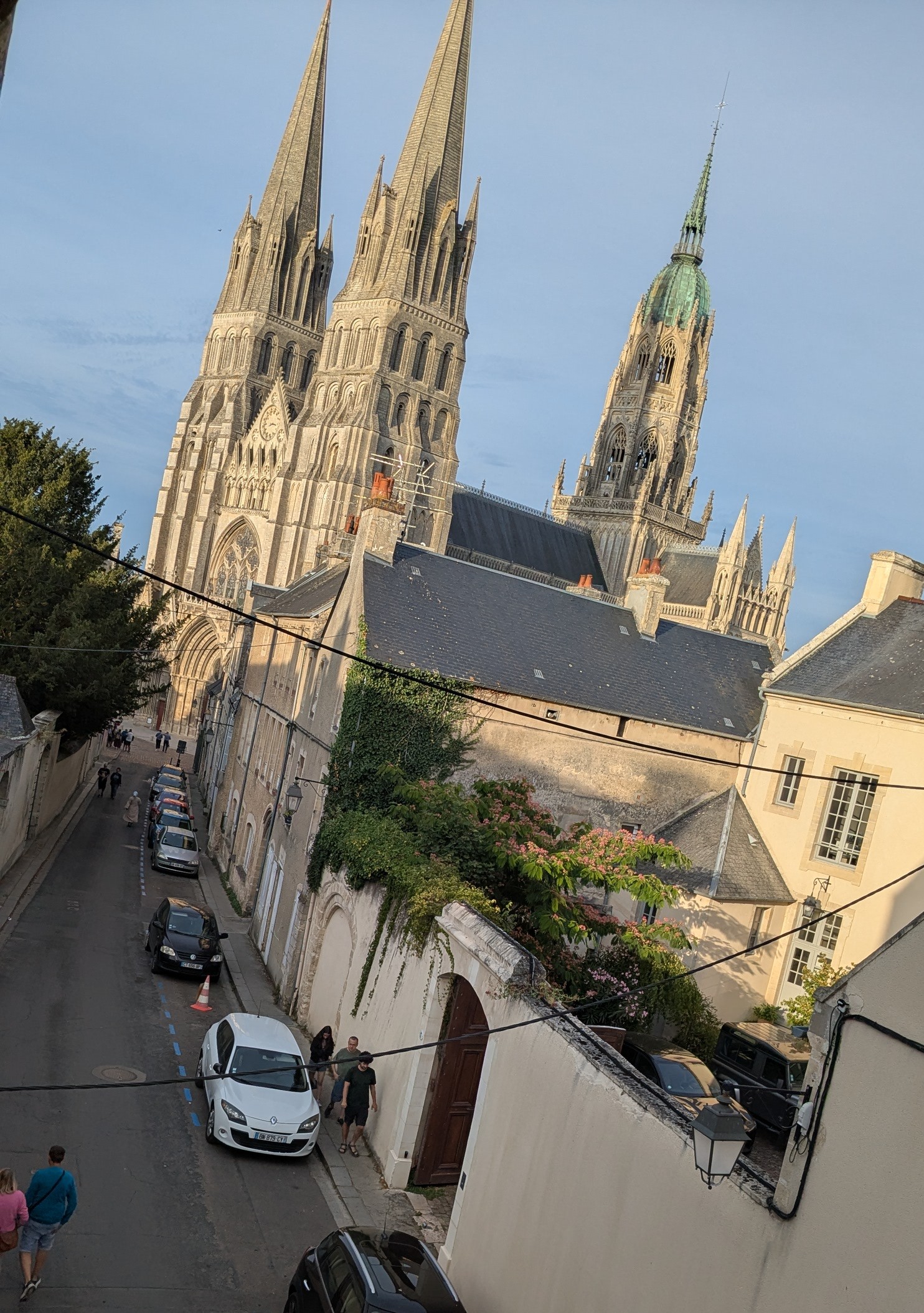
Bayeux is charming small town, in that medieval, narrow-cobblestone-streets-and-really-old-buildings kind of way that I’ve been looking for in our travels. We had a terrific B&B which was in an historic building, and was just steps from the town’s most prominent and beautiful feature, the Bayeux Notre Dame Cathedral, which you could see by leaning out our window.
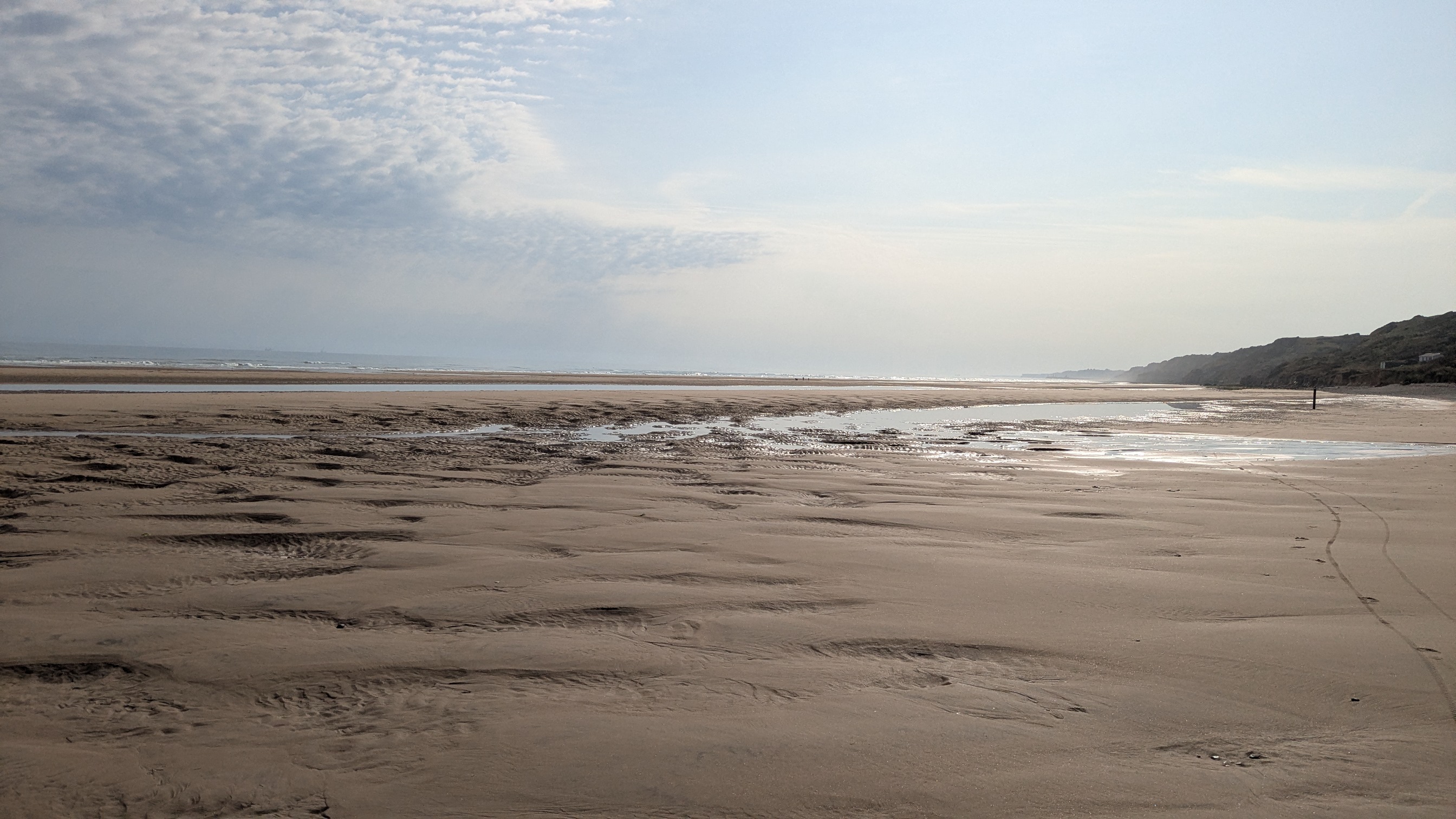
Our main reason for coming to Bayeux was to participate in a Band of Brothers tour, which was devoted specifically to the role of the 101st Airborne in the D-Day campaign. We not only stood on Omaha Beach, but visited several other significant sites including:
Pointe du Hoc, where Rangers scaled a cliff to take out what they thought was a German battery (but were actually trees painted to look like guns)
the American Cemetery
Ste. Mere Eglise, known for the mannequin of a paratrooper hanging from a church steeple
and three different spots where troops from the 101st Airborne fought local engagements, including Brecourt Manor, which was recreated in the miniseries.
The next day, we continued our D-Day exploration with a trip to the Bayeux Battle of Normandy Museum. and wandered through the adjacent Bayeux War Cemetery.
Before heading out of town, we had to stop into the cathedral. We’d been in a lot of churches and cathedrals, but this one was especially neat. There were so many different side chapels, amazing artwork, unusual windows, and a really cool, all-stone, dark, lower-level, 1,000-year old crypt which really looked like it could be a place where ritual sacrifices were held.
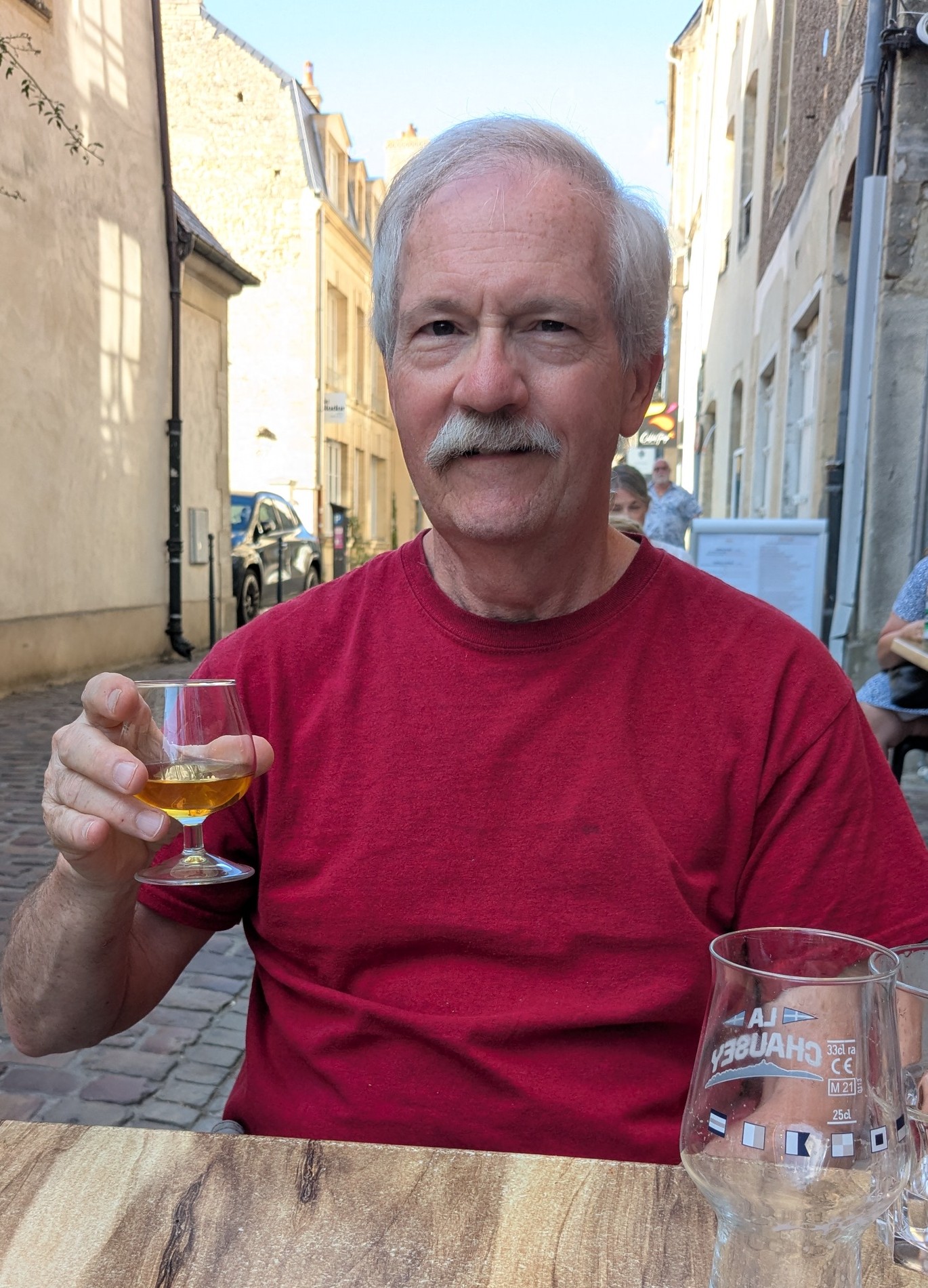
Jack’s D-Day adventure would not be complete, however, before sampling some Calvados at dinner, a local spirit which apparently the soldiers would get very drunk on. Turns out it’s rather like whiskey.
The next morning, we took our train to Paris. Got to our hotel in Paris around 10:30, much too early to check in. So we dropped our bags and explored the area for the next four hours.
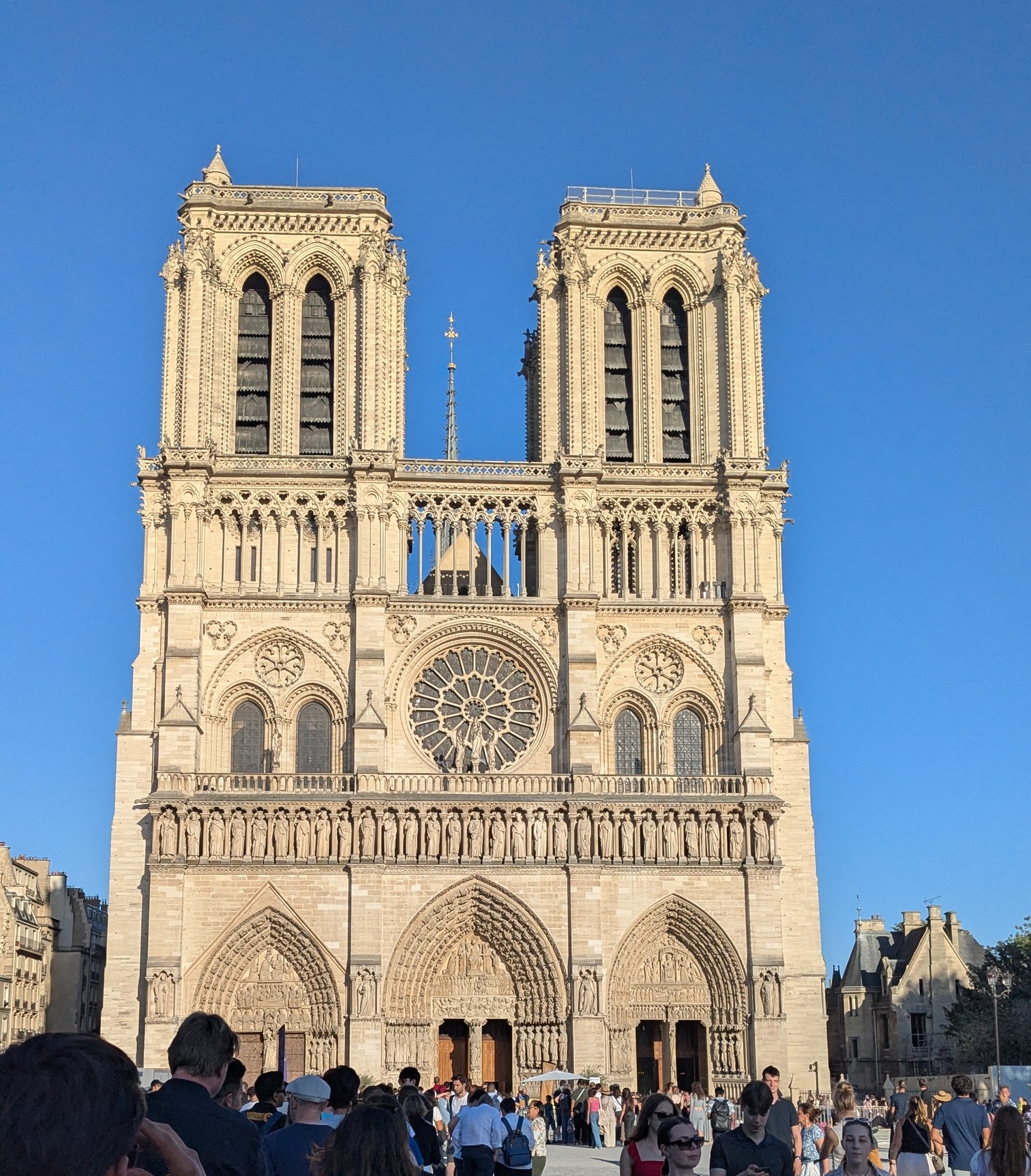
The River Seine was just a few blocks away, so we found a river walk and headed north toward the Notre Dame Cathedral. We found it and many photos happened. By this time we could get some lunch and our first pint in Paris before heading back to the hotel, which at this point had become a long walk.
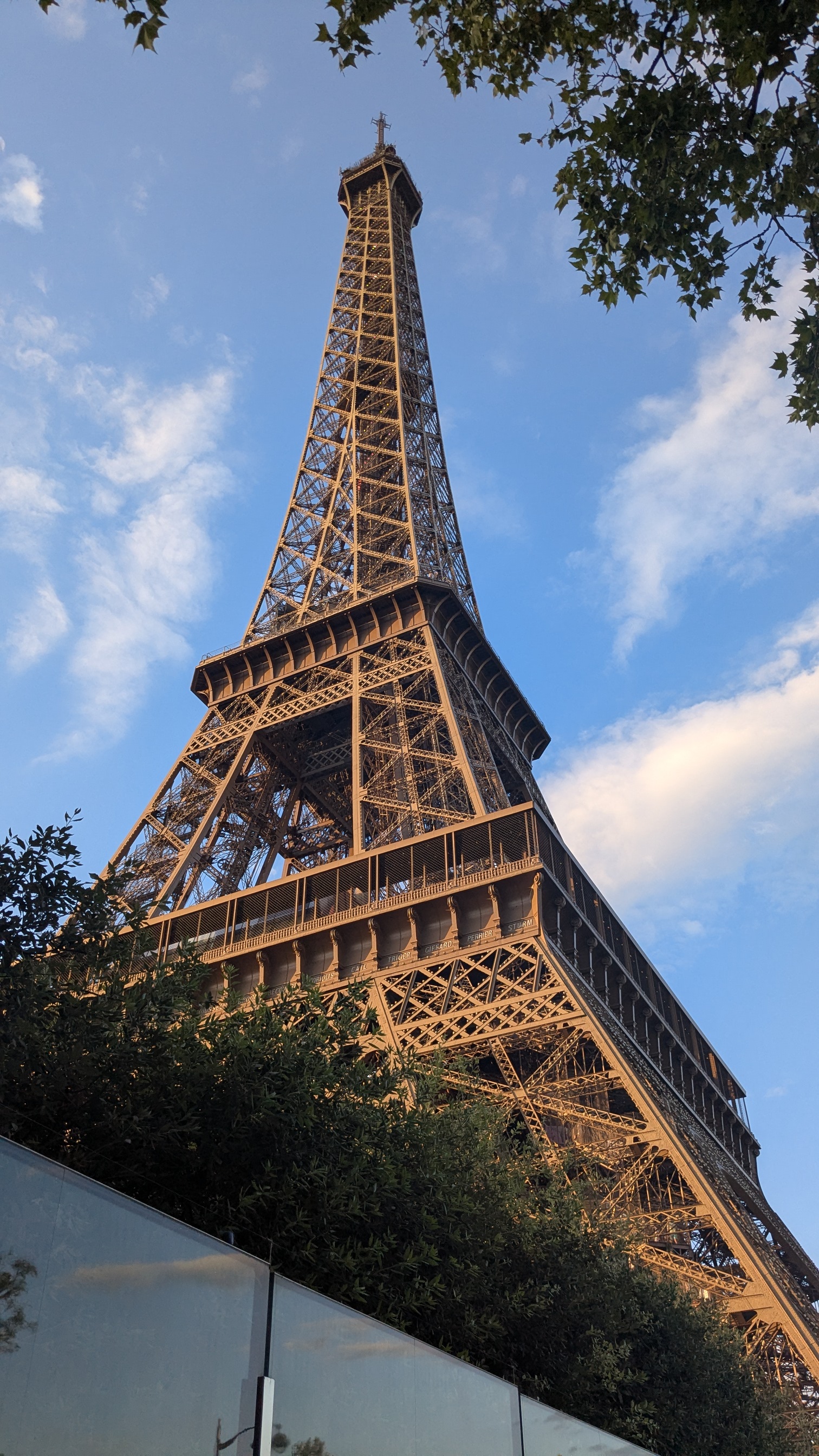
After dinner, Jack figured out how to get to the Eiffel Tower, which involved two metro rides and about a half hour of travel towards the north side of the city. Many more photos happened. Bucket list item checked.
The next morning we had a guided sightseeing tour of the city. Turns out we were the only people on the tour. Our guide Paul was an enthusiastic talker and storyteller who for the next four hours regaled us stories and history lessons as we walked from one iconic attraction to the next. We began at Notre Dame and ended at the Eiffel Tower. (A less iconic but very interesting part of that tour was when we stood atop the tunnel through which Diana’s car was traveling when she died.)
After dinner that night we headed back down to Notre Dame, hoping the lines would be shorter. Sure enough, it didn’t take us long to get inside.
Surprisingly, I found it less ornate than many of the old cathedrals we’ve seen on our travels (especially in Germany and Czechia) but it has some beautiful artwork and many, many side chapels, most of them decorated with sculptures and oil paintings.
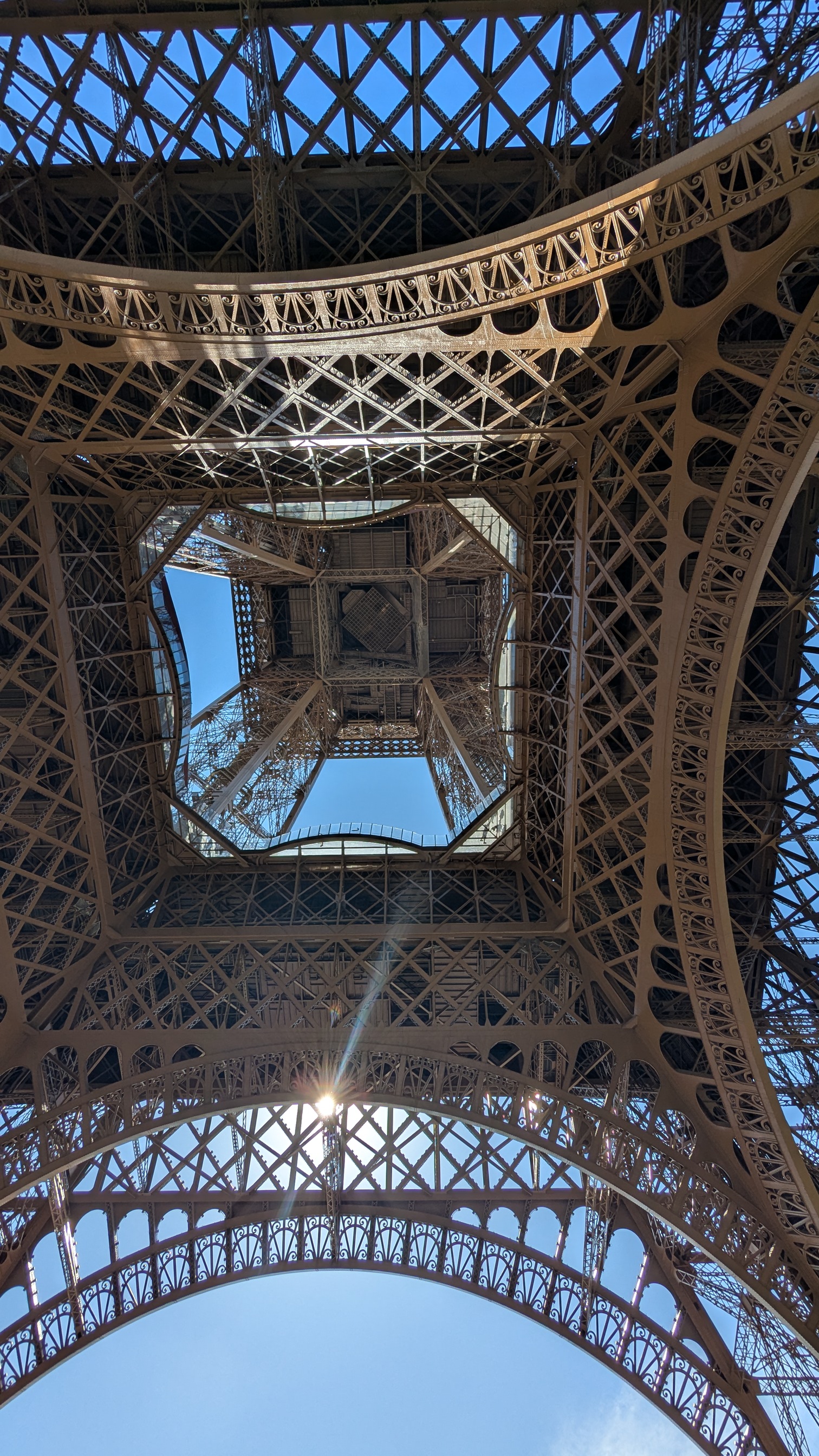
We had previously decided that we weren’t going to go up in the Eiffel Tower, but just admire it from afar, mostly because we didn’t want to fight the crowds. And I’m REALLY not a fan of heights. But thanks to some prodding from my friend Carol, who had made the trek herself, the next day we reconsidered. But we made two concessions: going earlier in the morning when the crowds would be less, and only climb to the second level (opting for the stairs instead of the elevator), saving on both money and knee-quaking height.
We got to the tower around 9:30 a.m. and the lines were indeed shorter. Google says there are 674 steps to the second level, which is at 377 feet, or the equivalent of a 38-story building. It felt more like 1,000. But we managed quite well and the effort was very worth it. Even though we weren’t at the tippy top (less than halfway up, actually), the view was spectacular.
Then we sat UNDER THE EIFFEL TOWER and ate our croissants. Do you get the sense it was an emotional experience for me? Many photos happened.
Stopped for a quick sandwich, then spent another hour or so locating and wandering through the amazingly beautiful Luxembourg Gardens, which has fountains, lots of statuary, square trees and lots of kids pushing little sailboats around the pond. Apparently this is a Parisian tradition.
It was a ten-hour, two-train trip to Madrid the next day, our second-to-last stop.
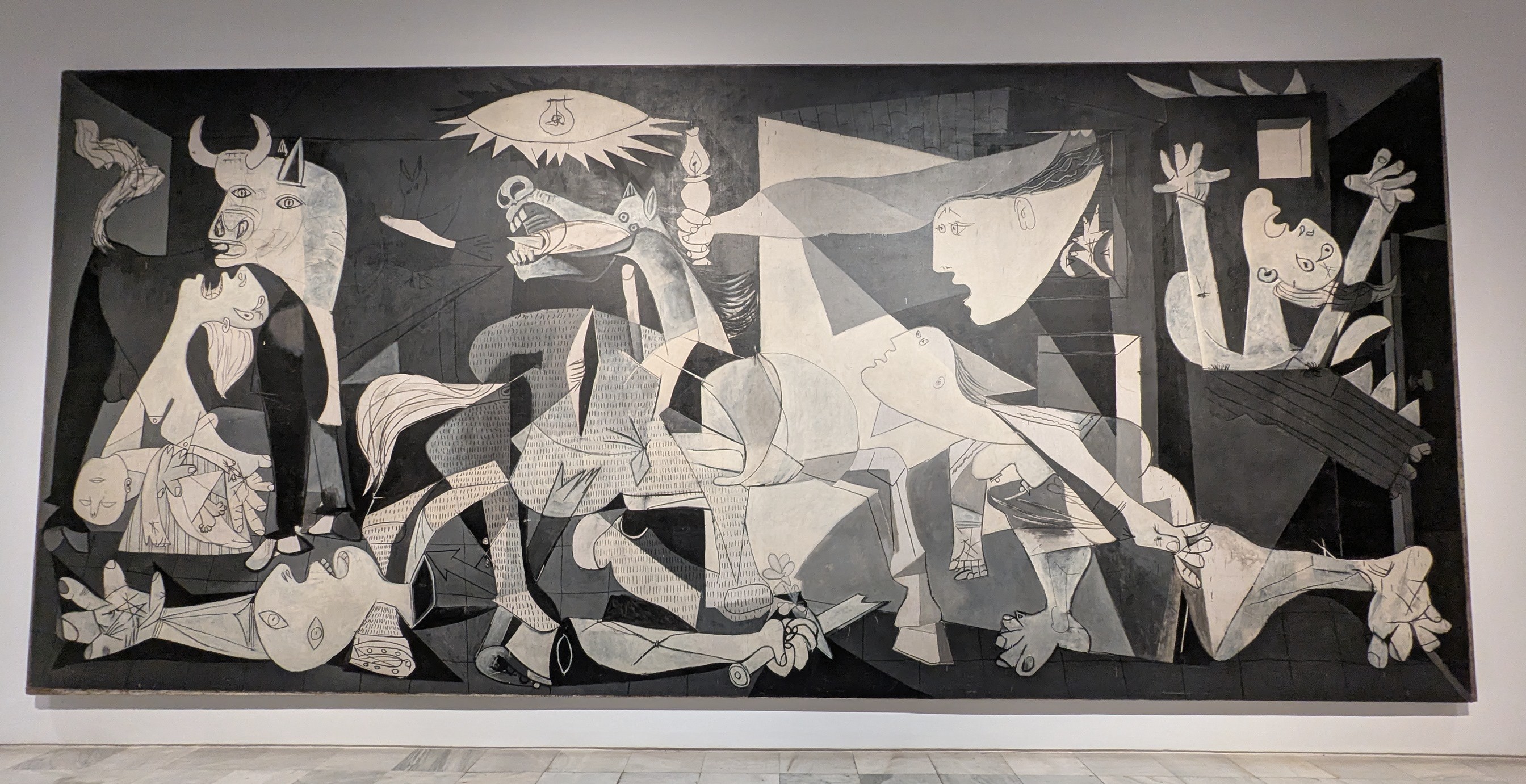
We didn’t get into town until after 6 p.m., but that was still time to grab dinner and visit the Reina Sofia museum, which was just steps from our hotel. We only had an hour before it closed, but that was enough time to track down what I really wanted to see: works by Picasso and Dalí. I was especially excited to see La Guernica, a piece which I had learned about during my Spanish-language-studying years.
We started our first full day in Madrid with a free walking tour, which for two hours or so took us through some back streets to see some neat architecture and learn some history. Immediately after that tour finished, we met up with my daughter Sara and son-in-law Tom, Tom’s sister Nikki and their friend Danielle, who had just arrived in town.
On Monday morning, Sara had booked us some tickets to the Royal Palace, which dates back to the mid-1700s. It’s the official residence of the current King and Queen of Spain, and is often used for official functions.
Jack and I have seen more palaces than we can count on our European adventures, but this one was definitely the most ornate. The artwork and wall decorations, furniture, and generally lavish ornamentation was over the top gaudy. We saw crown jewels, thrones, intricately painted ceilings, unbelievable chandeliers, you name it. Then we went through the Royal Armory with its collection of armor and weaponry, and the Royal Collections Gallery — basically an art gallery with collections from all of the kings and emperors who lived there. Tapestries, paintings by Goya and Titian, elaborate carriages.
Around dinner time, we headed out to track down a big neighborhood festival located only a few blocks from our hotels. We didn’t know exactly what we would find, but for Jack and me, it turned out to be a highlight of the trip.
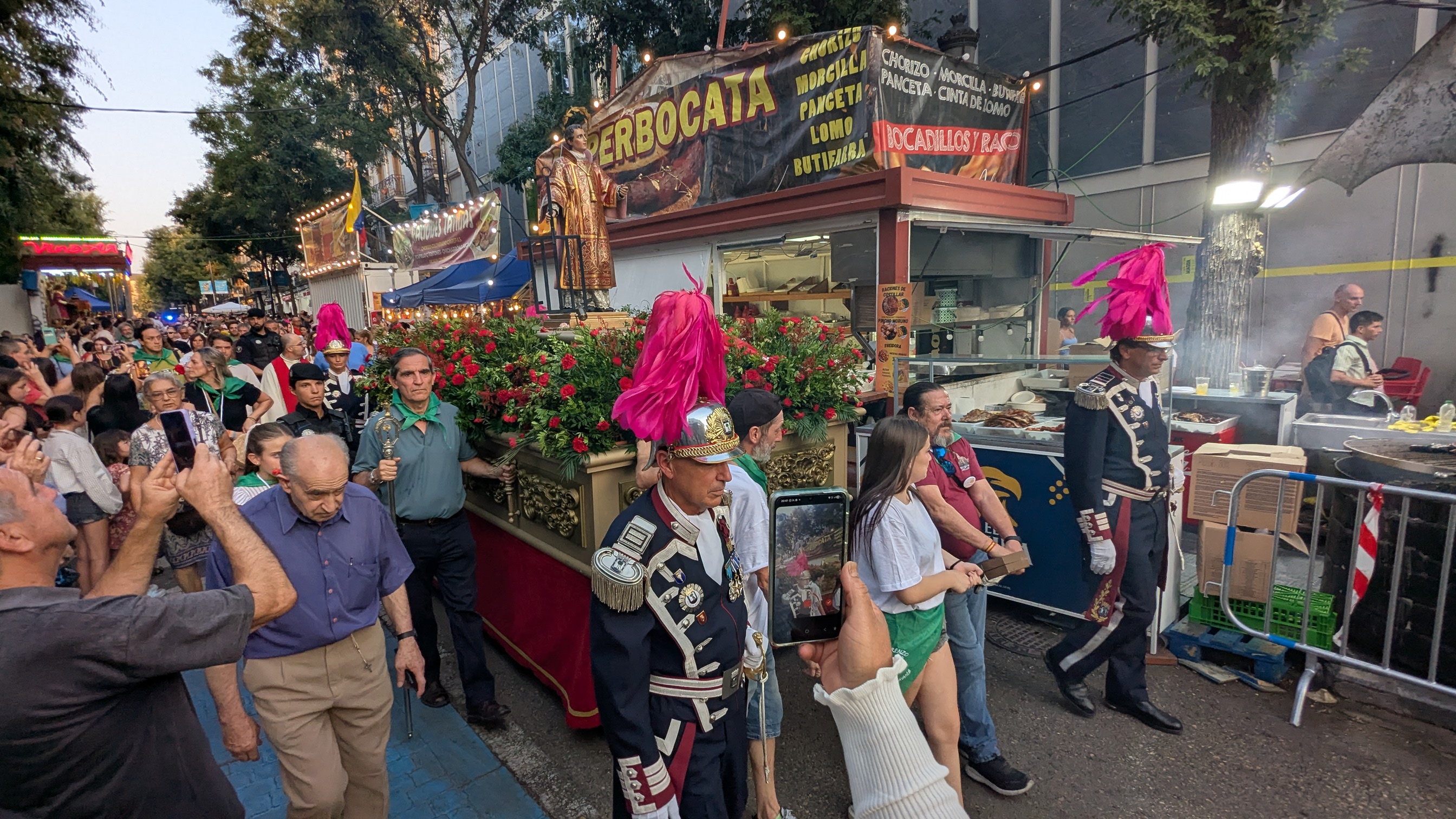
It was called the San Lorenzo Festival, which honors St. Lawrence (the same St. Lawrence as the seaway), a Roman deacon and martyr best known for his habit of washing peasants’ feet. The church which bears his name is in a multicultural neighborhood called Lavapiés, or “wash feet.” The festival began over the weekend and came to its grand conclusion that night with a Mass and a procession from the church.
There was a rock band, street foods and beer, but it was the procession that delighted us most, because it was exactly the kind of local cultural celebration that we love being a part of. It began at the church and meandered through the narrow neighborhood streets, which were crowded with local residents and tourists.
Leading the procession was a cardboard recreation of the church, then a wagon carrying a casket and an effigy of St. Lawrence. Following close behind were dozens of men and women dressed in traditional attire, and a brass band. Finally, hundreds of neighborhood residents trailed behind, many of them wearing green scarves bearing San Lorenzo’s name.
The atmosphere was electric. It reminded us a lot of the Witches’ Night celebration we encountered in Prague. There are a lot of photos in the Madrid gallery.
You may remember from WAYYYY back when I started this blog, I mentioned that the main reason we were coming to Valencia was to see the total solar eclipse.
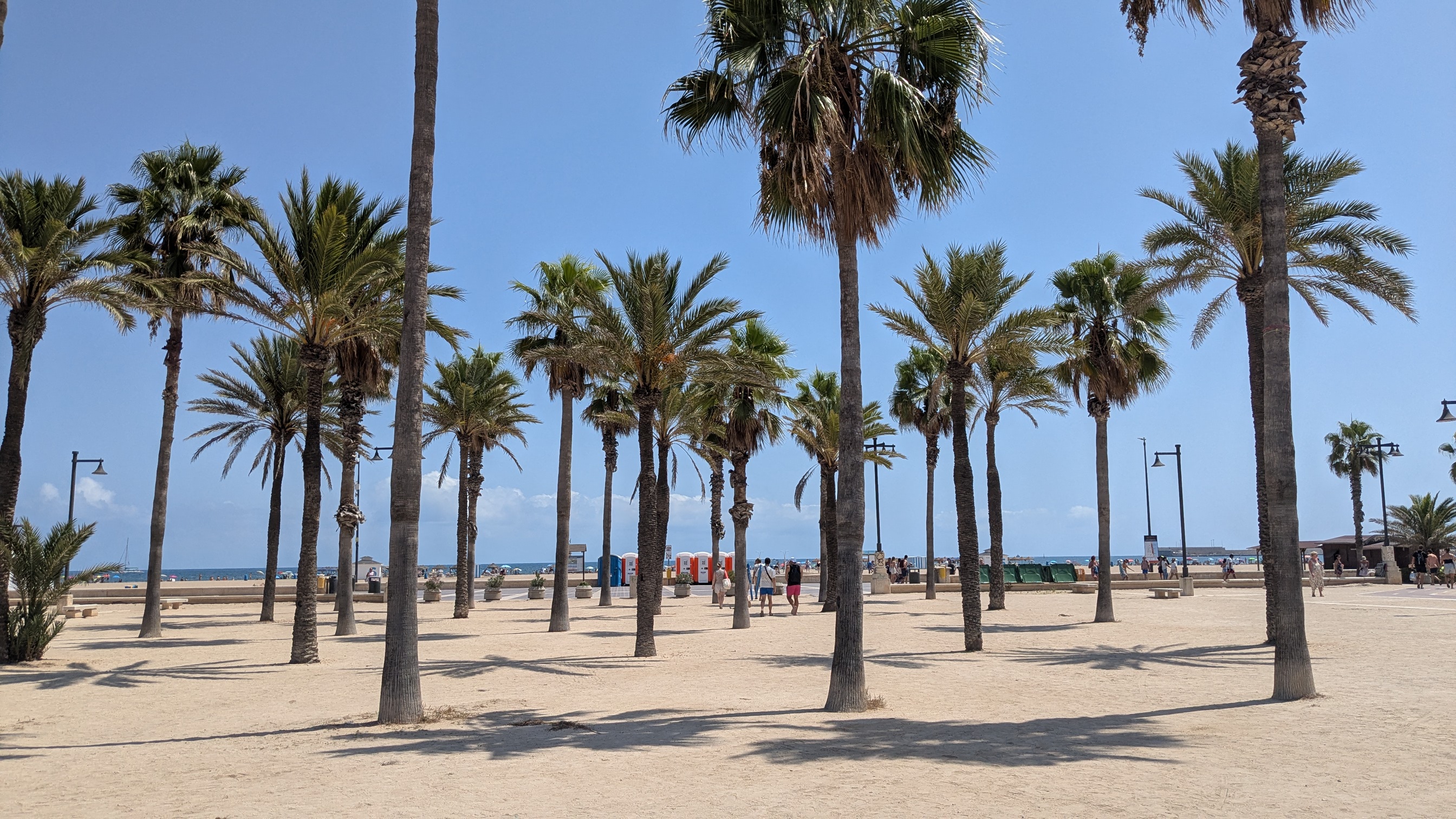
Valencia threw us the hottest weather to date. It had been warm in other countries — especially early on — but 95 in Valencia felt like 100+ thanks to the humidity caused by its location on the Mediterranean Sea. When we arrived, it was still too early to check into our B&B (which was air conditioned), so we dropped our bags at a luggage storage place and met back up with Sara and her gang at the Central Market. The market is a large indoor mercantile with lots of food vendors and fishmongers. Jack and I picked up some fast-food paella for our first meal of our Valencia stay. Because when in Valencia, that’s what you eat.
We wandered around Old Town waiting for our flats to be ready, then split up and met again for dinner.
The next morning, at Sara’s suggestion, Jack and I rented bikes and rode “The Rio.” It’s a five-mile long dry river bed that runs through Valencia, from which the city had diverted water from after a storm many years ago. Now it’s a beautiful park with soccer fields, playgrounds, fitness areas, coffee shops and gardens. We spent about 90 minutes riding its length, up one side then down the other.
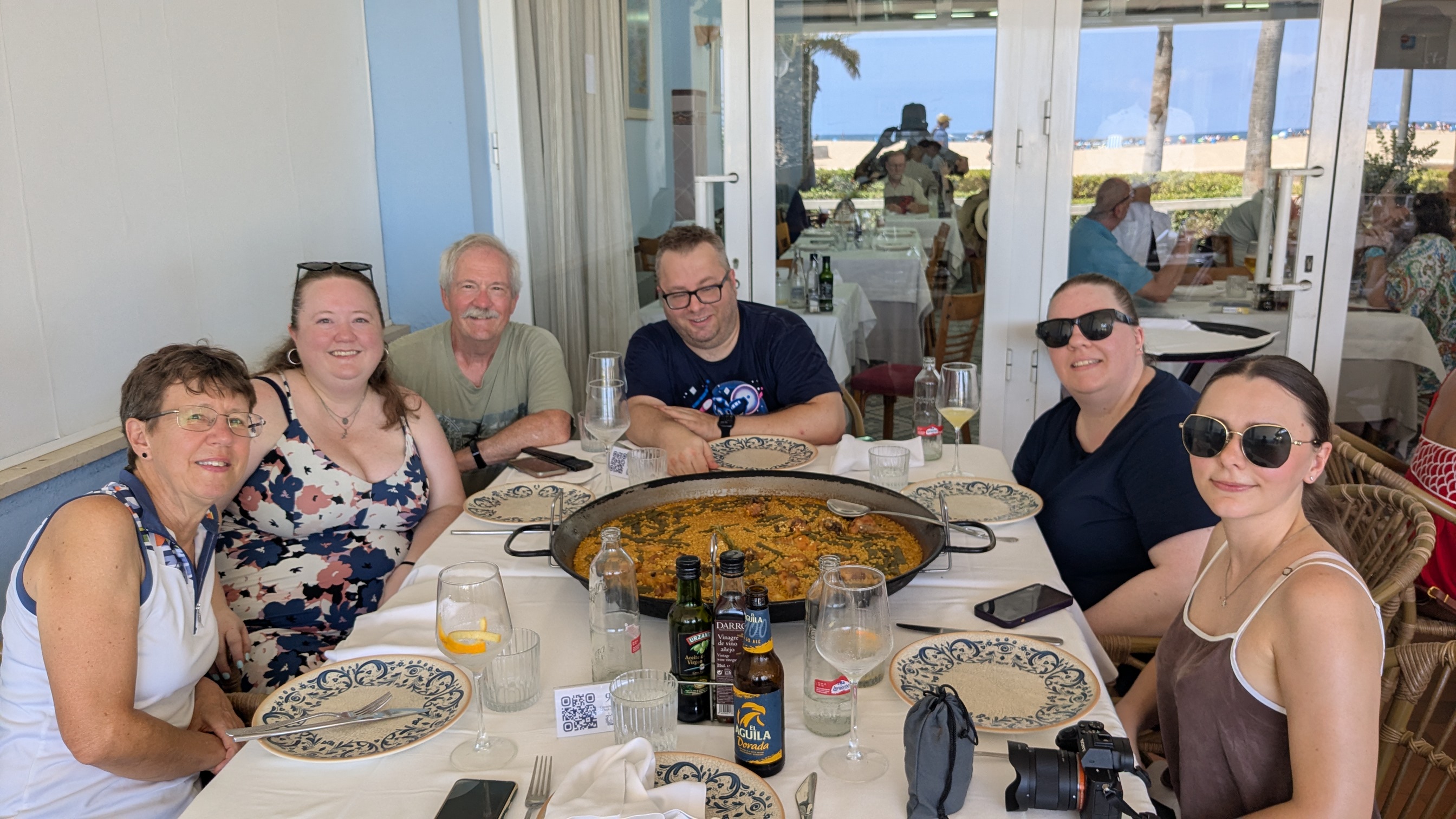
For lunch, Sara had made a reservation for us at “La Pepica,” a restaurant located right on the beach, which is especially well known for its paella. The paella was huge (check out the photos), the Agua de Valencias went down smoothly, and it was a great afternoon.
We finished at Pepica around 4 p.m. The eclipse was happening at 7:30 that evening, and as our plan was to watch it from the beach, it would have been inefficient at that point to go back into town and come out again a few hours later. So we filled the next few hours at an ice cream shop and a beach-side pub.
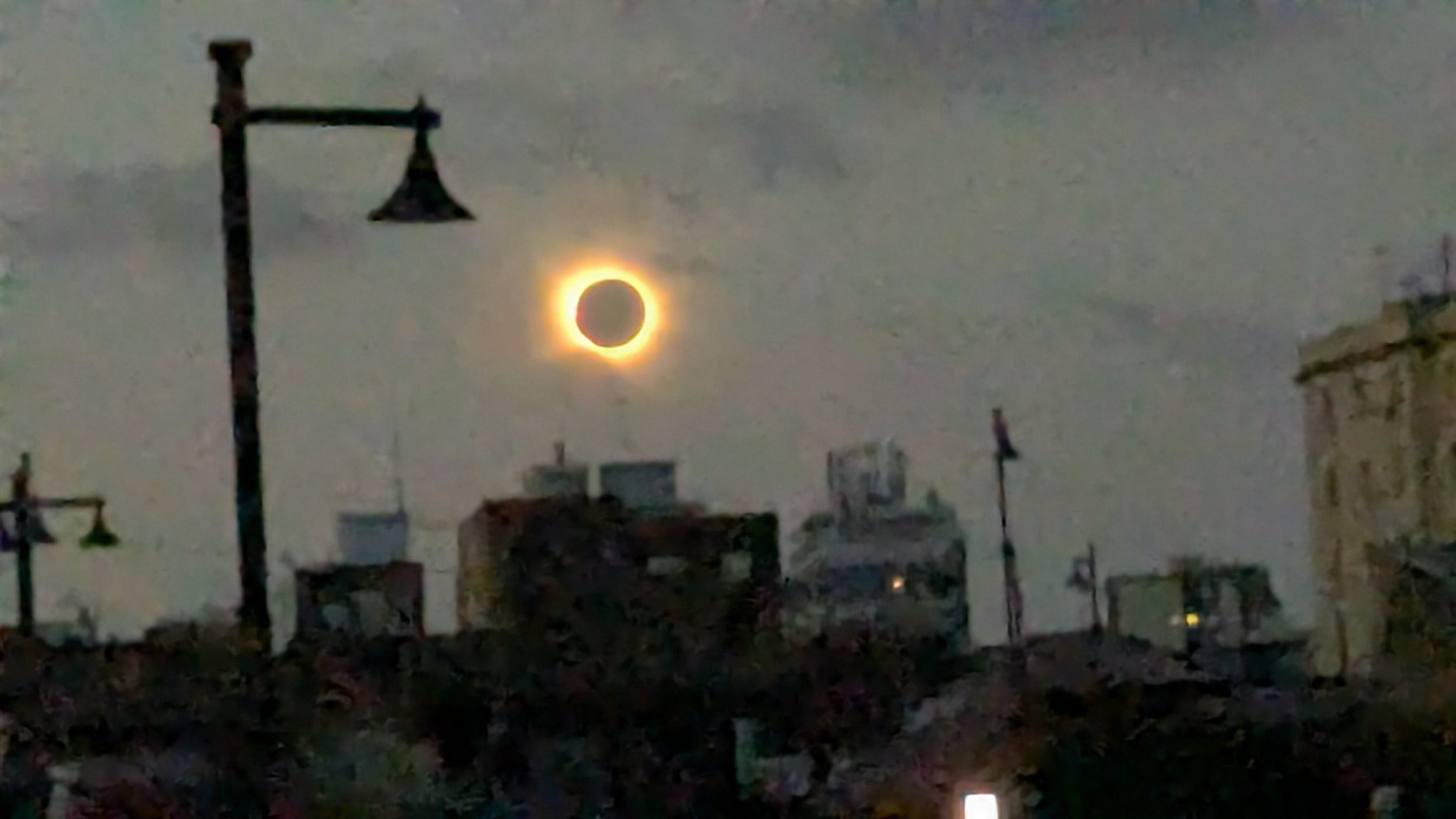
The City of Valencia had identified and designated an area along the beach for prime eclipse viewing, so at about 7 p.m. we found a spot alongside hundreds of thousands of others and peered over the neighboring buildings as the sun set in the west.
As promised, we had a great view, and aside from a few passing clouds, a clear sky. We watched as the sun became a smaller and smaller crescent. A cheer erupted from the crowd as it reached totality, which only lasted about a minute. It was a MUCH better experience than we had in Webster a few years ago.
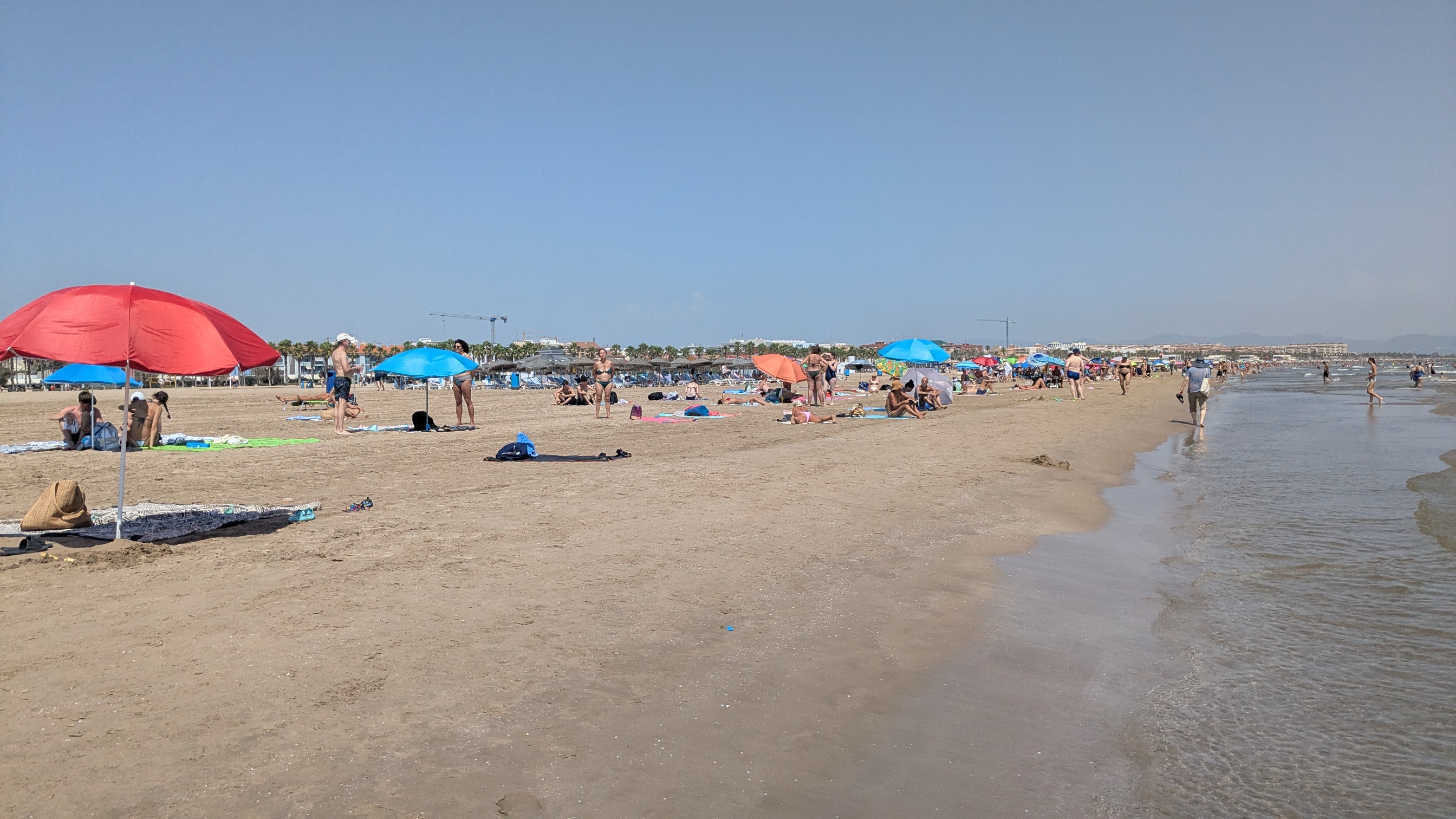
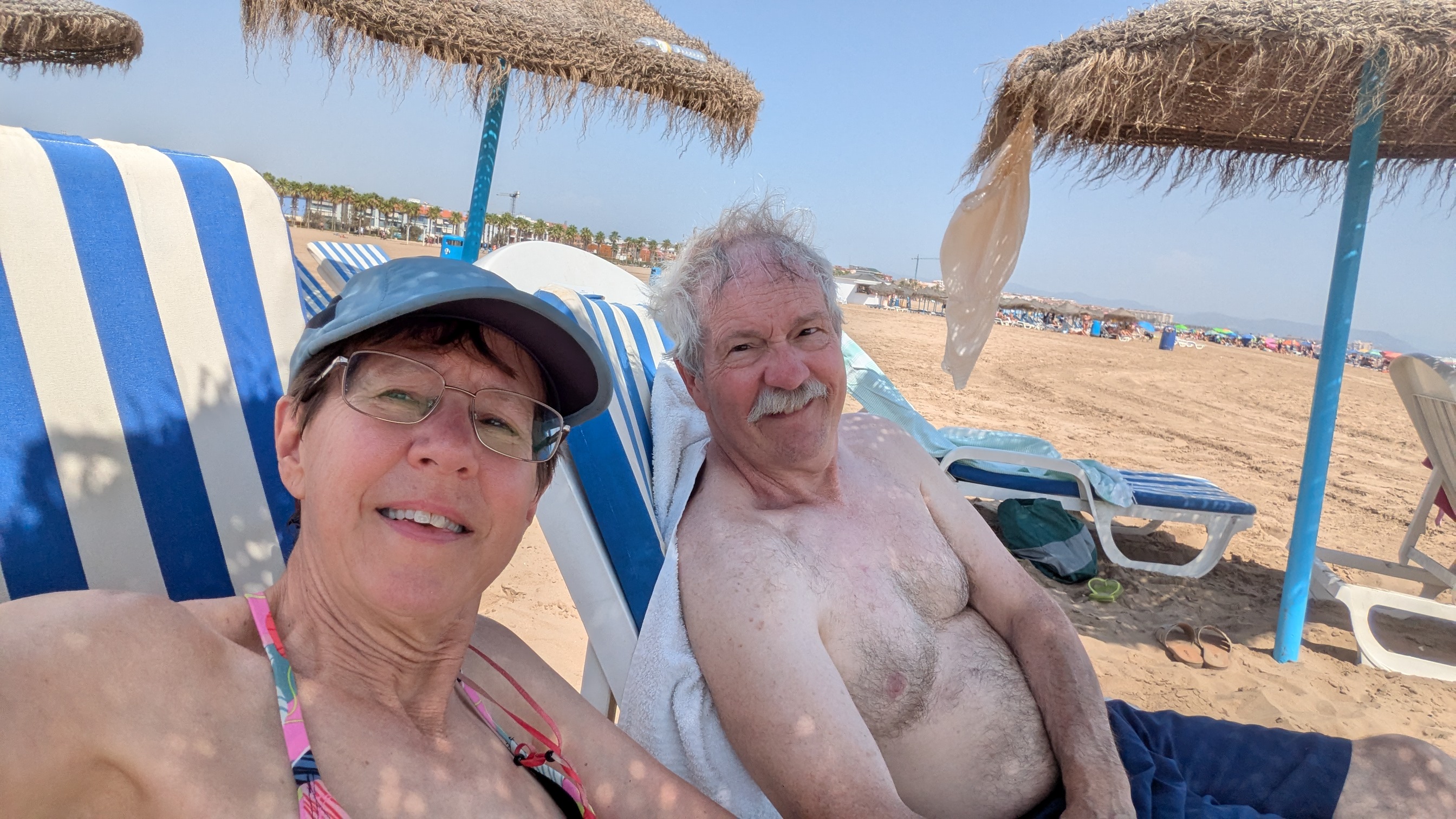
The next morning, Jack and I took a bus down to Valencia’s beautiful beach, where we rented an umbrella and beach chairs and just relaxed for four hours. It was the ideal conclusion to a hectic (almost) six weeks. We slathered ourselves with sunblock and tried to stay out of the sun as much as we could, because 15 minutes in that sun would have turned us into beets. But we did get into the water several times to float and ride the swells. It was bathwater-warm.
We had a small lunch and later in the day connected up with Sara and her gang one more time before turning in rather early, since we were planning for a 5 a.m. alarm.
Our return home started with a plane to Vienna, where we stayed overnight, then a plane to Toronto, where we stayed overnight. Finally, last Sunday, we took a train back to Rochester. True to form, Amtrak ran 90 minutes late. Of the dozens of train trips we took in the previous six weeks, Amtrak was the ONLY one that was not on time.
To sum up, during our trip we visited eight countries and 15 cities and towns, carried our bags through five airports, 18 train stations and countless metro stations and bus stops. We stayed in seven different Air B&Bs and 11 hotels. We averaged more than 15,000 steps a day, peaking out at 26,000 on a few of those days.
My daughter Sara asked me what I was looking forward to most when I got home. Most people would say “sleeping in my own bed.” But most of the places we stayed had king beds, so going back to my queen was not on the top of my list. Instead, I was looking forward to seeing my friends, doing laundry when I feel like it, using a clothes dryer and a wash cloth (Europe doesn’t believe in either). Enjoying air conditioning in the bedroom. And driving. I miss driving. Plus, I’m glad I’m not going to totally miss out on corn season.
I’m sorry to have missed the Jazz Fest and the Carnival (guess I didn’t miss the parade, though). But I wouldn’t have traded this experience for anything. If you’ve read this far, thank you, and I hope you’ve enjoyed the photos.
* * *
(posted 8/19/2026)
email me at missyblog@gmail.com. “Like” this blog on Facebook and follow me on Instagram and Threads (@missyblog)
You can also get email notifications every time I post a new blog by using the “Subscribe” link on the right side of this page (or all the way at the bottom of the page if you’re on your phone).
The summer of 2026 is almost over, and I hope it’s been a good one for all of you and your families. Despite the heavy rains and the smothering wildfire smoke, I hope you’ve found it to be relaxing and rejuvenating, and you’ve been able to do some fun things with your kids, grandkids and friends. As for me, the summer of 2026 will always be remembered as my European summer.
For most of the last six weeks, beginning the first week of July, my husband Jack and I were traveling in Western Europe. Unless you knew about my plans, you probably didn’t even notice that I was gone (I hope so, anyway) because before I left, I’d written and scheduled more than a dozen blogs to post automatically. And, of course, I kept getting emails when I was traveling, many of which I turned into blogs, taking advantage of train wifi as we rode between cities.
When I’m on extended trips like that, I don’t like publicizing the fact on Facebook, so I didn’t post any photos while I was gone. But of course I took hundreds, which I really want to share with you all. So if you’re interested in seeing any (or all) of them, please keep reading. There’s so much to tell you, I’m going to split it into two blogs.
The background
Back in January our eldest daughter Sara said she was planning a trip to Valencia in mid-August to view the total solar eclipse. Would we like to come along? We of course said yes. A week or so later, our son Sean texted that he and his girlfriend were heading to Salzburg in early July for some music workshops, followed by a side trip to Ireland. Would we like to come along?
We briefly considered choosing between the two options, but soon realized that we needed to do both. And of course we weren’t going to fly home in between. Thus, the three-week tour of Europe in between. Jack took on the challenge of planning out everything from the plane and train tickets to the hotels and Air B&Bs.
We like to fly out of Toronto for our European trips, but didn’t like the idea of leaving our car there for six weeks. So we decided to take a train to Toronto, stay overnight, and catch a flight to Vienna the next evening.
Our itinerary after Toronto covered 15 cities and towns, including, in order: Salzburg, Ennis (Ireland), Galway, Limerick, Vienna, Munich, Heidelberg, Cologne, Utrecht (Amsterdam), Bayeux (Normandy), Paris, Madrid and Valencia. We took trains everywhere (except to Ireland); I’ve sketched out the route on the map.
So strap in, and I’ll take you through the whole trip, city by city. For each city, I’ll include a link to a bunch of photos. Read as much as you’d like, and check out as many pictures as you want. If you’re really not interested, rest assured that my regular blogging schedule will resume in a few days!
(To see the photos I took in each locale, click the hyperlinks.)
We officially flew into the European continent on July 8, when we landed in Vienna and immediately hopped a train to Salzburg to meet up with Sean and Chelsey.
There are two things you really need to do in Salzburg: go up an Alp and check out some shooting locations from The Sound of Music. We did a little bit of both. The mountain we went up was called Untersberg, which is almost 6,000 feet at the tippy top point we stood on. The mountain was featured at the beginning and end of Sound of Music, but she did her iconic title song on the opposite side.
Among other things we did in Salzburg:
We toured Mirabell Gardens, part of a palace built by some prince for his mistress. Several scenes from the movie were filmed here, so you might recognize the arbor archway, the Pegasus statue and the steps, all of which were featured in the Do-Re-Mi song.
We took a funicular up to Fortress Hohensalzburg, the imposing fortress on the hill in some of my photos.
Started our beer tour of Europe at Augustiner Brau, the largest beer garden in Austria. The convention is you choose your mug size from a shelf and they fill it directly from a keg. No choices. One kind of beer.
Wandered through Hellbrunn Palace and St. Peter’s Abbey. Hellbrunn is famous for its “trick” fountains which will spurt randomly, often spraying unsuspecting passersby, and lots of mechanical figures powered by water. It’s also the current home of the gazebo from the Sound of Music.
Three stops in Ireland
After a few days in Salzburg, we took a train back to Vienna, where we spent the night before flying to Ireland to meet up with Sean and Chelsey again. That was a long travel day; it started with a tram to the train station, a train to the airport, a 3-hour flight to Dublin, then a 4-hour bus trip to Ennis.
Our time in Ireland was basically a traditional Irish session tour. Sean and Chelsey are both music teachers and Irish trad musicians, so we followed them around from one session to another and immersed ourselves in trad music and Irish beer.
Ennis is considered the heart of the Irish music scene. Lots of great music, cute rabbit-warren village streets and alleys. From there we took a bus to Galway, which is one of my favorite cities. More music, more cute streets. But a LOT more tourists.
One of the Galway sessions was led by Enda Scahill, widely considered one of the best banjo players in the world. And since the banjo is currently Sean’s favorite instrument to play in sessions, sitting in on a session with Enda was a real treat. And the tunes were rocking. (There’s a video in the Galway gallery.)
Our next stop in Ireland was Limerick, which is a much more working-class city than Galway. We wandered along the river walk and listened to more music. The following day we headed back to Ennis where we watched the most unusual session I’ve ever seen. It’s run by a guy named Blackie, and only uilleann pipes players are invited (except for his “backer,” who strummed a bouzouki). Blackie calls the session “Piping Heaven, Piping Hell,” alluding to the session being “heaven for pipers, hell for listeners.”
I’m not a fan of pipes, so I expected it to be annoying, but it was actually rather tuneful and even a bit enjoyable. It helped that the session was held in an outdoor beer garden at the back of the pub. If it were inside, my ears might have been bleeding.
We said goodbye to Sean and Chelsey in Limerick and took one more bus trip back to Galway, which as I said is one of our favorite cities. We enjoyed wandering the packed-with-tourists streets, and visited a few of our favorite pubs. There was an arts festival in town, and that night it featured a rather unusual event: a mini-parade with two monstrous set pieces — a huge whale, chased by a huge ship, both ridden by musicians and actors and accompanied by blaring music and pyrotechnics. It was a real sight. (There’s a video of this, too, in the Galway gallery.)
Leaving Ireland marked the end of the first chapter of our European adventure. We flew back to Vienna to begin our exploration of the heart of Western Europe.
We managed to pack a lot in the few days we had there:
We visited the Sisi Museum at the Hofburg Palace, a very interesting exploration of the life of Elisabeth, Empress of Austria, a rather tragic figure who struggled with depression and was assassinated in 1898.
Grabbed some street food at the Naschmarkt, an almost one-mile long market with farm vendors, food stands and restaurants. Came across the first set of stumbling stones we’ve seen on this trip — and we would see many more.
(Stumbling stones are are small, brass plaques embedded in sidewalks to commemorate individual victims of Nazi persecution during World War II. They mark the last place an individual lived before being arrested, and include their date of birth, date of arrest, where they were sent — many indicate Auschwitz — when they died and how they died.)
Checked out the Museum of Military History, which held a real surprise: the actual car in which Archduke Franz Ferdinand of Austria was riding when he was assassinated in June of 1914, the event which directly sparked World War I. They also had the uniform he was wearing and the lounge on which he was lying when he died.
Explored the Vienna Prater, a massive two–square mile amusement park established in 1766. Think Seabreeze on steroids. It’s packed with roller coasters, fun houses and fright houses and towering thrill rides. Plus, the rides and common areas are adorned with sometimes macabre sculptures of people and animals, which made our exploration of the sprawling park very entertaining indeed.
Visited Vienna’s Central Cemetery, where we saw the graves of Beethoven, Franz Schubert, Johannes Brahms and Johann Strauss.
Hopped a train to Munich the next day, and had time in the afternoon for some beer-gardening and sightseeing.
Our first stop was the Chinese Tower Beer Garden in English Garden, a huge Central Park-like green space in the middle of Munich. It’s a beautiful place with ponds and creeks and lots of walking paths. After having a pint and a snack there, we walked through the garden towards Old Town, admiring the scenery and incredible architecture along the way.
We did a lot of sightseeing:
The Nymphenburg Palace, where we walked through gardens and along tree-lined paths.
Olympic Park, site of the 1972 Summer Olympics. You may remember this was where 11 Israeli athletes were abducted and ultimately killed. There was a very informational and moving memorial to the athletes, which overlooks the Olympic Village where it all happened.
Old Town, where we saw some very pretty and ornate churches (we saw a lot of pretty and ornate churches in Europe).
A memorial to Michael Jackson — almost like an ofrenda — surrounding a statue in a pocket park. There are a few photos of that in the gallery.
The Devil’s Footprint, which can be seen just inside the front door of the Munich Cathedral. As the myth goes, when the 15th-century builder ran out of money, he made a deal with the devil to fund the project on the condition it would have no windows to let in light. When the devil came to inspect the building, he stood near the entrance and saw no windows because it had been designed so the massive columns would block his view of them. He stomped his foot in triumph, leaving the charred mark. But when he stepped forward and saw the bright, stained-glass windows, he fled in fury. Photos in the gallery.
During our stay we also made sure to visit the very traditional Hofbrau Haus. The first time we were there, a few years ago, we fell into a conversation with a couple from Argentina. We were hoping to have a similar experience this time around, so we were pleased when a young man named Thierry from Quebec asked to join us. For the next two hours we laughed and drank and talked politics and listened to the oompah band. Then, after we’d had enough to eat and drink there, we walked over to the Viktualmarket beer garden for one last pint before heading our separate ways.
Unlike many of the places we’d been to up to this point, we had never visited Heidelberg, so I was looking forward to it.
Heidelberg’s biggest tourist attractions are the “Old Bridge” (which reminded me a lot of the Charles Bridge in Prague) and the Heidelberg Castle. It’s reached by a two-funicular ride up the 1,000-foot tall mountain and offers great views of the city. (We saw a lot of old castles on our trip).
We explored Old Town Heidelberg, which is rather quaint and attractive and has some gorgeous architecture, and walked up Philosopher’s Way, a roughly 2-km walk along a path on the opposite side of the river from the castle. It begins and ends with steep inclines (including a challenging, snake-like, brick-covered path) but the view from the top was worth it.
Our next stop was Cologne, Germany, a city we visited two years ago during our Viking Rhine Cruise.
Aside from its magnificent cathedral, Cologne is known for its Kolsch, served cold and crisp in .2-liter glasses. Much of the three-hour train trip from Heidelberg was along the Rhine, so we enjoyed seeing many of the castles on the hills which we saw on the cruise, and traveling through the center of many of the cute small towns.
Jack’s a big war history nerd, so on Wednesday we did the first day of our World War II history tour. We took a train and bus to Bastogne, Belgium, a key location in the Battle of the Bulge and featured prominently in Band of Brothers.
When we got back into town we enjoyed a dinner of bratwurst and Kolsch.
Stay tuned for Part 2 tomorrow.
* * *
(posted 8/18/2026)
email me at missyblog@gmail.com. “Like” this blog on Facebook and follow me on Instagram and Threads (@missyblog)
You can also get email notifications every time I post a new blog by using the “Subscribe” link on the right side of this page (or all the way at the bottom of the page if you’re on your phone).
This is the latest in my on-again, off-again series of Bygone Blogs, in which I’m re-posting some of my favorite blogs from the last 18 years.
This was an amusing little interlude which made me chuckle so much I just had to write about it. It was originally published on November 26, 2012.
Why did the goose cross the road?
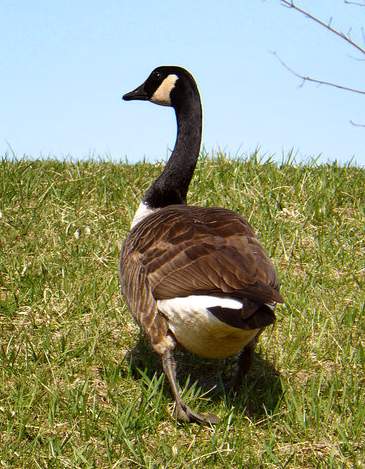
I saw the most amusing little scene play itself out yesterday afternoon. As I was driving home from Thomas High School on Publisher’s Parkway, I passed a flock of about 30 Canada geese gathered on the north side of the road. To a goose, they were all peering at the roadway, and standing very still on the grass, a safe distance from the passing traffic.
Well, not quite all of them. One solitary goose was inching his (her?) way closer and closer to the road. As I drove slowly past, I watched him creep every so slowly onto the shoulder, while the rest of the flock stood and watched.
I was hooked. I just HAD to see how this was going to play out. So I pulled off to the side of the road to see what was going to happen next.
Step by step, the goose waddled tentatively into the roadway. For almost a minute, he was close enough to the roadside that drivers just went around him. But at long last, the goose had made his way to the middle of the road, effectively stopping traffic.
Then, and only then, did the rest of the flock start across.
I didn’t hang around long enough to see if all the other geese gave their brave friend a high five or slap on the back. But as I drove away, I did wonder how that poor sap had landed such a dangerous mission. Did he volunteer? Maybe he pulled the short straw. Perhaps it was some sort of goose gang initiation. Or maybe a Birda Poopa Epsilon fraternity hazing.
Or maybe, just like all of us after a long day of work, they just wanted to have a little fun. So they decided to play a game of … you guessed it … chicken.
* * *
(posted 8/4/2026)
email me at missyblog@gmail.com. “Like” this blog on Facebook and follow me on Instagram and Threads (@missyblog)
You can also get email notifications every time I post a new blog by using the “Subscribe” link on the right side of this page (or all the way at the bottom of the page if you’re on your phone).
For some people, running is a natural passion, a non-negotiable part of their daily routine. For others (like me) it takes a concrete goal just to lace up the sneakers. Two Webster women found a creative way to bridge that gap, doing something that fills both buckets.
Karen Seidel and Angela Oldfield have been running buddies ever since meeting through a Webster Women Runners Facebook group about eight years ago. They meet several times a week somewhere in town and run various distances.
In early 2024, Karen saw a story on the television news that intrigued her. It told of a woman who walked every street in Monroe County. “I knew I didn’t want to do that,” she remembered, “but I started thinking about a goal we could achieve that was not running a marathon, or even half marathon. We could get a map of the Town of Webster and run every street.”
Having set the goal (and getting Angela on board), the first step was to plot the routes. Using a detailed map she secured from Town Hall, plus Google Maps and a program called OntheGoMap.com, Karen starting planning, driving the routes to check details like the route’s distance, where to park, street lights, traffic density, shoulder width and more.
On July 23, 2024, they set their plan in motion with their first run from Dewitt Road Elementary School, guided by directions Karen had written on a 3″ x 5″ card she kept in her pocket.
They started incorporating their goal into their regular routine, eventually shifting the “run every street” runs to the daytime for safety. This also allowed them to actually see the neighborhoods they were running through, which was a major part of their original plan. Every time they completed a route, Karen would color it in on the huge map.
As you can imagine, Karen and Angela learned quite a bit about our little town in their travels. They noticed, for example, that lots of Webster residents own campers and RVs, people are very supportive of the Marching Band bottle and can drive, there are a LOT of deer (and the occasional skunk and horse), and you can smell donuts baking when you run by the cider mills. Most importantly, though, they learned that Webster is a very friendly town. Fellow runners always waved and made a comment about the weather, and one homeowner even let them use her bathroom.
They also discovered some gorgeous neighborhoods. Among their favorites were the Herman Rd. neighborhood, Inspiration Point, and The Bluffs on the west side of the bay.
In general, the whole project went very smoothly, but there were a few hiccups and difficulties. Like last October when they were planning to run six and a half miles, but got talking and forgot to turn around, so they ended up running nine miles instead. Also, running along Empire Blvd. between Five Mile Line and the AMC Theater was “not ideal.”
“We ran those areas early in the morning when there was no traffic,” Karen remembered. Pre-sunrise darkness, heavy rains and blistering heat were other challenges they needed to overcome — or endure.
Are you wondering if they ran down your street during their quest? They got that question a lot.
“When we told people what we were doing (such as dog-walkers or passers-by),” Karen said, “they inevitably started listing street names they knew and asking us if we had run them. The answer is yes.”
Ultimately, the entire project was a journey of discovery on several levels.
“Overall,” Karen said, “we learned so much about our beloved town. We learned there are beautiful trees and gardens all over Webster. There are all kinds of neighborhoods, dog-walkers, and people who sit on their porch drinking coffee and waving hello.” But they also learned how the power of friendship can help you meet a goal and work through life’s challenges together.
“Some of my favorite runs didn’t necessarily have to do with the place we were running,” Angela said. “It was the conversation. Karen and I have helped each other through highs and lows of life. We’ve given each other advice, we’ve supported each other by listening, and have NEVER once canceled on each other.”
At the finish lineFamily and friends welcomed them Highlighting the final route
On Saturday morning, July 25, almost exactly two years after they began their quest, Angela and Karen completed the last of their “run every street” runs. It was a 6.4-mile route that took them through the village and along the Rt. 104 bike path, ending by Village Bakery. Several runner friends joined them and family members met them at the finish line to congratulate them on their incredible achievement.
In total, Karen and Angela ran 89 different routes and more than 476 miles. And while they’re not planning another grand adventure like this anytime soon, they are planning to repeat some of their favorite routes in the future.
“We feel great,” Karen said, and “we got to know our town really well.”
* * *
email me at missyblog@gmail.com. “Like” this blog on Facebook and follow me on Instagram and Threads (@missyblog)
You can also get email notifications every time I post a new blog by using the “Subscribe” link on the right side of this page (or all the way at the bottom of the page if you’re on your phone).
Perhaps the most rewarding part of writing this blog is watching how it connects our community. Today I have a follow-up to one of my recent posts which is a perfect example.
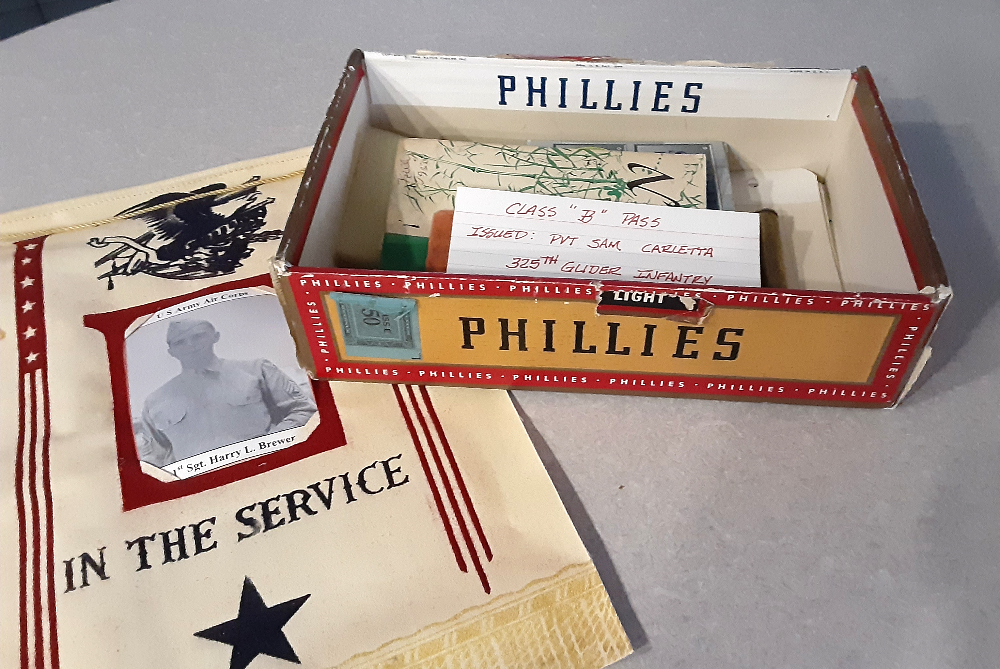
A little more than two weeks ago I posted a blog titled “History in a cigar box.” It described a treasure trove of information about the veterans buried in our Webster cemeteries, which had been found in a cigar box in a storage room at the American Legion. On more than 150 small notebook pages, someone had meticulously recorded, in hand-written notes, each veteran’s name, personal details, which cemetery he is buried in, and what lot number. Most of them also included much more information, including the soldier’s rank, war(s) and battles he fought in, enlistment and discharge dates, even his commanding officer’s name. No one seemed to know who had gathered all that information and kept such detailed records, or why.
A few days after I posted the blog, it was re-printed in the Webster Herald as my History Bit, which I write monthly for the Webster Museum. The photo which accompanied both the blog and the Herald article was the one you see above, with the cigar box and a soldier’s photo.
Just a few days after that, I received this email from Janice Smith, which cleared up one of the mysteries:
Your story on page one of the Herald shows my dad Harry Brewer. And I’m about 99.8% sure that it was him who collected the notes about Webster soldiers. He ran his own gas station on Empire at Plank Rd., and he saved everything. He had at least 25 empty cigar boxes upon his death (he sold cigars, never threw out anything). He was a dedicated member of the Legion for 67 years.
Also, the photo on page three shows the kind of little flip-page note book he used to record credit purchases in for his best customers. At the end of each month he’d tally up each customer’s charges and write them a statement and mail it to them. That’s some of his handwriting.
I connected Janice with Cherie Wood, the current caretaker of the pages. About a week ago, we all met at the Webster Library so Janice could look through her father’s old records and hopefully shed some light on why he created them.
Her father, she remembered, was very interested in genealogy and in his Webster neighbors. He grew up on East Main Street in the village, and even as a teenager would sit at his uncle’s gas station at the corner of Empire and Plank, and listen to the men talk and tell stories. Later, when he owned the station, he started writing those stories down on his little notepad.
“He was curious,” Janice said. “I can remember sitting in the station when he was talking with someone whose grandfather had been in the wars, and was writing notes about them.” And he clearly kept adding to his records as he learned more; on some of the pages, subsequent notes are written with different pens, and often there was so much information it flowed onto the back of the page. Like the one soldier who fought in 18 Civil War battles, each one listed individually, and was present at Lee’s surrender at Appomattox.
Janice also added a very interesting footnote to the story of Sylvester Brewer, whom I mentioned briefly in the original blog.
Sylvester — Harry Brewer’s distant cousin — was taken prisoner at Spotsylvania during the Civil War and spent three months in the infamous Andersonville prison in Georgia. He survived his imprisonment, and upon his release, traveled by foot all the way home to Webster. Janice estimates it took him about three months. When he got home, he walked into the West Webster Hotel (where the Jade Palace is now) where his father was bartending. Sylvester was so emaciated from the war, imprisonment and long trip home that his father didn’t even recognize him.
Why Brewer was keeping the records is still not clear. But the fact that the pages record exactly where each veteran’s gave is located seems to indicate they were referenced when the American Legion placed flags every Memorial Day.
“I think he was involved in placing the flags,” Janice said. “He was always involved in decorating (the graves).”
Whatever the reason Harry Brewer decided to fill his little notebook with details about our local veterans, we owe him a huge debt of gratitude. His curiosity, connection with the Webster community, and his passion for collecting stories have enriched our knowledge and helped us remember and honor our fallen heroes.
* * *
(posted 6/27/2026)
email me at missyblog@gmail.com. “Like” this blog on Facebook and follow me on Instagram and Threads (@missyblog)
You can also get email notifications every time I post a new blog by using the “Subscribe” link on the right side of this page (or all the way at the bottom of the page if you’re on your phone).
If you’re an Irish musician and you live in or near Rochester, chances are good you were at a party up at Webster Park on Saturday the 13th.
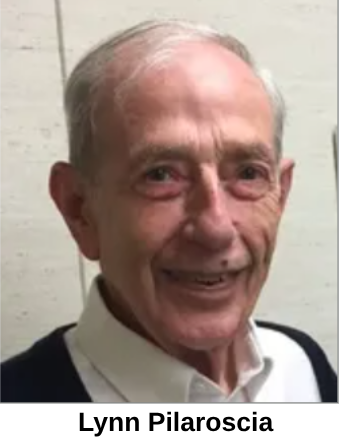
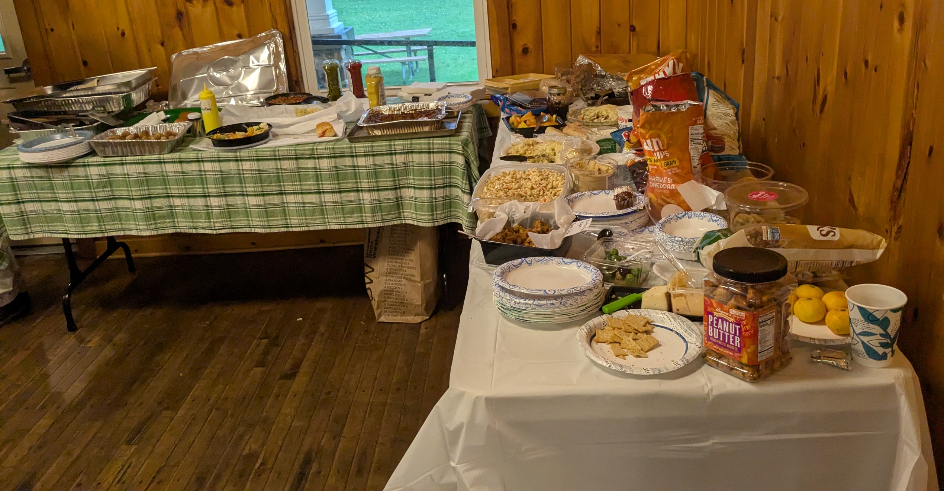
The occasion was the annual “Stand Around and Play Some Tunes” gathering, at which musicians of all kinds are invited to … well, stand around and play. The event was begun perhaps 40 years ago by well-known local Irish musician Lynn Pilaroscia, an invitation for his musician friends (whether Irish, folk, bluegrass or others) to hang out together, enjoy some food and drink, and play some tunes.
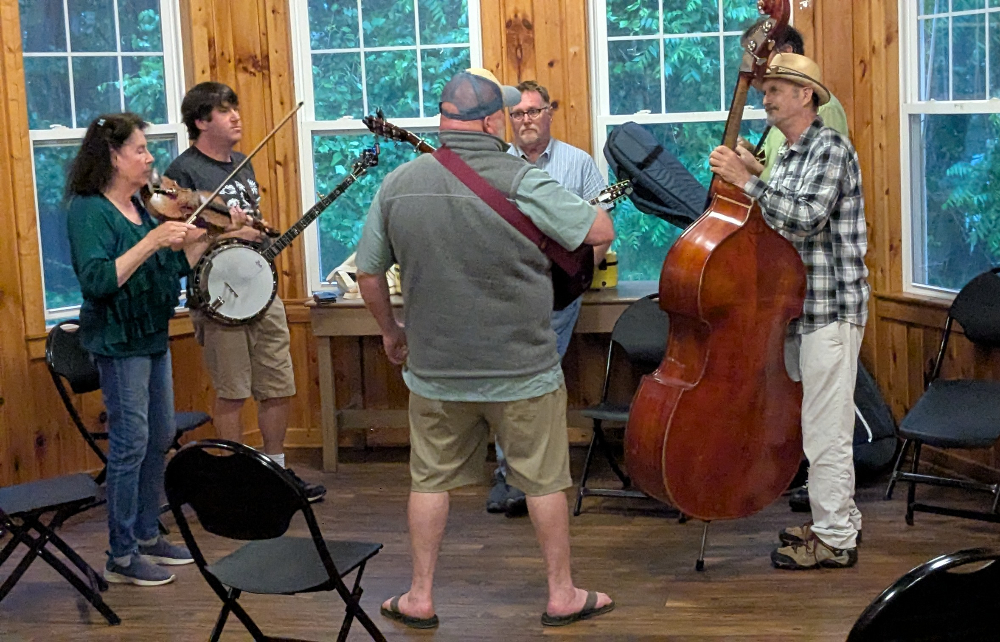
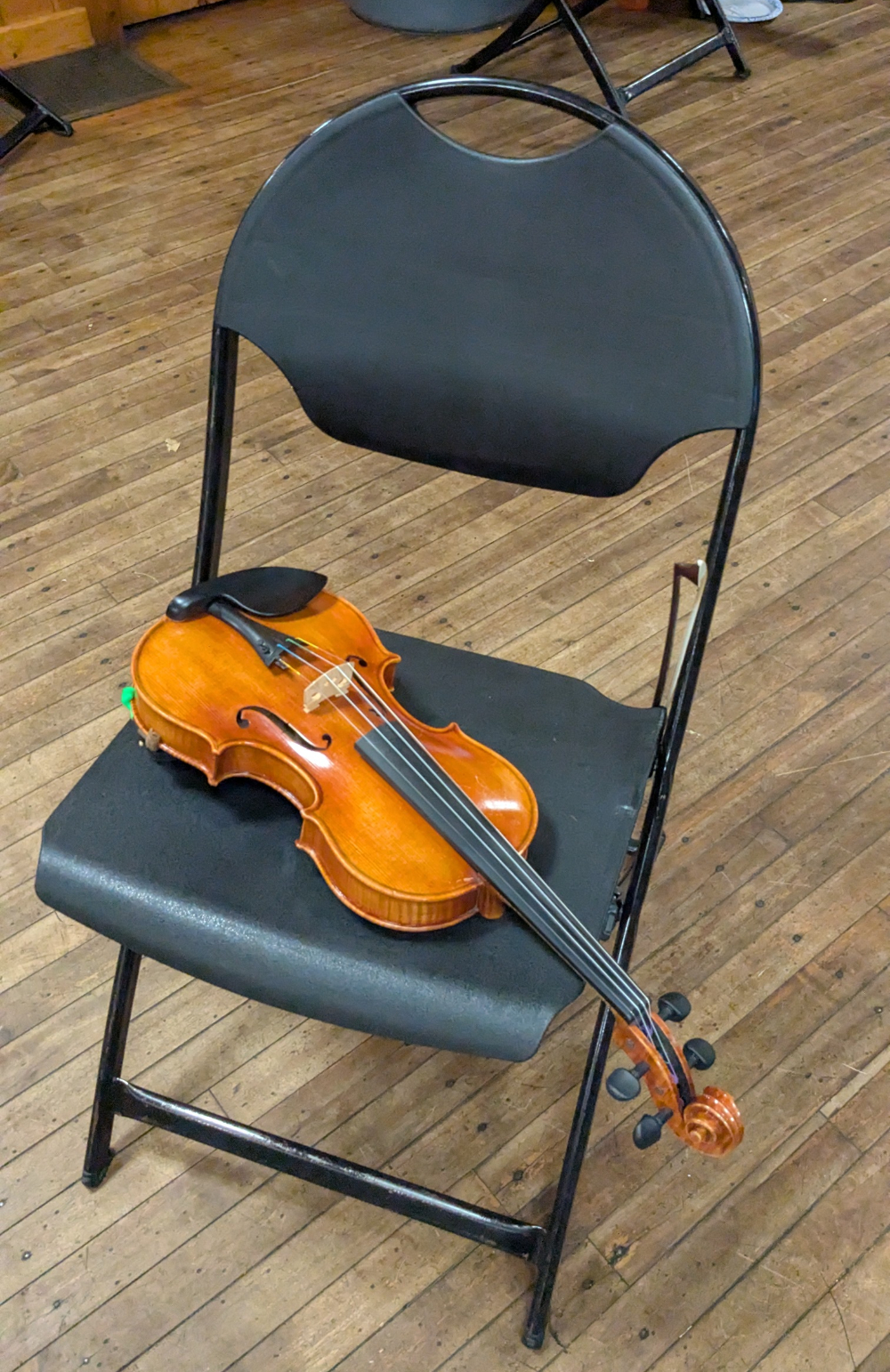
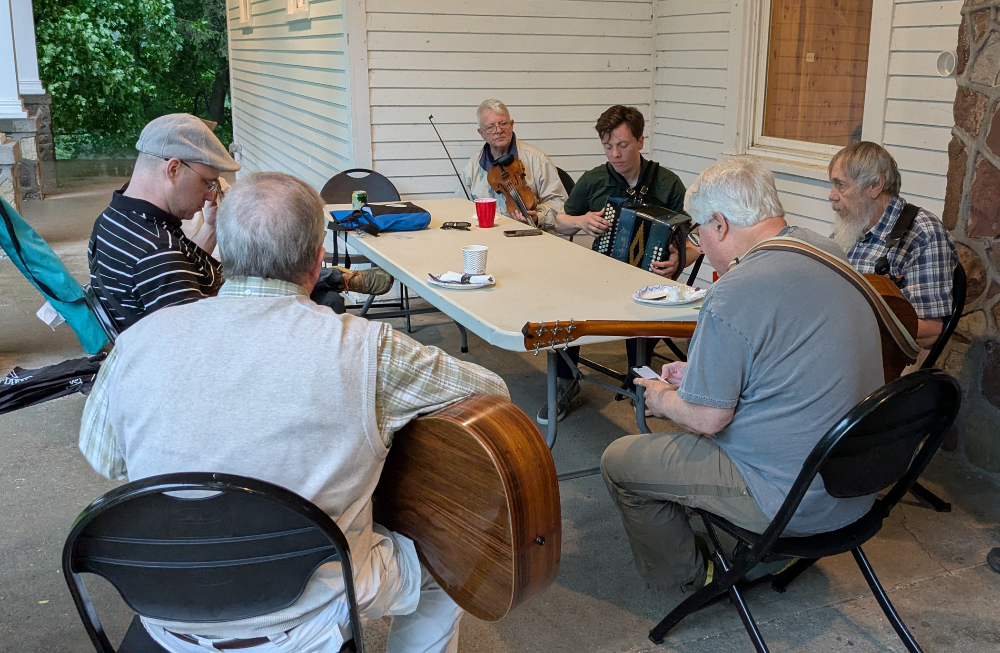
When everything really got going, it was quite a treat for the eyes and ears. At any one moment during the afternoon you might see anywhere from four to seven small groups of musicians, each in a different corner of the White House property — the front porch, the back porch, under a tree, in the main room — jamming. No matter where you were, music surrounded you: bluegrass, waltzes, folk tunes, and traditional Irish jigs, reels and ballads. And the variety of instruments was always astounding: flutes, concertinas, banjos, guitars, string basses, mandolins, accordions, tin whistles, bodhrans, and lots of fiddles.
Thanks to our significant involvement in the Rochester Irish community back in the 1990s, my husband and I knew Lynn well and attended many Stand Around and Play gatherings. It was a great chance to visit with old and new friends from the Irish community and listen to some trad Irish tunes. My favorite memory is when my son Sean — who at 5 years old was inspired by Joe Dady to take up the fiddle — actually got to chat with Joe at one of these parties, and play his fiddle.
Around 2014, Lynn decided to take a break from the parties, in large part because his friend who had done all the grilling wasn’t able to do it anymore. For a long while, the event was forgotten. Lynn passed away in July, 2024 before resurrecting the annual musical gathering.
But last year, and again this year, thanks to the efforts of John Michael Ryan, Jonathan Kyle, and Comhaltas Ceoltoiri Eireann, the Rochester Irish Musician’s Association, Stand Around and Play returned to the White House. Once again, music of all kinds filled the air from all corners of the building (mostly indoors this year since it rained buckets that Saturday). Perhaps because of the threat of nasty weather, attendance was down. But organizers are hoping that in the years to come, the event will continue to grow again, and Lynn’s dream is rekindled, bringing musicians together to do what they love most: play music.
* * *
(posted 6/25/2026)
email me at missyblog@gmail.com. “Like” this blog on Facebook and follow me on Instagram and Threads (@missyblog)
You can also get email notifications every time I post a new blog by using the “Subscribe” link on the right side of this page (or all the way at the bottom of the page if you’re on your phone).
I feature the people and places and events that make Webster the wonderful community it is — and throw in some totally-not-Webster-related personal ramblings every once in a while as well.
I love it when readers send me news about the great things happening in their schools or the community, so please email me anytime at missyblog@gmail.com