Tag Archives: Webster museum

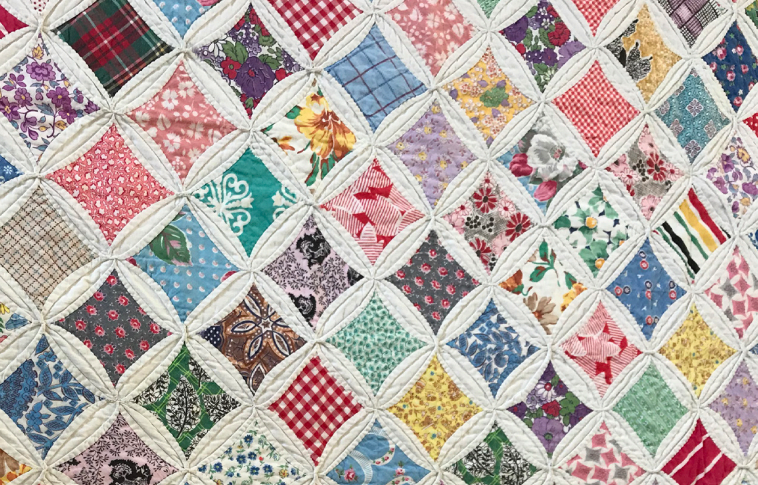
Webster Museum talk presents a journey through the history of quilting

18 Mar

The Webster Museum cordially invites everyone to a presentation by local quilt historian Beth Davis on Sunday, March 22 at 2 p.m.

Beth has worked at The Genesee Country Village Museum and until recently was an American Quilter Society Certified Appraiser of Quilted Textiles. She is retired from both, preferring now to focus on her love of quilt making. She excels at both documenting oral history (having contributed to Quilters Save Our Stories, the largest oral history collection about quilt makers in the world) and documenting in written form (having written the GCVM catalog on their quilt collection). Beth is also the author of A Stitch in Time: Quilts From Genesee Country Village and Museum.

Beth will talk about the history of quilting and its many variations and applications. Time will be provided after the presentation to view the quilts displayed in exhibit areas throughout the museum.

The presentation is scheduled for Sunday, March 22 at 2 p.m. at the museum, 18 Lapham Park in the Village of Webster. There’s no cost to attend this program, but registration is required, and the seats are filling up quickly. Visit webstermuseum.org, and you’ll be directed to where you can sign up. Limit two people per registration.

Here’s a bit more about the museum’s current exhibit of quilts, which they call “Stitched Stories: a Celebration of Vintage Quilts”:

At the heart of the new exhibit are more than 20 handcrafted quilts. Visitors are invited to step back in time and explore the beauty, skill, and storytelling woven into quilts from the 19th and early 20th centuries, which showcase a wide variety of designs and techniques, each a reflection of the maker’s artistry and resourcefulness.

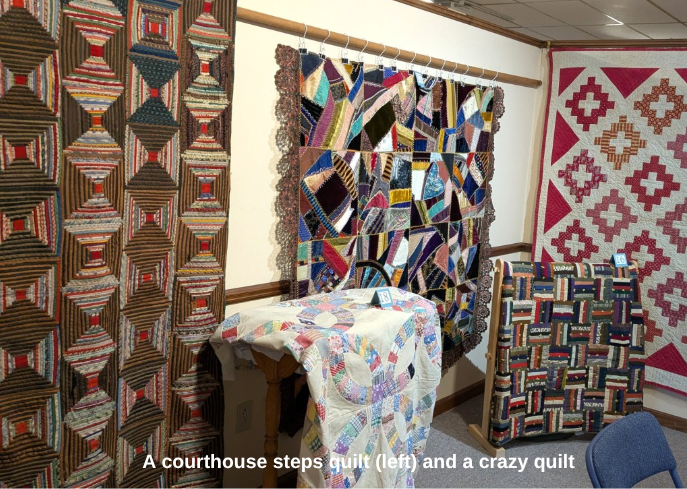
Far more than practical bedcovers, these quilts served as visual diaries of family life and community connections. Patterns such as “Courthouse Steps,” “Crazy Quilt,” and “Redwork” reveal regional traditions and changing fashions in both fabrics and colors. Some pieces were stitched from scraps of worn clothing, while others feature intricate embroidery or appliqué work that turned everyday materials into works of art.

“Stitched Stories” runs until June, inviting guests to experience how creativity and community have long been interlaced through needle and thread.

* * *

(posted 3/18/2026)

email me  at missyblog@gmail.com“Like” this blog on Facebook and follow me on Instagram and Threads (@missyblog)

You can also get email notifications every time I post a new blog by using the “Subscribe” link on the right side of this page (or all the way at the bottom of the page if you’re on your phone).

Don’t like the cold? Be thankful you don’t have to move the outhouse.

13 Mar

Tuesday evening, my Village Runners friends and I ran in shorts. Three days later, it’s snowing.

This (almost) spring’s topsy-turvy weather made me think of a very interesting article I read in the most recent Penny Farthing newsletter created by the volunteers at the Webster Museum. Titled “Plow, Plant, Harvest, and Hearth,” it took a closer look at what life was like in early Webster in each of the four seasons. I repost that article here for your enjoyment:

Plow, Plant, Harvest, and Hearth — Life in Early Webster Through the Four Seasons

Winter found older kids in school, people reading, making ice cream, maybe having a bath, eating the “put up” foods, and women and girls sewing, mending, knitting and quilting. Men and boys were busy repairing equipment and caring for the animals. Everyone was looking through the Sears Catalog and thinking about Christmas. Winter was a time of sickness and if a doctor was not available, the women knew what herbs to use.

Spring brought longer days, fresh greens, grass for the animals, maple syrup, sheep shearing, barn and house cleaning, and maybe move the outhouse if the pit was getting full. Crops were planted in freshly prepared fields and boys were out of school to work on the farm.

Summer brought soap making, laundry drying outside, smaller kids in school, swimming if a pond or creek was nearby, 4th of July celebrations, neighborhood gatherings and picnics. Much of the work was maintaining fields, gardens, and fruit trees. Also making butter and mending fences.

Fall found farm families butchering and preserving meat in salt or drying for winter. Wheat and oats were harvested for the animals or sold, and fruit and vegetables were picked and dried or “put up.” Pumpkins were preserved as they were high in Vitamin C. Barns were prepared and houses were cleaned and made ready for winter.

Some things haven’t changed. Winter is still a time of sickness, and I still like to hang my laundry outside and gather with neighbors and friends. But I am glad we no longer have to churn our own butter, thank you.

This article was just one of several very interesting historical tidbits in the spring edition of the Penny Farthing. They come out quarterly, and if you like learning about Webster’s fascinating history, you should subscribe. If you’d like to be added to the distribution list, email WebsterMuseum@gmail.com. If you’d like to see this month’s edition, click here, and to see past editions, click here.

* * *

(posted 3/13/2026)

email me  at missyblog@gmail.com“Like” this blog on Facebook and follow me on Instagram and Threads (@missyblog)

You can also get email notifications every time I post a new blog by using the “Subscribe” link on the right side of this page (or all the way at the bottom of the page if you’re on your phone).

February History Bit: The Blue Line Trolley

14 Feb

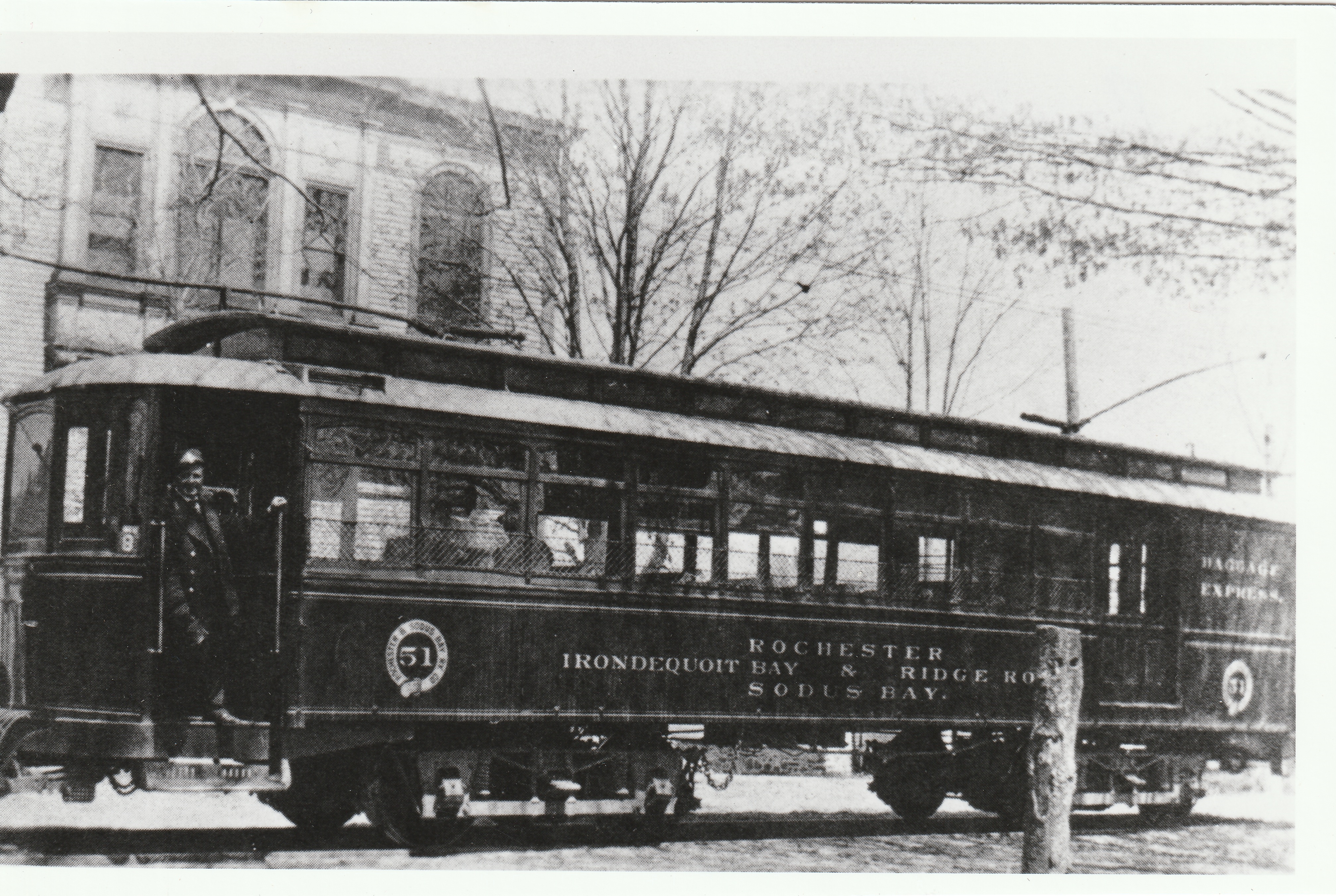
In the early 1900s, before automobiles became commonplace and horse-drawn wagons just weren’t considered fast enough anymore to travel long distances, Webster residents had another option: the “Blue Line” trolley.

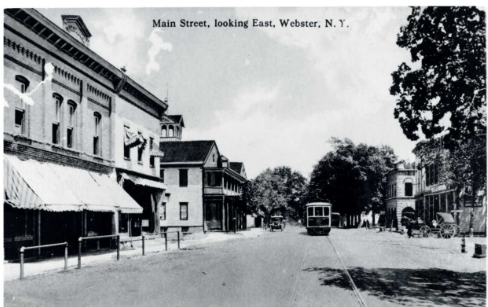
The trolley was part of the Rochester and Sodus Bay Railroad Company, which was incorporated in August, 1898. It was nicknamed the “Blue Line” because the cars were all painted a deep, distinctive royal blue. The section that ran through Webster was built in 1900, taking passengers on a rather circuitous route through the town, especially where it climbed the east bank of Irondequoit Bay. When it reached the top of the hill, along what is now Rt. 104, it crossed the highway south of Dayton’s Corners and Plank Rd., continued to Creek St. and Bay Rd., then to Glen Edith. From there, the line headed east through West Webster, the Village of Webster, Union Hill, Fruitland, Ontario Center and beyond.

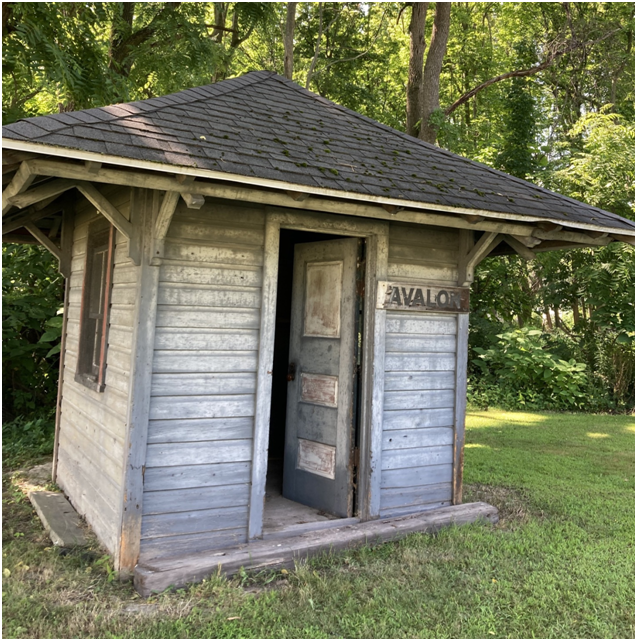
In the villages along the route, tracks were laid through the main streets; in the Village of Webster, the trolley stopped at 28 East Main St., where Root Rituals Salon is now. At smaller stations, the trolley would only stop if there were passengers to embark or disembark. In pleasant weather, riders could wait along the tracks and watch for the trolley to approach, but in inclement weather, catching the trolley was a bit more challenging. Then, passengers would have to wait inside a small ticket booth and watch for it to arrive. If they didn’t get outside quickly enough, the trolley would pass by without picking them up.

One of these original ticket booths still stands on Bay Rd. near Avalon Trail. It’s believed that the Avalon Trolley Stop could be one of the line’s historic “porthole” stops. Passengers peeked out through a window and were instructed to light a “torch” made of rolled-up newspaper to signal the approaching trolley. Unsurprisingly, this method was eventually deemed a fire hazard for both the passengers and the wooden shelters, and eventually an electric light was installed on the building to signal the trolley driver.

When the line first operated, trolleys ran on an hourly schedule from Rochester to Sodus Point and back between 6 a.m and 9 p.m., along 47 miles of track. A normal run took two hours and 19 minutes, and tickets cost $1.32. During the spring months, the Blue Line was often referred to as the Apple Blossom Special; for a reduced rate — just 75 cents — passengers could take a ride along Ridge Road to see and smell the apple blossoms.

In 1920 the automobile began taking business away from the trolley, and business fell off considerably through the later part of the decade. The Blue Line made its last run on June 27, 1929. Esther Dunn described that run in her book Webster … Through the Years: “On that day, William ‘Yank’ Gloor, Sodus Bay line’s most popular motorman who ran the first regular car to Sodus Point from Rochester, had the distinction of piloting the last car to leave the Point for Rochester. On this last trip, car number 111 carried a banner on front which read, ‘My Last Run — Goodbye Folks.'”

You can read more about the Blue Line Trolley at the Webster Museum, where the volunteers there have created a very informative display right inside the front door. So stop by and check it out for yourself. The museum is located at 18 Lapham Park in the Village of Webster, and is open from 2 to 4:30 p.m. every Tuesday, Thursday and Saturday.

Thank you to Webster Town Historian Lynn Barton and several other museum volunteers for helping me pull together this information.

* * *

(posted 2/14/2026)

email me  at missyblog@gmail.com“Like” this blog on Facebook and follow me on Instagram and Threads (@missyblog)

You can also get email notifications every time I post a new blog by using the “Subscribe” link on the right side of this page (or all the way at the bottom of the page if you’re on your phone).

New museum program pairs story time with history

29 Jan

The Webster Museum is introducing a brand new program in February, designed to help history come alive in a fun way for elementary-aged students.

It’s called “Story Time at the Museum,” and the first one is scheduled for Saturday, Feb. 7 at 2:30 p.m. This month’s theme is Valentine’s Day. Children will share a story, learn about the history of this special day, examine some antique Valentines and make their own Valentine greetings.

The Valentine’s Day-themed story time is just the first in what organizers are hoping will be a regular first-Saturday-of-the-month event, each month pairing delightful stories with interesting historical lessons. On March 7, the story time program will be all about quilts and quilting, and highlight the museum’s current display of historical quilts.

There’s no charge to attend and all ages are welcome. The Webster Museum is located at 18 Lapham Park in the Village of Webster.

* * *

email me  at missyblog@gmail.com“Like” this blog on Facebook and follow me on Instagram and Threads (@missyblog)

You can also get email notifications every time I post a new blog by using the “Subscribe” link on the right side of this page (or all the way at the bottom of the page if you’re on your phone).

(posted 1/29/2026)

A quilt-lover’s paradise at the museum

20 Jan

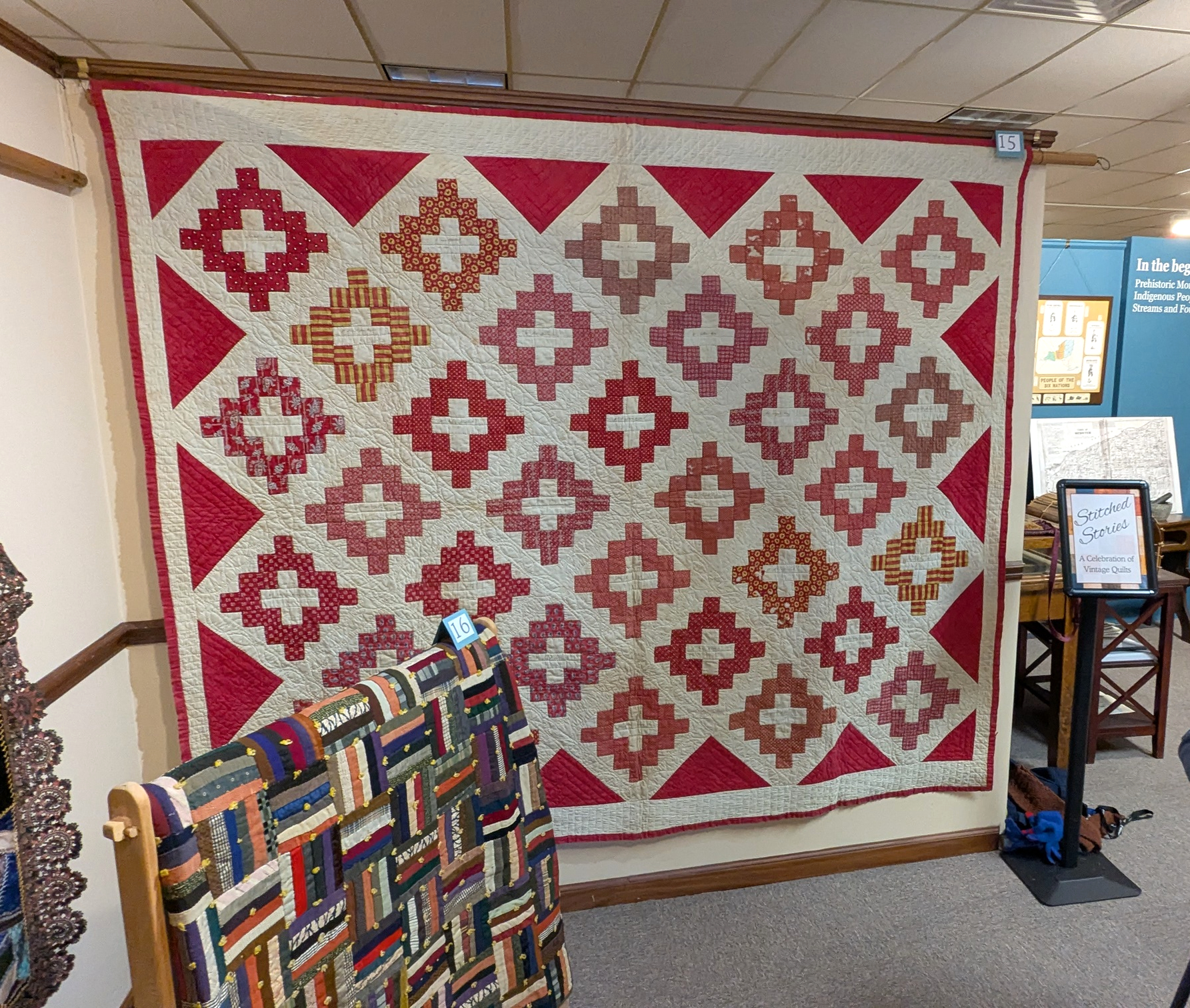
The Webster Museum’s annual Quilt Exhibit — called “Stitched Stories” — has returned, and if you love anything and everything about quilting you’re not going to want to miss it.

Stitched Stories offers an illustrated journey through Webster’s history, told through the evolving designs, colors, fabrics and intricate patterns of heirloom quilts. Over the years, the museum has been the fortunate recipient of many vintage quilts. Most are documented in detailed binders that include their history, the artisans who created them, and, in many instances, their appraised value. These textile treasures capture decades of Webster history in their stitches.

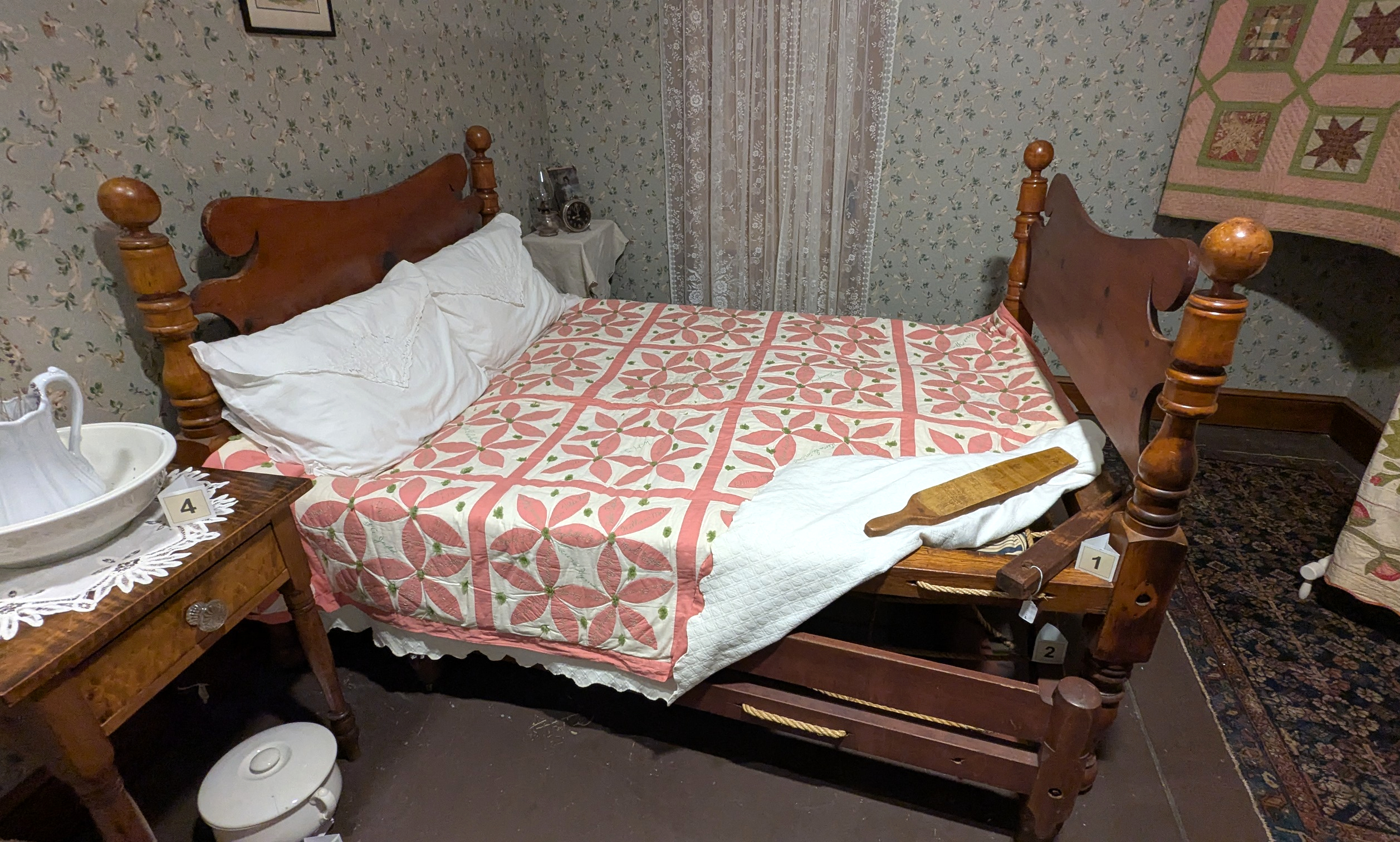
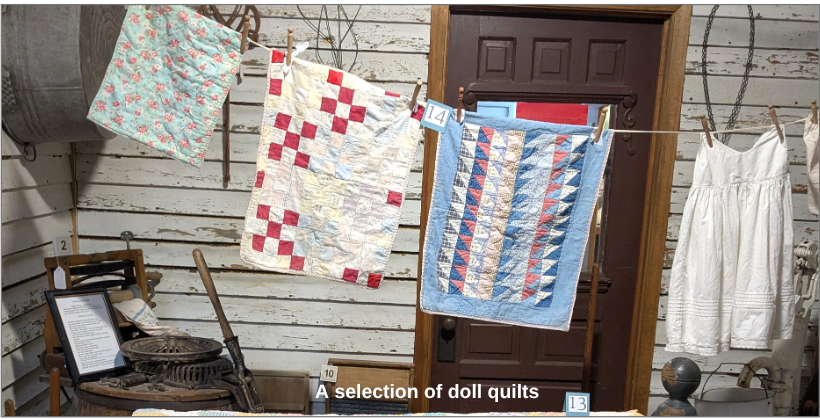
More than 20 quilts of different sizes have been placed on display throughout the museum, from doll-sized mini-quilts, to a small cot quilt, to a full-sized courthouse steps quilt. They hang in exhibit cases, decorate the vintage parlor and bedroom, and adorn walls and railings. With some pieces dating back over 170 years, each stands as a testament to months of patient needlework and intricate craftsmanship.

I stopped by the museum on Tuesday afternoon to see the exhibit for myself, and discovered how LITTLE I know about the history of quilting. For example, there are so many different designs, popular during various times — like the wedding ring design, flying goose quilt, nine-patch quilt, crazy quilt and the “beginner friendly” courthouse steps design. (I did not consider that anywhere near beginner friendly myself.)

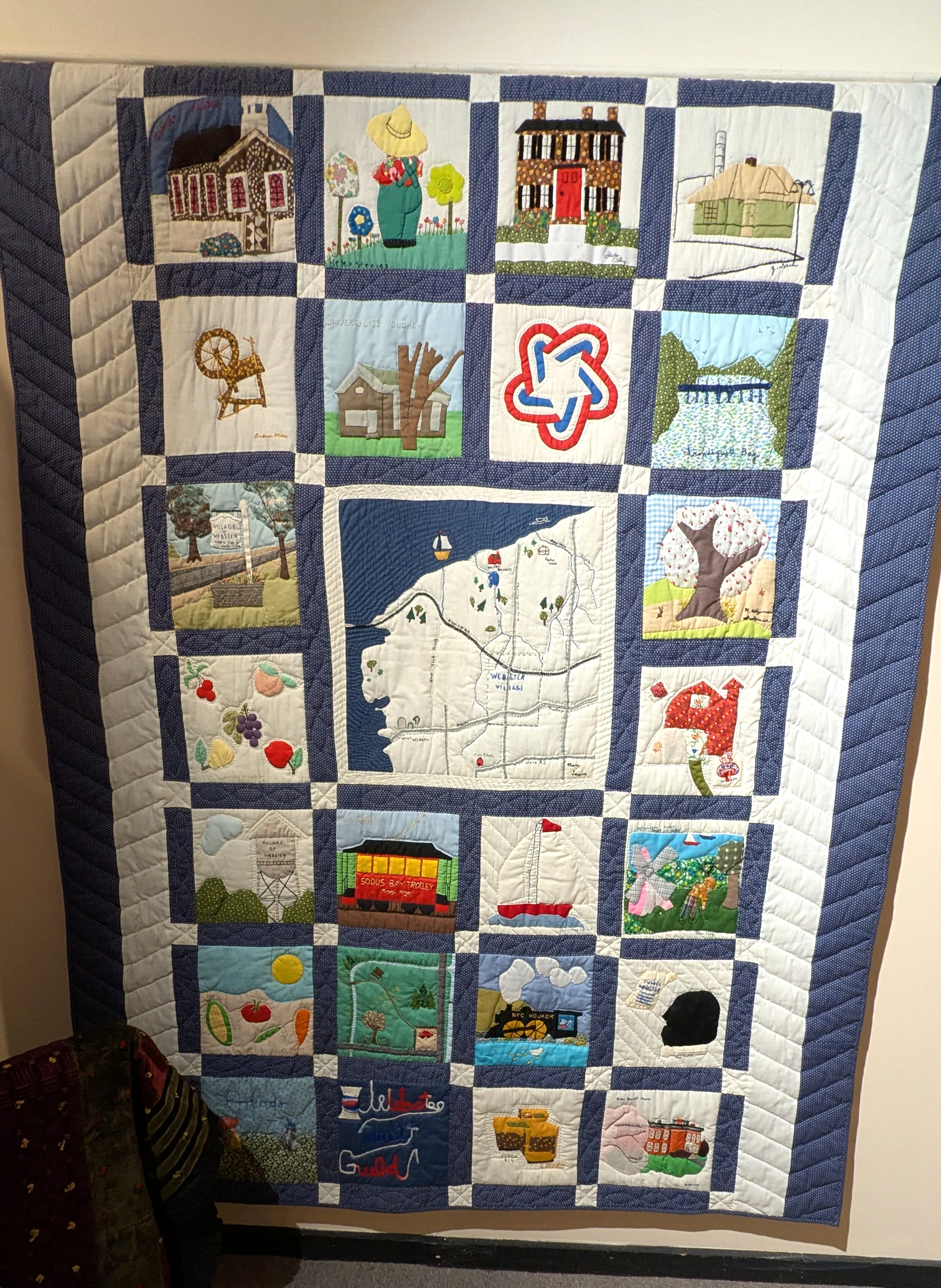
Some of the history was very interesting. The tiny doll quilts, for example, were popular from the late 1800s to the mid-1900s, often made by young girls just learning to sew. Cot quilts, used on a small bed or cot, were just the right size for a soldier in the Civil War to tuck into his backpack. The album panel quilt, crafted by Minerva Green Woodhull, has writing on it by her father-in-law, Byron Woodhull, who was Webster’s first supervisor. And I particularly liked the Webster Bicentennial heritage quilt, depicting a Webster map and squares representing historical highlights, made in 1976 by members of the Webster Quilt Guild.

An informative binder near the museum’s front entrance provides some background about each of the quilts on display. There’s even more information about each in the museum’s library, if you’re interested. Just ask one of the volunteers about that.

The Webster Museum is located at 18 Lapham Park, in the Village of Webster. They’re open Tuesday, Thursday and Saturday from 2 to 4:30 p.m.

* * *

email me  at missyblog@gmail.com“Like” this blog on Facebook and follow me on Instagram and Threads (@missyblog)

You can also get email notifications every time I post a new blog by using the “Subscribe” link on the right side of this page (or all the way at the bottom of the page if you’re on your phone).

(posted 1/20/2026)

January History Bit: What IS this thing?

14 Jan

You never know what curious artifact you might discover when you wander through the Webster Museum. Case in point, this funny-looking, heavy glass, jar-like thing. Believe it or not, it’s actually a mouse trap, on display among many other farm and home gadgets that were instrumental to the lives of Webster residents a century ago.

The trap is about 6 inches long, with one open and one closed end. It has such an unusual shape and is so unlike anything we’re familiar with, that visitors are naturally drawn to examine it more closely and find out exactly what it’s all about. Fortunately, its history is thoroughly explained in a very helpful magazine article posted with the trap.

According to the article, it was patented in 1918 by Nute Wigginton of Winchester, Virginia, who dubbed it a “Mouse Exterminator.” Apparently, farmers at that time commonly used strychnine-coated oats and wheat to poison mice in their orchards and vineyards. But if the bait was exposed to the weather, it would be spoiled by the first rain shower that came through. It was a real problem, especially since a single mouse could destroy as many as ten or more fruit trees in one winter by gnawing on the bark at the base of the tree.

Wigginton came up with a brilliant solution. He designed his exterminator so that a tablespoon of poisoned bait could be inserted from the top. Then, when placed on the ground with the hump up, rain couldn’t get in. But a mouse could easily climb inside and eat the bait, and because the strychnine worked so fast, the mouse never got back out.

This particular Mouse Exterminator was found in the orchard of Drake Farm, which was located just west of Bay Rd., at the Webster/Penfield border. Unfortunately, the date it was found is unknown, but that doesn’t diminish the fascinating history behind it.

Stop by the Webster Museum yourself to see what other curious finds you might discover. The museum is located at 18 Lapham Park in the village, and is open every Tuesday, Thursday and Saturday from 2 to 4:30 p.m. There’s no admission charge. 

* * *

email me  at missyblog@gmail.com“Like” this blog on Facebook and follow me on Instagram and Threads (@missyblog)

You can also get email notifications every time I post a new blog by using the “Subscribe” link on the right side of this page (or all the way at the bottom of the page if you’re on your phone).

(posted 1/14/2026)

And the Tree Festival winners are …

2 Jan

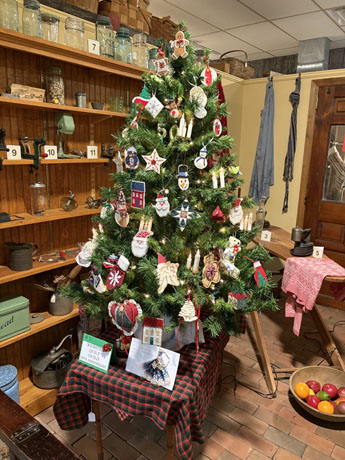
The 2025 Webster Museum Festival of Trees has concluded, and after counting and re-counting, the winners have been announced.

This year’s contest included 20 mini-trees, beautifully decorated by these organizations and individuals:

  • American Legion
  • Gwen Hoffman
  • Jack Foundation
  • La La’s
  • Spry Lego League
  • The Webster Citizen’s Action Group
  • The Webster Republican Committee
  • Webster Arboretum
  • Webster Comfort Care
  • Webster Community Chest
  • Webster Country Gardeners
  • Webster Democratic Committee
  • Webster Firemen Ladies’ Auxiliary
  • Webster Grange
  • Webster Museum Volunteers
  • Webster Quilt Guild
  • Well Field Preservation
  • Women’s Club of Webster
  • Wreaths Across America

More than 630 votes were tallied in person and online, and I can tell you from personal experience, it was not an easy choice.

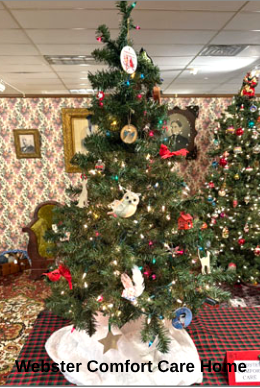
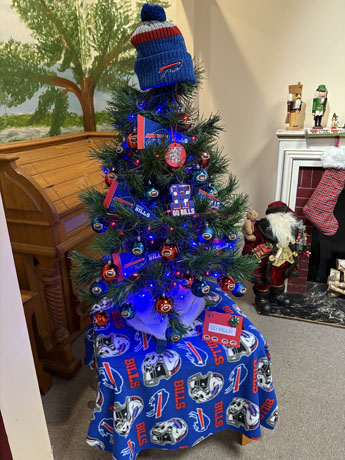
Taking first place this year, with 84 votes, was the tree decorated by the Webster Comfort Care Home. (This is the third year in a row that Webster Comfort Care has taken the top spot. We’re talking a dynasty here.) Coming in a close second with 78 votes was the Go Bills! tree designed by Webster Museum volunteer Gwen Hoffman. I didn’t vote for this one, but I thought it might be a fan favorite.

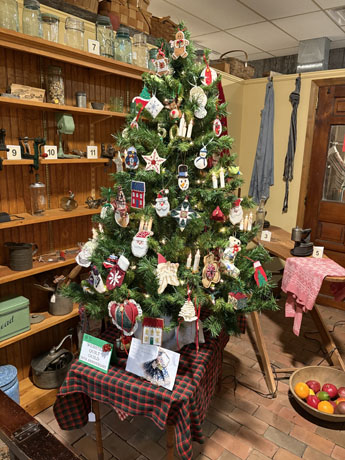
In third and fourth places were the Webster Quilt Guild with 61 votes and the Webster Community Chest with 58.

The Webster Museum hosts the very popular Festival of Trees every year. Voting typically opens in early December on the day of the Village of Webster’s Winter Wonderland and runs through the end of the year. It offers a great chance for local organizations to have a little fun with tree decorating, while drawing some attention to their cause. And having 20 beautifully lit and decorated trees sprinkled throughout the museum makes the museum really sparkle during the holidays.

Congratulations to all the winners, and thank you to everyone who participated.

* * *

email me  at missyblog@gmail.com“Like” this blog on Facebook and follow me on Instagram and Threads (@missyblog)

You can also get email notifications every time I post a new blog by using the “Subscribe” link on the right side of this page (or all the way at the bottom of the page if you’re on your phone).

(posted 1/2/2026)

Webster community mailbag

26 Dec

Webster Museum’s Festival of Trees

There’s still time to vote for your favorite mini-Christmas Tree at the Webster Museum’s Festival of Trees.

Nineteen beautifully decorated trees have been set up around the museum, decorated by local non-profit agencies. Community members are invited to examine them all and vote for their favorite one. Votes will be accepted through the end of December. You can stop by the museum on Tuesday, Thursday or Saturday from 2 to 4:30 to see them in person, or vote for your favorite online at the museum’s website.

Also, beginning Jan. 13, the museum will introduce their 2026 Quilt Exhibit, called “Stitched Stories: A Celebration of Vintage Quilts.” It will be on display in both the museum AND the Webster Public Library.

Start off the new year with a hike!

For the first time ever, Friends of Webster Trails will be hosting a free, guided First Day Hike at 10 a.m. on Thursday, Jan. 1 at Whiting Rd. Nature Preserve.

This family-friendly hike will be about an hour over easy or moderate terrain. Dress in layers and have traction devices for your feet if necessary. Well-behaved, leashed dogs are welcome. 

Please register online for this event so they have an idea of how many to expect.  

Friends of Webster Trails is a volunteer organization dedicated to maintaining the public trails throughout Webster, including the Hojack Trail which runs through the village.

Village of Webster Christmas Tree Recycling

Curbside collection of Christmas trees will take place during the Village’s monthly brush pick up, the week of Jan. 5. Remember:

  • Live trees only, no artificial trees
  • Remove ornaments and lights
  • Do NOT put tree in a bag or cover with plastic
  • Place tree at curb by Sunday, January 4

News from Webster Comfort Care

Webster Comfort Care Home will be selling Kittelberger 12 Months of Flowers Cards from Jan. 5 through Jan. 26.

Cost is $50 and entitles the bearer to one fresh new bouquet of flowers every month for 12 months. For more information, click here. Payment accepted by cash, check or credit card. Cards can be picked up at Webster Comfort Care Home, 700 Holt Rd., from 8 a.m. to 8 p.m.

Women’s Club announces January meeting

The Women’s Club of Webster will host their monthly general meeting and luncheon on Thursday, Jan. 22, at Nucci’s Restaurant, 807 Ridge Rd., Webster. The gathering begins with social time at 11:15, a business meeting at noon and lunch at 12:30, followed by a speaker. This month, the Women’s Club welcomes Margery Morgan from Webster Hope, a nonprofit organization which helps Webster residents in need of assistance by providing food, clothing and emergency financial support.

Cost of the luncheon is $23, and will feature a buffet with chicken parmigiana, pork loin, greens and beans, oven-roasted potatoes, penne with sauce, and salad. Cost is $23. Please send your check made out to the Women’s Club of Webster by Jan. 15 to Carolyn Rittenhouse, 405 County Line Road, Ontario, 14519. If you think your check might be late, please call Carolyn at 585-265-1303.

At the library …

Here’s a sneak peek at some of the Webster Public Library‘s January programs:

For adults:

  • Elsa von Blumen: Famous Rochestarian and Female Bicyclist — Thursday, Jan. 15, 6:30 to 7:30 p.m. Learn about Elsa, a famous Rochestarian in the 1800s. Registration is required.
  • Salaff String Quartet Concert — Thursday, Jan. 22, 4 to 5 p.m. Enjoy a variety of music from classic to folk, performed on string instruments. Registration is required.

For Teens and Tweens:

  • Make it Monday: Snowy Pine Cone Trees — Monday, Jan. 12, 6 to 7 p.m. Teens (grades 4 and up) and adults are welcome to attend this monthly craft night. All supplies will be provided. Registration is required.
  • T(w)een Library Club — Wednesday, Jan. 28, 6:30 to 7:30 p.m. For grades 4 and up. Do you like books, games, crafts, sharing your ideas, or just hanging out with your friends? This group is for you. Registration is required.

For the little ones:

  • Rubber Ducky Storytime — Tuesday Jan. 13, 10 to 10:30 a.m. Celebrate National Rubber Ducky Day with stories, songs and rhymes about ducks, plus an activity and simple craft. All ages are welcome.
  • Preschool Puzzle Morning –Tuesday, Jan. 27, 10 a.m. to noon. Stop by the storytime room to try an assortment of toddler-friendly puzzles.

And this stuff:

  • The Webster Library’s annual Webster-Area Preschool Fair will be held on Saturday, Jan. 10 from 11 a.m. to 1 p.m. Meet representatives from many area preschools to learn about their programs, More to come about this.
  • Zaurac’s Space Music Show — Saturday, Jan. 17 from 1 to 3 p.m. Zaurac (also known as Steve Fentress), will perform a live celestial-themed keyboard concert complete with cosmic-themed songs and imagery. For all ages. Registration is required.
  • The January Community Exchange is cookbooks. Bring in some you don’t use anymore, and pick up some new-to-you ones.

* * *

email me  at missyblog@gmail.com“Like” this blog on Facebook and follow me on Instagram and Threads (@missyblog)

You can also get email notifications every time I post a new blog by using the “Subscribe” link on the right side of this page (or all the way at the bottom of the page if you’re on your phone).

(posted 12/26/2025)

Merry Christmas (1840s style)

24 Dec

For this Christmas Day 2025, I offer a reminder of what Christmas was like — or rather, NOT like — in the 1840s, courtesy of the Webster Museum. I pulled this piece directly from the Museum’s most recent Penny Farthing newsletter, just one of many fascinating historical nuggets included in this month’s edition. (More info at the end of the blog about how you can sign up for this informative publication.)

The article made a very interesting comparison between what the Christmas season was like back in the mild-19th century and what it’s like now. Specifically, here’s a list of things that are completely normal today, but would have been utterly impossible, unimaginable, or simply didn’t exist in an 1840s Christmas:

Decorations and the tree itself

  • Electric Christmas lights / fairy lights (first strung in 1882, not common in homes until 1900s–1920s)
  • Artificial Christmas trees (widespread only after 1930s plastic, 1960s aluminum, 1990s+ PVC)
  • Tinsel (invented 1870s in Germany, not common until 20th century)
  • Tree ornaments made of blown glass (mass-produced only from 1860s–1870s onward)
  • LED projector lights, inflatable lawn Santas, laser light shows
  • Putting up outdoor Christmas lights in November and leaving them until February

Gifts and wrapping

  • Wrapping paper with Santa/print designs (mass-produced only from ~1910s)
  • Stick-on gift tags, Scotch tape (1930), gift bags
  • Any toy with batteries, screens, or plastic, or electronics
  • LEGO, Barbie, video games, drones, smartphones, AirPods, etc.
  • Gift cards, Amazon vouchers

Santa Claus as we know him

  • Red suit with white fur trim (solidified by Coca-Cola ads 1931; before that he wore green, brown, blue, or bishop’s robes)
  • “Santa lives at the North Pole” (only fixed in the 1860s–1880s)
  • Flying reindeer named Dasher, Dancer, Prancer… (named in 1823 poem, but not universal until much later)
  • Leaving cookies and milk for Santa (an American 1930s tradition)

Food and drink

  • Candy canes (peppermint striped hook shape only from ~1880s–1900s)
  • Chocolate in Christmas stockings (milk chocolate bars only after 1875)
  • Cranberry sauce in a can with ridges
  • “Advent calendar” with chocolate (invented 1958)

Cards and greetings

  • Commercial Christmas cards (first one printed 1843 in London, By 1849 still a novelty.)
  • “Merry Christmas” was only just starting to replace “Happy Christmas” in the 1840s.

Media, music and entertainment

  • Jingle Bells (1857)
  • Silent Night in English (widespread only after 1860s)
  • White Christmas, All I Want for Christmas is You, Last Christmas, etc.
  • Any Christmas song played on radio, Spotify, or shop speakers 24/7
  • Watching It’s a Wonderful Life, Elf, Home Alone, Die Hard, or The Grinch on TV
  • Hallmark Christmas movies

A typical Christmas Day in the 1840s consisted of:

  • Church in the morning
  • A slightly-better-than-usual dinner (goose or beef instead of salt pork, maybe a small plum pudding if you could afford suet and raisins)
  • Parlor games, a new pair of socks or a handkerchief as the big present
  • Perhaps a single candle in the window

If you’d like to read more interesting historical tidbits like this, sign up to get the Penny Farthing delivered to your mailbox every few months. Each issue is packed with historical photos and stories, event notices, and information about the museum. If you’d like to be added to the distribution list, email WebsterMuseum@gmail.com.

Happy Christmas everyone. I hope you’re surrounded by friends and loved ones this holiday season and enjoy your own old-fashioned or newfangled traditions.

* * *

email me  at missyblog@gmail.com“Like” this blog on Facebook and follow me on Instagram and Threads (@missyblog)

You can also get email notifications every time I post a new blog by using the “Subscribe” link on the right side of this page (or all the way at the bottom of the page if you’re on your phone).

(posted 12/24/2025)

December History Bit: Meet the Webster Museum (Part 6)

9 Dec

What do a pig ringer, a bull leader, a hog scraper, a hitching weight and a goose collar all have in common? Well, if you were a Webster farmer back in the 1800s, these items were all helpful tools of your trade. And while you’re not likely to find any of these gadgets on a farm these days, you can see them all at the Webster Museum.

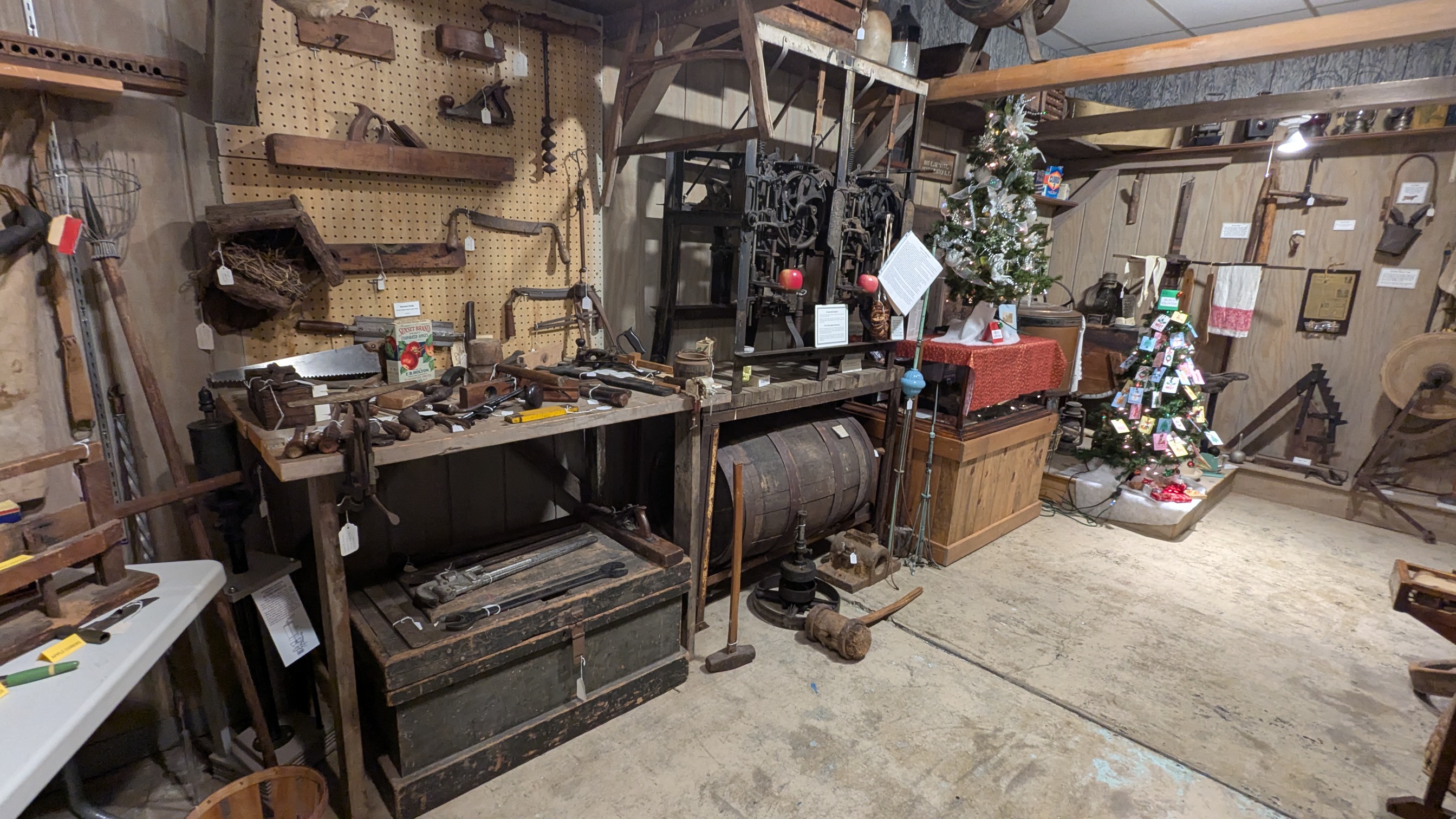
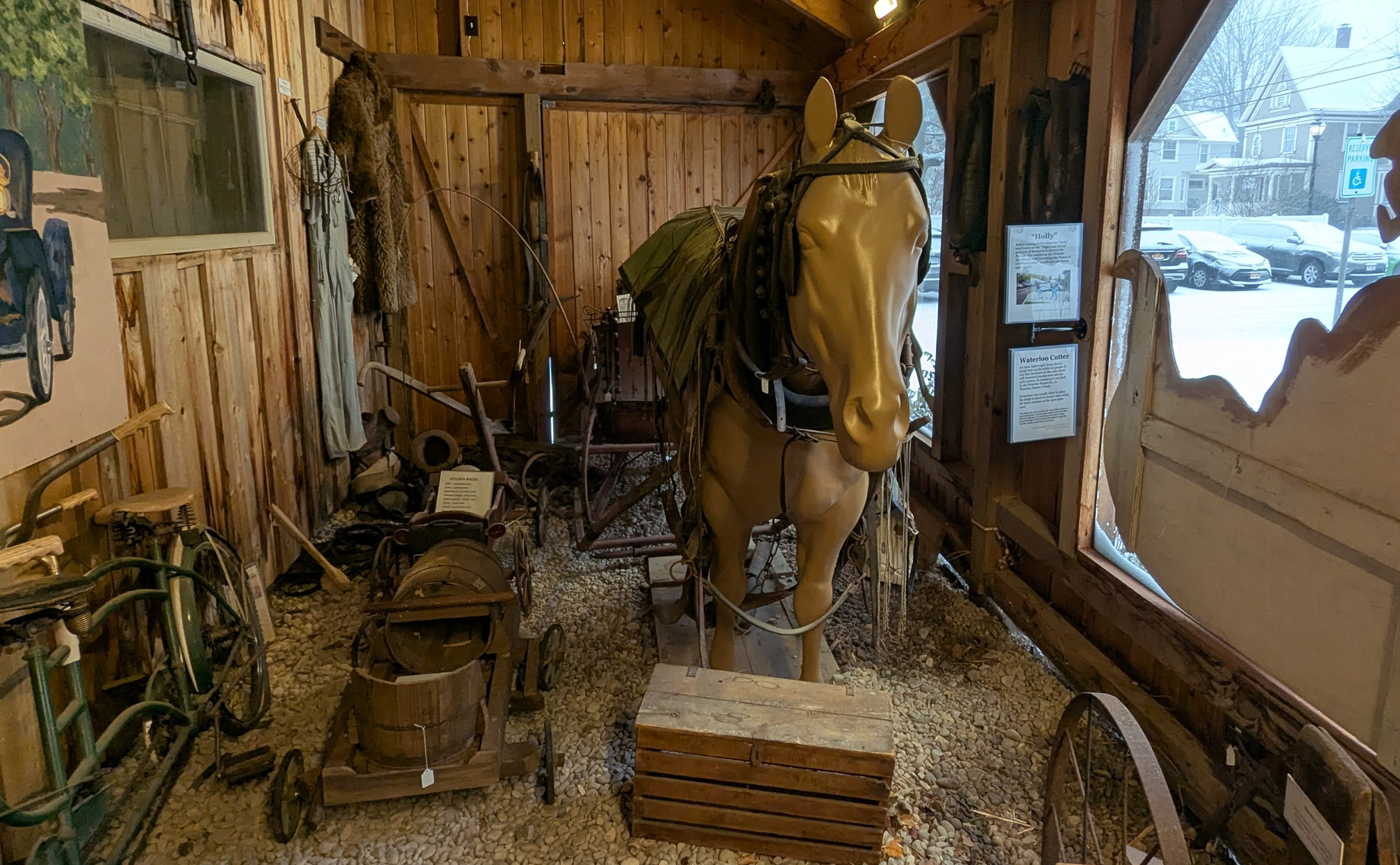
Our “Meet the Webster Museum” tour makes our last stop in this month’s History Bit, ending on the right-hand side of the building as you enter the museum, where these farming implements are part of an eclectic collection of 19th-century tools and labor-saving appliances that offer a glimpse into life in early Webster.

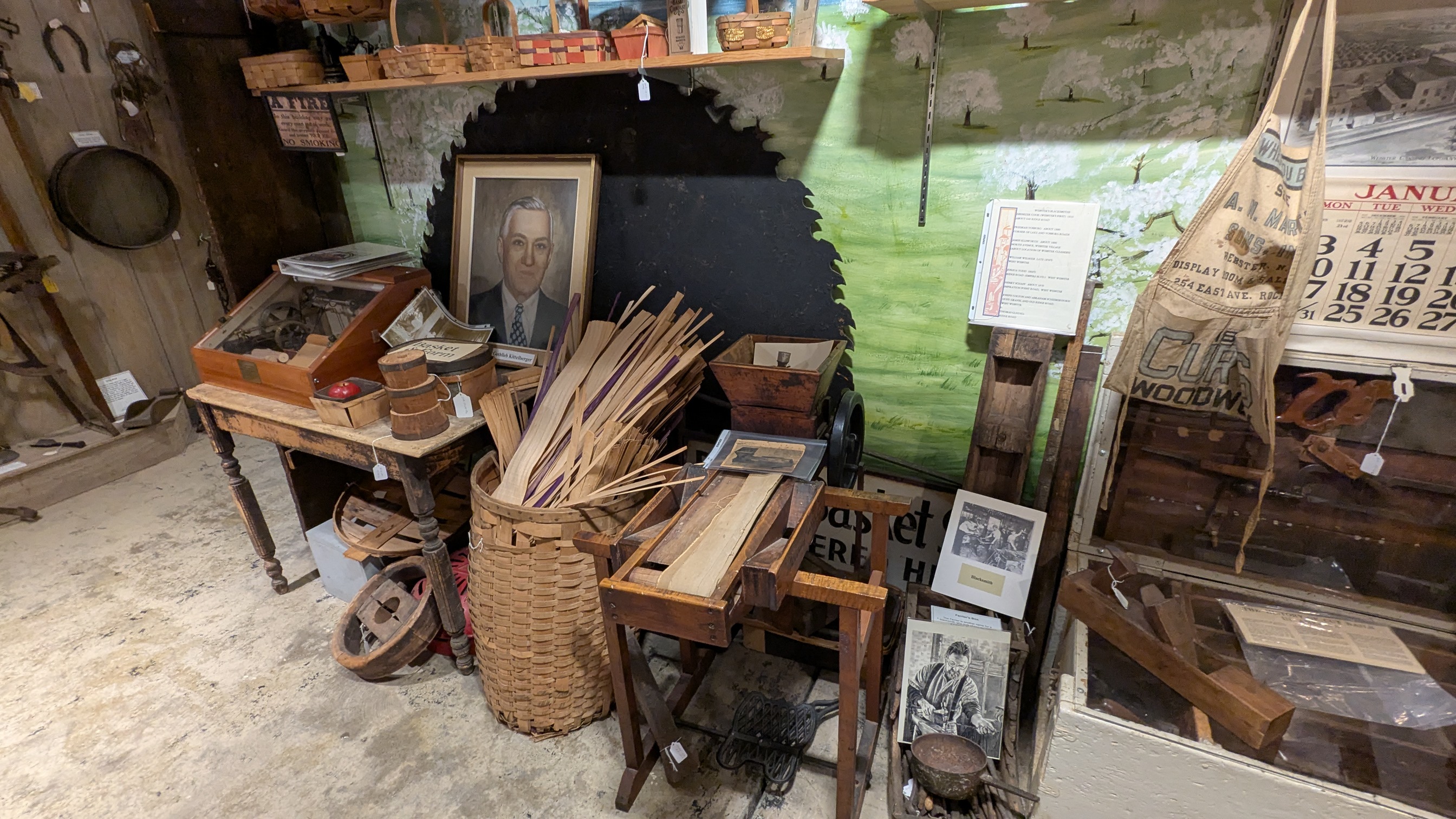
Our tour began last January, and so far, we’ve strolled down the Village of Webster’s Main Street, revisiting Witmer’s Variety Store and the Candy Kitchen; stopped into Mayor Hawley’s office and a recreated pharmacy; paused to remember Webster’s many service stations and dairies; and peeked into an early parlor, bedroom and kitchen. Here at our last stop, near the farming tools and other everyday necessities, visitors can also see presentations about two of Webster’s earliest and most profitable industries: apple drying and basket making.

All of these displays, however, really just scratch the surface of the impressive variety of exhibits at the Webster Museum that illuminate our town’s early history, as well as the extensive resources available for anyone interested in researching their family or home.

For example, these include:

  • three different kids of early washing machines on the “back porch,” including one that looks and operates a lot like a butter churn;
  • evidence that mammoths passed through here (and left a molar) and that Native Americans hunted and fished here;
  • an authentically recreated one-room schoolhouse, complete with double desks, a schoolmaster’s desk, a collection of early textbooks, and early teaching aids;
  • typewriters and rotary phones (yes, they’re historical artifacts now!);
  • an exhibit highlighting our local military veterans;
  • a toy room filled with dolls, trucks and trains;
  • the “barn” (the museum’s front porch) with farming tools, a display about the “Blue Line” trolley that once rolled through Webster, and Holly the Horse pulling a one-horse sleigh.

And tucked way in the back is a research library devoted to cataloging Webster’s history, with an extensive archive of books, photos, maps, documents, and more. Community members are welcome to use it to explore their own heritage.

The Webster Museum is a true community gem, devoted to preserving and celebrating our town’s rich history. If you’ve never visited, make it a new-year goal to stop in. And if you have been there before, come back to see what’s new; the seasonal exhibits are always changing. At the very least, take a spin through the Webster Museum website; it’s filled with terrific stories and insights into our town’s past.

The Webster Museum is located at 18 Lapham Park in the Village of Webster. It’s open every Tuesday, Thursday and Saturday from 2 to 4:30 p.m.

* * *

email me  at missyblog@gmail.com“Like” this blog on Facebook and follow me on Instagram and Threads (@missyblog)

You can also get email notifications every time I post a new blog by using the “Subscribe” link on the right side of this page (or all the way at the bottom of the page if you’re on your phone).

(posted 12/9/2025)